.blog-cta-wrapper{text-align:center;margin:2rem 0;width:100%} a.vr-cta-button,
a.vr-cta-button:link,
a.vr-cta-button:visited{
position:relative!important;
display:inline-flex!important;
align-items:center!important;
justify-content:center!important;
width:auto!important;
min-width:unset!important;
max-width:100%!important;
padding:0.65rem 2.2rem!important;
min-height:unset!important;
height:auto!important;
font-weight:700!important;
font-size:0.9rem!important;
line-height:1.3!important;
text-decoration:none!important;
text-align:center!important;
color:#0b1320!important;
background-color:#00f5ff!important;
background-image:linear-gradient(135deg,#00f5ff 0%,#00c8e0 70%,#00b0cc 100%)!important;
border:none!important;
border-radius:30px!important;
box-shadow:inset 0 1px 0 rgba(255,255,255,.2),0 4px 18px rgba(0,245,255,.28)!important;
letter-spacing:.03em!important;
cursor:pointer!important;
box-sizing:border-box!important;
transition:all .4s cubic-bezier(.16,1,.3,1)!important;
white-space:nowrap!important;
float:none!important;
z-index:1!important;
outline:none!important
}
a.vr-cta-button::before,
a.vr-cta-button::after{display:none!important;content:none!important;opacity:0!important;visibility:hidden!important}
a.vr-cta-button:hover{
background-color:#66f7ff!important;
background-image:linear-gradient(135deg,#66f7ff 0%,#00e0f0 70%,#00c8e0 100%)!important;
box-shadow:inset 0 1px 0 rgba(255,255,255,.25),0 8px 28px rgba(0,245,255,.5)!important;
transform:translateY(-3px)!important;
color:#060f1a!important;
text-decoration:none!important;
z-index:2!important
}
a.vr-cta-button:active{transform:translateY(-1px)!important;box-shadow:inset 0 1px 0 rgba(255,255,255,.15),0 4px 12px rgba(0,245,255,.3)!important}
a.vr-cta-button:focus{outline:none!important}
.vr-cta-button .cta-arrow{display:inline-block;transition:transform .3s ease;margin-left:0.3em;position:relative!important;z-index:3!important}
.vr-cta-button:hover .cta-arrow{transform:translateX(4px)}
a.vr-cta-btn-outline,
a.vr-cta-btn-outline:link,
a.vr-cta-btn-outline:visited{
position:relative!important;
display:inline-flex!important;
align-items:center!important;
justify-content:center!important;
width:auto!important;
min-width:unset!important;
max-width:100%!important;
padding:0.65rem 2.2rem!important;
min-height:unset!important;
height:auto!important;
font-weight:700!important;
font-size:0.9rem!important;
line-height:1.3!important;
text-decoration:none!important;
text-align:center!important;
color:#00f5ff!important;
background-color:transparent!important;
background-image:none!important;
border:2px solid #00f5ff!important;
border-radius:30px!important;
box-shadow:none!important;
letter-spacing:.03em!important;
cursor:pointer!important;
box-sizing:border-box!important;
transition:all .4s cubic-bezier(.16,1,.3,1)!important;
white-space:nowrap!important;
float:none!important;
z-index:1!important;outline:none!important
}
a.vr-cta-btn-outline:hover{
color:#0b1320!important;
background-color:#00f5ff!important;
background-image:none!important;
border-color:#00f5ff!important;
box-shadow:0 8px 28px rgba(0,245,255,.4)!important;
transform:translateY(-3px)!important;
text-decoration:none!important;
z-index:2!important
}
a.vr-cta-btn-outline:active{transform:translateY(-1px)!important}
a.vr-cta-btn-outline::before,
a.vr-cta-btn-outline::after{display:none!important;content:none!important}
/* 行内产品链接 */
.vr-article a.inline-product-link{color:#00f5ff;text-decoration:underline;text-underline-offset:3px;font-weight:600;transition:color .2s}
.vr-article a.inline-product-link:hover{color:#66f7ff}
/* 分隔线 */
.section-divider{width:60px;height:3px;background:linear-gradient(90deg,#00f5ff,transparent);margin:1rem 0 2rem;border:none;border-radius:2px}
@media(max-width:600px){
a.vr-cta-button,a.vr-cta-button:link,a.vr-cta-button:visited,
a.vr-cta-btn-outline,a.vr-cta-btn-outline:link,a.vr-cta-btn-outline:visited{white-space:normal!important;padding:0.5rem 1.5rem!important;font-size:.85rem!important}
}
.vr-faq{margin-bottom:2px;border:1px solid #4a6080;background:#161f33}
.vr-faq summary{display:flex;align-items:center;justify-content:space-between;padding:1.1rem 1.3rem;cursor:pointer;font-weight:600;font-size:1.02rem;color:#00f5ff;list-style:none;outline:none;user-select:none}
.vr-faq summary::-webkit-details-marker{display:none}
.vr-faq summary::marker{display:none;content:""}
.vr-faq summary:hover{background:rgba(0,245,255,.04)}
.vr-faq .faq-label{flex:1;padding-right:1rem}
.vr-faq .faq-icon-wrap{flex-shrink:0;display:inline-flex;align-items:center;justify-content:center;width:22px;height:22px;font-size:1.3rem;line-height:1;color:#00f5ff;transition:transform .3s ease}
.vr-faq[open] .faq-icon-wrap{transform:rotate(45deg)}
.vr-faq .faq-body{padding:0 1.3rem 1.2rem}
.vr-faq .faq-body p{margin:0;color:#c8d6e5;font-size:.95rem;line-height:1.75}
.vr-faq .faq-body a{color:#00f5ff;text-decoration:underline;text-underline-offset:3px;font-weight:600}
@media(max-width:600px){.vr-faq summary{font-size:.95rem;padding:.9rem 1rem}.vr-faq .faq-body{padding:0 1rem .9rem}}
Search for “vr arcade” and you will find two kinds of content: glossy renderings of 500㎡ mega-venues, and forum threads asking whether a small VR zone can actually make money. This article is neither. It is a data-backed, square-meter-by-square-meter revenue model for a 50㎡ virtual reality experiences zone—the kind you can install inside an existing shopping mall, a supermarket retail strip, or an airport concourse. No overexpansion. No $500k gamble. Just a disciplined spatial architecture, a three-zone revenue layering strategy, and the throughput numbers to underwrite the investment. If you have ever searched for vr examples of compact, profitable setups—or wondered whether a rec room can evolve into a micro-entertainment hub—this is the blueprint.
Model Coverage
50㎡ · EU & SEA · CAPEX-to-Payback
Why 50㎡ Is the Strategic Sweet Spot for a VR Arcade
If 30㎡ is the entry-level precision format—compact, low-overhead, but fragile—then 50㎡ is the controlled scale model. It is the smallest footprint that unlocks what makes a vr arcade structurally profitable: revenue layering. At 30㎡, every machine must multitask; revenue is dependent on peak utilization; one machine going down can collapse the day’s income. At 50㎡, you can introduce dedicated zones, separate traffic types, engineer price differentiation, and smooth volatility.
A 50㎡ virtual reality experiences zone is:
- ✓Large enough to support multiple revenue streams simultaneously, introduce structured queue management, create visible attraction in malls, and offer pricing tiers.
- ✓Small enough to operate with 1–2 staff, maintain cost discipline, and avoid high-risk rent commitments.
Key Insight: 50㎡ is not about cramming more machines into a bigger room. It is about revenue layering—the difference between a machine cluster and a micro-entertainment hub. Among available vr examples, the 50㎡ model stands out as the format that balances investment discipline with revenue diversification. Explore LEKE VR’s compact zone solutions →
The Three-Zone Revenue Architecture
A stable 50㎡ VR zone does not succeed by accident. It succeeds because the equipment is organized into three distinct revenue zones. This separation prevents queue bottlenecks, revenue cannibalization, and underutilization during slow hours.
| Zone | Equipment | Area | LEKE VR Product | Role in Revenue Architecture |
|---|
Zone A
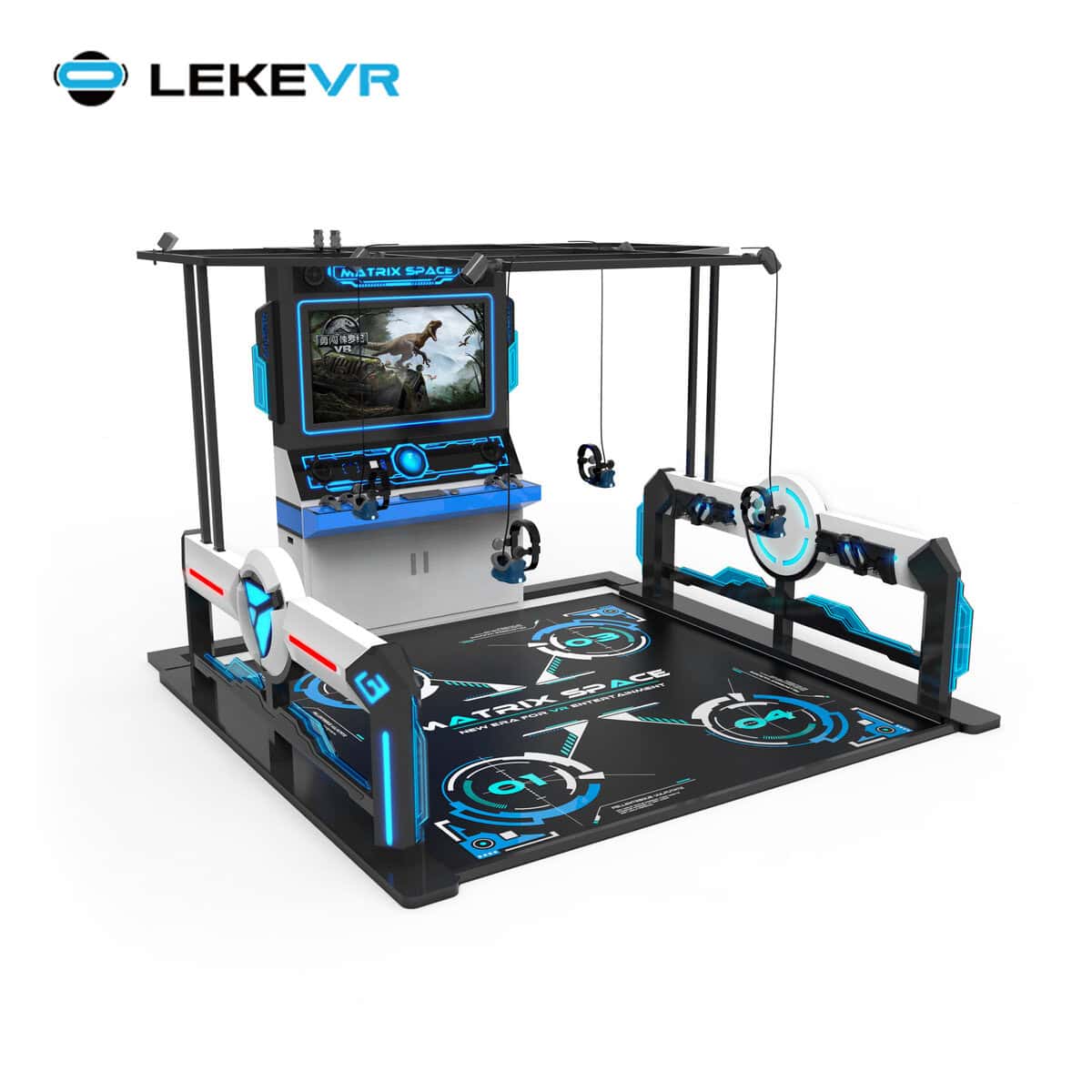
Group Anchor | 4-Seat VR Cinema | 18㎡ | Venue Solution → | High visual energy. Draws walk-in attention. Serves groups and families simultaneously. The venue’s visual billboard. |
Zone B
High-Turnover | 3× VR Chairs / Platforms | 10㎡ | Venue Solution → | Fast rotation. Solo impulse plays. Volume driver. Fills gaps between group sessions. Sustains weekday baseline revenue. |
Zone C
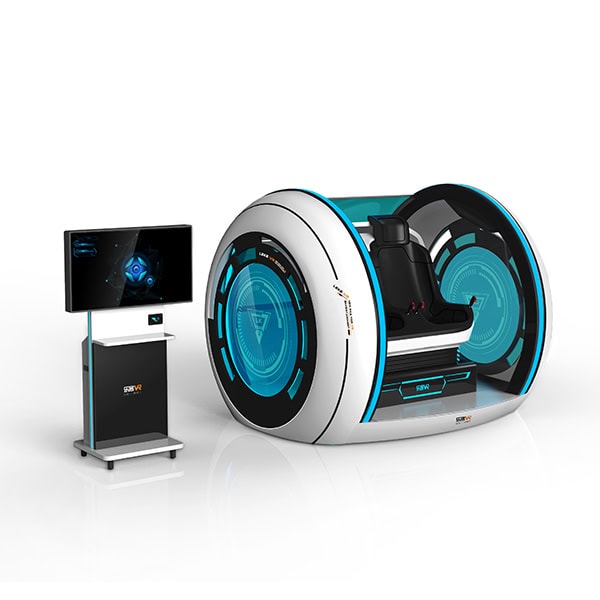
Premium | 1× Racing Simulator | 6㎡ | 3DOF Racing → | Highest per-session ticket price. Premium upsell. Creates a psychological price anchor that makes other tiers feel appropriately valued. |
Flex
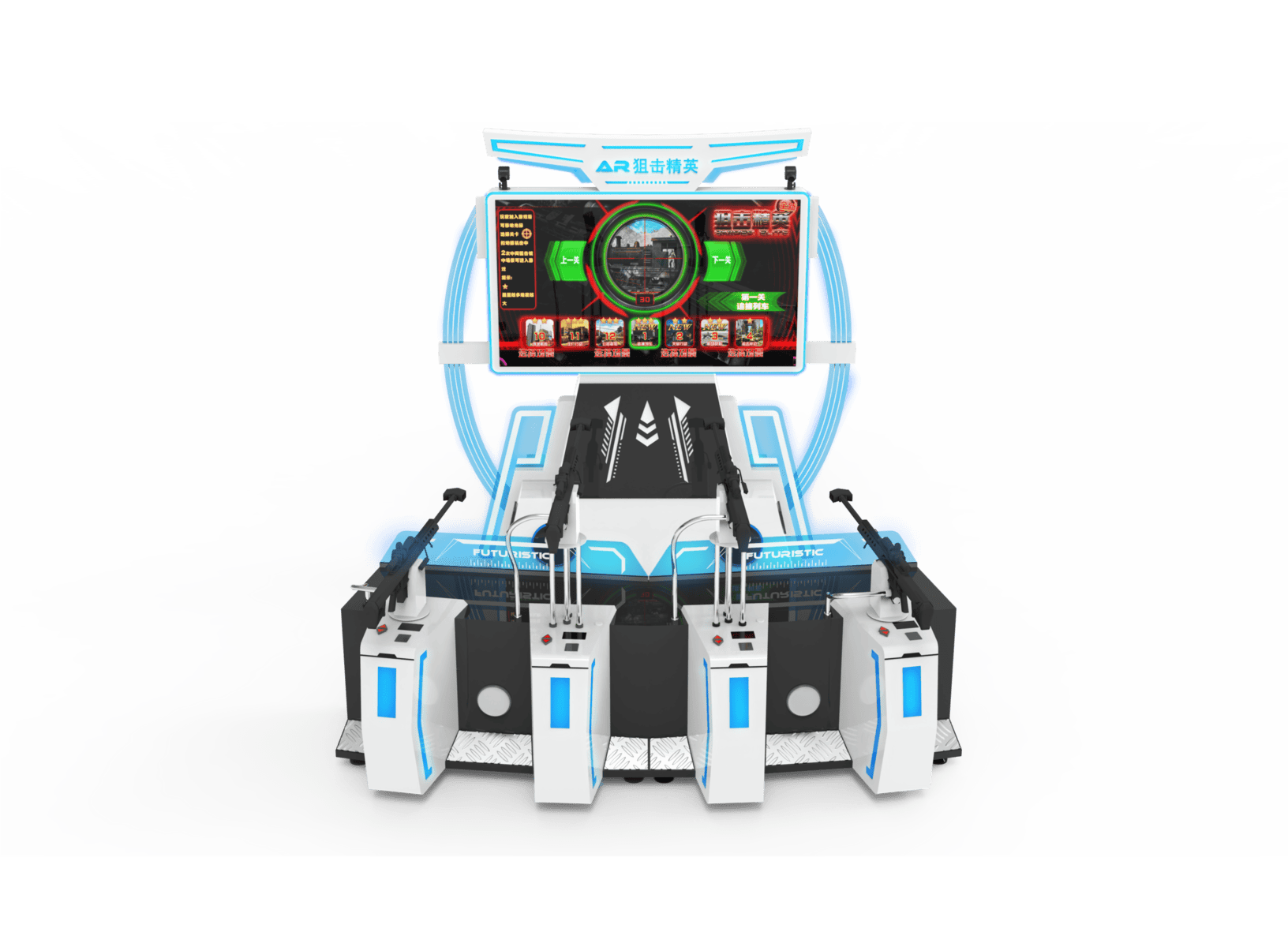
Overflow | 1× Shooting Unit | 6㎡ | Venue Solution → | Mid-tier pricing. Absorbs overflow from Zone A. Provides a different play modality for variety-seeking guests. |
| Total | 6 Units | 50㎡ | — | 10㎡ circulation & queue space included |
Equipment Mix & Throughput Modeling
Revenue models live or die on throughput assumptions. Below is a blended utilization model assuming 5-minute sessions, 1-minute reset windows, and 55% blended utilization across a standard operating day:
Revenue Modeling by Region
🇪🇺 Europe / North America Scenario
| Equipment | Plays/hr | $/Play | $/hr | Tier |
|---|
| 4-Seat Cinema | 22 | $7 | $154 | Standard |
| VR Chairs (×3) | 17 | $6 | $102 | Standard |
| Racing Simulator | 5 | $8 | $40 | ★ Premium |
| Shooting Unit | 5 | $7 | $35 | Mid-Tier |
| Combined | 48–50 | Blended $6.90 | ~$331/hr | 4-tier pricing |
8-hr day: ~$2,650 · 26-day month: ~$69,000 gross · Revenue density: $6.60/hr per ㎡
🇬🇲 Southeast Asia / Middle East Scenario
| Equipment | Plays/hr | $/Play | $/hr | Tier |
|---|
| 4-Seat Cinema | 22 | $3.50 | $77 | Standard |
| VR Chairs (×3) | 17 | $3 | $51 | Standard |
| Racing Simulator | 5 | $5 | $25 | ★ Premium |
| Shooting Unit | 5 | $3.50 | $18 | Mid-Tier |
| Combined | 48–50 | Blended $3.40 | ~$171/hr | 4-tier pricing |
Monthly gross: ~$30,000–40,000 · Higher foot-traffic density in Asian malls partially offsets lower per-session pricing.
CAPEX, OPEX & Payback Timeline
| CAPEX Item | Estimated Range | LEKE VR Product |
|---|
| 4-Seat VR Cinema | $30,000 – $45,000 | Venue Solution → |
| VR Chairs (×3) | $18,000 – $27,000 | Venue Solution → |
| Racing Simulator | $12,000 – $20,000 | 3DOF Racing → |
| Shooting Unit | $10,000 – $18,000 | Venue Solution → |
| Installation, Setup & Content | $5,000 – $8,000 | Venue Solution → |
| Total CAPEX | ~$75,000 – $115,000 | All factory-direct pricing |
| Monthly OPEX | Range |
|---|
| Rent (50㎡ commercial) | $2,500 – $6,000 |
| Staff (1–2 persons) | $1,200 – $2,500 |
| Power & Utilities | $400 – $800 |
| Maintenance & Content | $300 – $600 |
| Total Monthly OPEX | ~$4,500 – $9,000 |
Payback analysis (conservative): At a net margin of 30–40%, the European/North American scenario yields approximately $20,000–27,000 monthly net—4–6 month payback under stable traffic. The Southeast Asian/Middle Eastern scenario typically sees 6–10 month payback. These are conservative estimates based on reference data; actual performance depends on location quality, staffing efficiency, and content refresh cadence.
Strategic Insight — Why 50㎡ Outperforms a Traditional Rec Room: Three structural reasons. (1) Short 5-minute sessions with 1-minute resets create throughput density that passive entertainment cannot match. (2) Multi-layered pricing allows the same 50㎡ to extract different revenue rates from different customer segments simultaneously. (3) Group psychology—when a 4-seat cinema fills, bystanders are more likely to join the VR chairs or shooting unit rather than walk away, creating a self-reinforcing occupancy loop. A rec room filled with static gaming stations cannot replicate this dynamic because each station is a silo. A well-designed VR zone behaves as an ecosystem. Explore LEKE VR’s compact zone solutions →
Scaling Logic Beyond 50㎡
If a 50㎡ zone stabilizes for six or more months with consistent weekend throughput, the expansion path is not “double the floor space.” It is targeted scaling of what already works:
- ✓Duplicate the cinema — a second 4-seat unit doubles the highest-throughput zone without changing the operational workflow.
- ✓Add a second premium simulator — a 6DOF racing platform alongside the existing 3DOF unit creates a premium head-to-head tier.
- ✓Create a group party package — bundle Zone A + Zone C into a fixed-price group experience for predictable weekend revenue blocks.
Avoid: jumping directly to a 150㎡ arena without traffic proof. The discipline of 50㎡ is not a limitation—it is a verification stage.
| Factor | 30㎡ Entry Format | ★ 50㎡ Controlled Scale | 100㎡+ Full Arena |
|---|
| Revenue Stability | Moderate | High — 3-zone diversified | Very High |
| Staffing | 1 person | 1–2 persons | 3–5 persons |
| Pricing Tiers | Limited | 4 flexible tiers | Full segmentation |
| Scalability | Constrained | Expandable zone by zone | Already at scale |
| Risk | Higher | Lower — diversified | Moderate |
Frequently Asked Questions
How much does it cost to set up a 50㎡ VR arcade, and how long is the typical payback period?+
Total CAPEX for a commercial-grade 50㎡ vr arcade ranges from approximately $75,000 to $115,000, covering a 4-seat VR cinema, three VR chairs or standing platforms, one racing simulator (such as the LEKE VR 3DOF Racing Simulator), one compact shooting unit, and installation. Monthly OPEX (rent, 1–2 staff, utilities, maintenance) runs approximately $4,500–9,000 depending on location. Under conservative assumptions with stable traffic, European/North American markets typically see a 4–6 month payback; Southeast Asian/Middle Eastern markets 6–10 months. Every location is different, and LEKE VR builds a customized projection during site assessment. Request a CAPEX estimate for your location →
What equipment should I put in a 50㎡ VR zone to maximize revenue per square meter?+
The optimal 50㎡ configuration follows a three-zone revenue architecture: Zone A (18㎡) — a 4-seat VR cinema as the group anchor and visual billboard; Zone B (10㎡) — three VR chairs or standing platforms for high-turnover solo plays; Zone C (6㎡) — one racing simulator as the premium upsell tier; plus a compact shooting unit (6㎡) as flex/overflow. At 55% blended utilization, this processes 48–50 plays per hour across four pricing tiers, yielding approximately $6.60/hr per square meter in revenue density. Explore the recommended racing simulator →
What kind of VR experiences generate the highest throughput in a compact commercial zone?+
Among available virtual reality experiences for compact commercial venues, three categories consistently deliver the strongest throughput-to-footprint ratio: (1) multi-seat immersive cinemas — zero skill barrier, 5-minute sessions, processes 4 guests simultaneously; (2) solo VR chairs or standing platforms — fast rotation, impulse-friendly, fills gaps between group sessions; (3) motion racing simulators — lower hourly play count but highest per-session ticket price, functioning as the premium tier that lifts the blended revenue rate. The key is combining all three in a zone architecture that prevents bottlenecks and revenue cannibalization. Tour the X-Space group anchor platform →
A 50㎡ vr arcade is not about being bigger than 30㎡. It is about layered revenue, operational resilience, price segmentation, and space engineering. When designed properly—with a three-zone architecture that separates group anchor traffic from solo impulse plays and premium upsells—it behaves like a micro-entertainment hub, not a machine cluster. Among the available vr examples for operators evaluating their first or next move, the 50㎡ model stands out as the format that best balances investment discipline with revenue diversification. One manufacturer. One accountable partner. A zone model that works from day one.