
Mixed reality · Model 2403
VR motorcycle simulator — lean-controlled racing bike
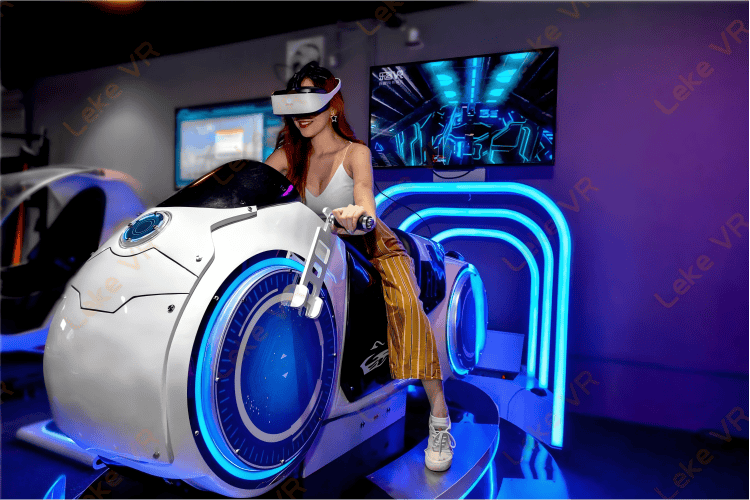
A single-seat racing bike in a low riding posture. The player steers by leaning, and the software matches what happens on screen to the angle the bike is actually at, so a corner is entered by shifting weight rather than by turning a wheel.
The body is a moulded fibreglass shell built to take public use, standing on 5.10 m² and weighing 470 kg. Voice prompts handle the pre-ride check and the track selection, which is what allows one attendant to look after several units at once.
- Lean to steer. Weight shift is the control, matched to the on-screen bike.
- Single seat. One rider, one machine, one ticket.
- Voice-guided checks. Prompts run the safety sequence before the ride.
01 / Overview
What a VR motorcycle simulator is
This is a fixed unit, not a vehicle on the floor. The player sits on a bike in a racing crouch, puts on a headset, and the machine moves under them as they ride. What separates it from a car cockpit is the control: there is no steering wheel, and the corner is taken by leaning the bike, which is the movement a rider already understands.
It is a single-seat machine, so the format is one rider at a time. That makes it a queue product rather than a group product — and it is why the pre-ride sequence, which the voice prompts largely run, is what sets how many rides an hour the unit does.
| Rider | One per machine, in a racing crouch. |
| Control | Lean angle, matched by the software to the on-screen bike. |
| Pre-ride | Voice-guided check and track selection; staff confirm boarding. |
| Footprint | 5.10 m² at 470 kg. |
| Power | One 220 V supply at 1,750 W. |
02 / Watch a session
One rider, one run
The clip shows the bike in use: the rider taking the seat and settling into the crouch, the headset going on, the pre-ride prompts running, then the bike leaning through the track. Watch the rider’s shoulders rather than the screen — the lean is the input, and it reads as a riding posture rather than someone turning a wheel.
The run goes as follows.
03 / Lean control
Why leaning is different from steering
A car cockpit asks the guest to learn a control they may never have used: a wheel and pedals in a racing context. A bike asks them to do the thing they already do on a bicycle — shift their weight into the corner. That is why first-time riders get a clean lap sooner, and why the machine reads as a bike from across the floor rather than as a cabinet.
The engineering behind it is the matching. The software takes the angle the bike is actually leaning at and drives the view from it, rather than playing a fixed animation and letting the player watch. When the two disagree, riders notice immediately and the ride stops feeling like riding.
Weight shift
The corner is entered by leaning, not by turning a wheel.
Angle-matched view
The screen follows the bike’s actual lean angle rather than a fixed clip.
Racing crouch
A low riding posture, so the machine reads as a bike before the headset goes on.
Fibreglass shell
Moulded body built for public seating rather than home use.
04 / Space and power
Footprint, weight and supply
The machine measures 1,700 mm wide, 3,000 mm long and 2,300 mm high, giving 5.10 m² and 470 kg. The length is the number that catches people out: a bike takes 3 m front to back where a car cockpit takes fewer, so a position that fits a racing pod may not fit a bike.
Power is one 220 V supply at 1,750 W. Weight is higher than a single-seat car simulator because the frame carries the lean mechanism, so the floor loading and the delivery route are confirmed before the position is agreed.
Send the position
Length available, headroom, load capacity and power position.
We confirm the fit
Clearance for the lean range, boarding side and the delivery route.
Order and production
Shell colour, lighting and track selection fixed at order.
Delivery and commissioning
Positioned, powered, calibrated, handed over with staff training.
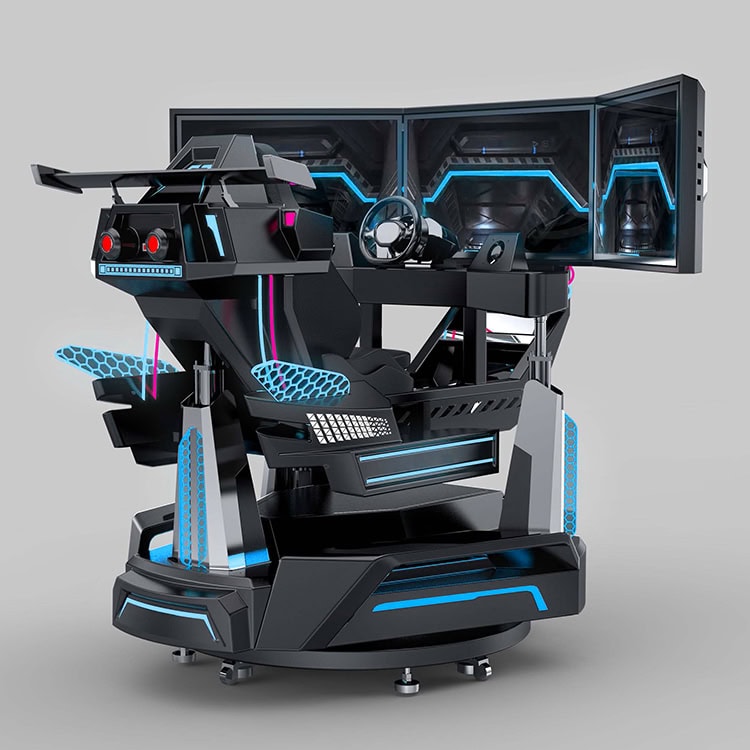
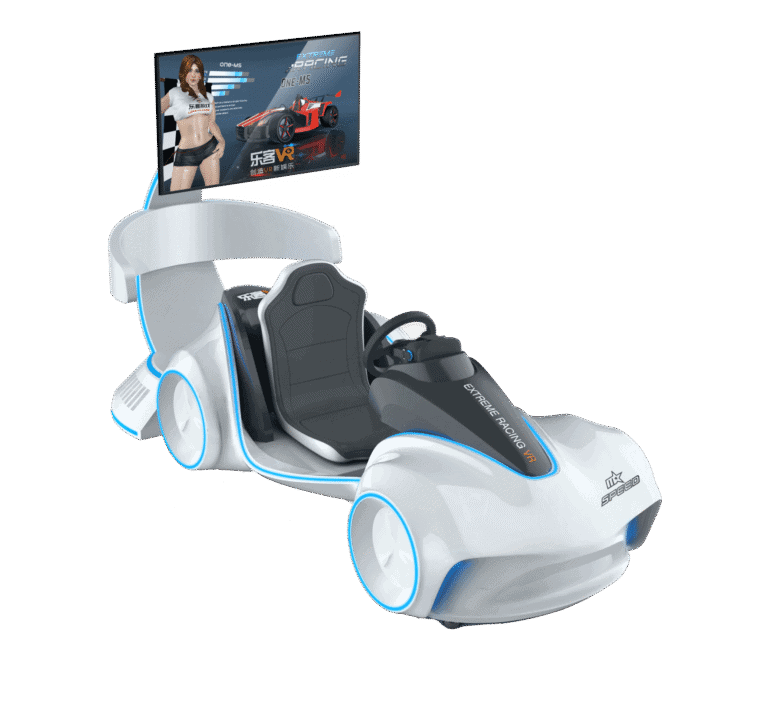
Where the floor cannot spare 3 m of length, the car-shaped racing unit takes less front-to-back space. Placement examples are on the solutions page.
05 / Operation
What the staff actually do
Most of the pre-ride sequence runs itself. Voice prompts walk the rider through the check and the track selection, and the backend reports the state of each machine, so an attendant is there to seat the rider, hand over the headset and confirm the bike is ready — not to explain the controls each time.
That is what makes a bank of bikes manageable: one person can look after several machines, because the explanation and the check are not repeated by a human for every rider. The throughput limit becomes the seat-and-headset step, which is worth timing on your own floor before you size the bank.
Specification
| Model | 2403 |
| Dimensions | 1700 × 3000 × 2300 mm |
| Weight | 470 |
| Riders | 1 |
| Footprint | 5.1 |
| Power | 220 V, 1,750 W |
| Display | One VR headset per machine; voice-guided pre-ride check |
| Certification | ISO 9001:2015 · CE · FCC · RoHS, by model and destination |
| Lead time | Stated on the quotation |
06 / Commercial
What the quotation includes
Comparative quotes in this category are rarely like for like, and the difference is usually in the second column. Both lists are given before any figures are compared.
From LEKE VR
- The bike, the lean mechanism and the fibreglass shell
- The VR headset and the voice-guided pre-ride system
- The installed track library
- Export packing, documentation and delivery to port
- Installation, calibration and staff handover
- Remote diagnostics and spare parts from our own stock
Budgeted on your side
- Freight, insurance and import duty to your market
- Floor preparation or any local building work
- Local electrical supply and its certification, signed off by your electrician
- Queuing rail, signage and shell graphics
Structural questions remain with your structural engineer and electrical questions with your licensed electrician. We supply the drawings and load data they need.
Quality management is certified to ISO 9001:2015, with CE marking and RoHS and FCC compliance by model and destination. Certificates and test reports are available on request.
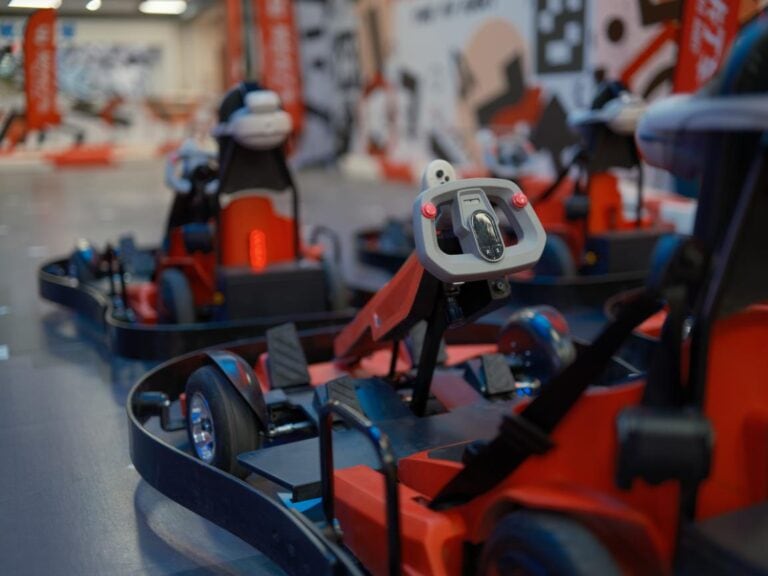
Our showroom and factory in Guangzhou can be visited. Projects listed below belong to operators, so access is theirs to grant. If a visit is not practical, we work from your floor plan instead. The rest of the racing line, including the mixed-reality kart fleet and the 3DOF triple-screen simulator, is listed under commercial VR products.
Reviews
What operators say about the VR motorcycle
Swipe to see more →
Measure the length before the area. Three metres front to back is what rules positions out, not the 5.1 m².
First-timers get a clean lap faster than on a wheel. They lean, the bike leans, and it works.
The lean matching is the whole product. When the view and the bike disagree, riders feel it immediately.
The bike draws people from across the floor. Single seat means a queue, so we run it beside a group attraction.
Projects
Solutions we build
Swipe to see more →

More machines
Elsewhere in the range
Swipe to see more →

Where it goes
Where this machine is usually installed
Suited to family entertainment centres, shopping-mall units and theme parks.
Layout, access and power are confirmed against your floor plan before the order is placed, so a site is not ruled out until the plan has been checked.
07 / Questions
Questions operators ask
How does the rider control it?
By leaning. There is no steering wheel; the bike follows the rider's weight shift and the software drives the view from the bike's actual angle.
How many people ride at once?
One. This is a single-seat machine, so the format is a queue rather than a group session.
How much floor does it need?
5.10 m², but the length matters more: the machine is 3,000 mm front to back, which is longer than a car-shaped racing pod.
Does it need an operator?
Someone seats the rider and hands over the headset, but the safety check and track selection are run by voice prompts, so one attendant can cover several machines.
What power supply does it need?
One 220 V connection at 1,750 W.
Is it suited to first-time riders?
Yes. Leaning is closer to riding a bicycle than operating a wheel and pedals, so the first lap is usually cleaner.
What support is included?
Remote diagnostics, video support while staff are on the floor, spare parts from our own stock, and after-sales maintenance.
Next step
Send the position, not a wish list
Send the length you can spare, the headroom and the power position. Three metres front to back is the first thing to measure.
LEKE VR · Guangzhou Leke VR Technology Co., Ltd. · Guangzhou, China · contact
Figures come from the build sheet and commissioning records for this model and from our own venues. Maintained by the LEKE VR product team in Guangzhou and revised when a number changes.