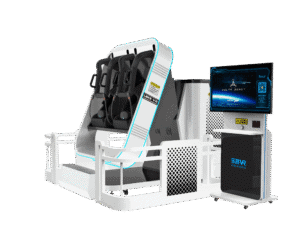
VR Chair 360 – Single-Seat 9D Virtual Reality Experience for Arcades

VR Chair 360 — Single-Seat 9D Virtual Reality Experience for Commercial Arcades Floor space is the scarcest resource in any arcade, and every square meter mus...

B2B Factory-Direct · Request a Custom Quote
ISO 9001 Factory CE / FCC / RoHS LekeVR Turnkey Delivery
Quick Factory Inquiry

We reply within 12 hours. You can also email [email protected].


VR Chair 360 — Single-Seat 9D Virtual Reality Experience for Commercial Arcades

Floor space is the scarcest resource in any arcade, and every square meter must earn its rent. The single-seat vr chair 360 is engineered precisely for that math — a self-contained, 2.41m² motion-simulator attraction that delivers the full 9d virtual reality experience in a footprint smaller than a standard claw-machine island. One player. 360-degree rotation. Wind, vibration, and 3K HD visuals synchronized frame-by-frame across 22+ pre-installed titles. For operators who need a high-impact anchor attraction but lack the square footage for a multi-player arena, this vr chair solves the spatial equation without compromising the sensory punch that drives repeat-play revenue.

vr-chair-360-single-seat-9d-virtual-reality-experience-overview
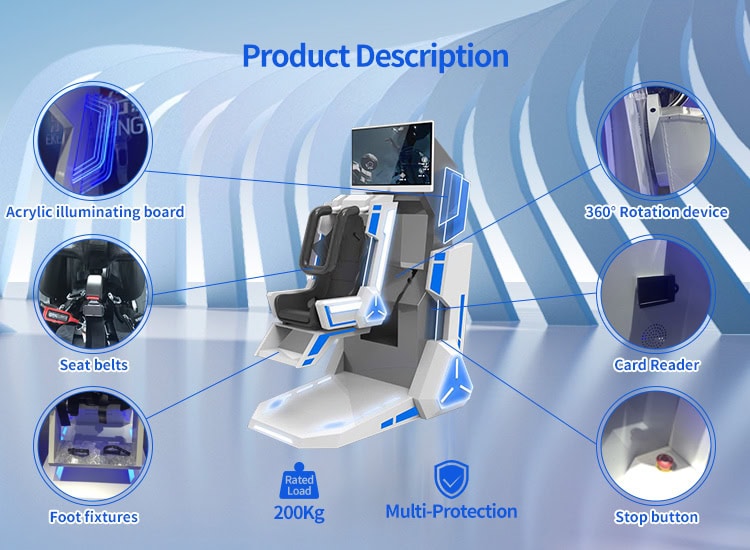
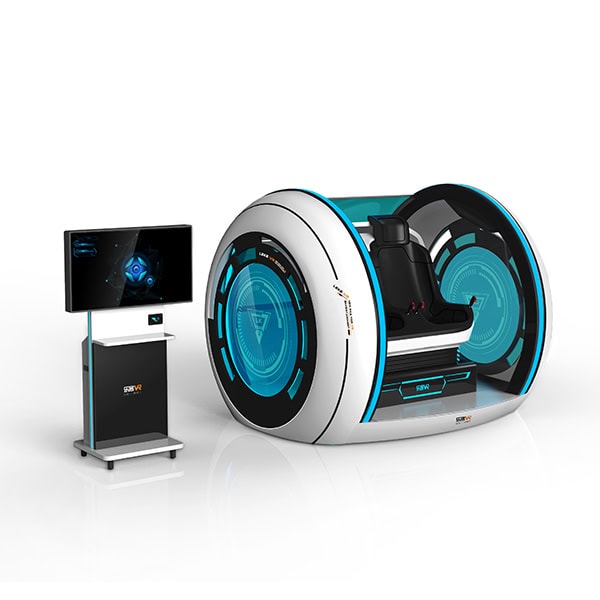
Figure 1 — The single-seat VR chair 360 in a commercial arcade setting, showcasing its compact 2.41m² footprint, sci-fi exterior, and fully enclosed 360-degree rotation cockpit.

2.41m² That Punches Above Its Weight Class: The Floor-Space Equation

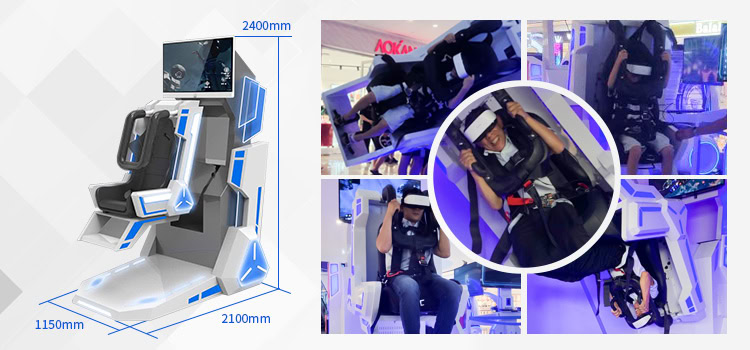
At W 2,400 × L 2,100 × H 1,150 mm and a net weight of just 200 kg, this vr chair 360 occupies less floor area than a standard two-seat redemption cabinet. That density advantage matters when lease costs are calculated per square meter per month. The unit is a fully self-contained attraction — no external PC tower to house, no base-station scaffolding to mount, no dedicated operator booth to cordon off. A single 2.5 KW power connection (supporting 110V, 220V, or 380V input, configurable at order) is all the infrastructure required. For cinema lobbies, shopping-mall kiosk zones, hotel game rooms, and FEC corners where every meter of floor plan is contested, this compact footprint transforms previously unmonetizable alcove space into a revenue-producing attraction.

A Machine That Markets Itself: The ROI of Visual Theatre

The enclosed cockpit design serves two commercial functions simultaneously. First, the futuristic shell — with its curved canopy, integrated LED accent lighting, and visible seat rotation through the transparent enclosure — acts as a passive crowd magnet. Passers-by see the chair in motion, hear the spatial audio bleeding through the canopy, and watch the player’s physical reactions in real time. That visual theatre converts walk-by foot traffic into queuing demand without requiring a dedicated floor attendant to “pitch” the experience. Second, the enclosed architecture isolates external arcade noise, creating a private sensory bubble that deepens immersion — a player inside the canopy experiences the full vr virtual reality 360 content without distraction from neighboring machines, while the arcade floor outside is not overwhelmed by the chair’s internal audio. It is a rare design that simultaneously amplifies player immersion and venue ambiance.

vr-chair-360-single-seat-motion-platform-3k-headset-detail-components
Figure 2 — Detail view of the 3K HD VR headset, 360-degree rotation drive assembly, safety harness system, and integrated multi-sensory effects module on the VR chair 360.

Beyond the Headset: 360° Rotation, Wind, Vibration — What 9D Actually Means

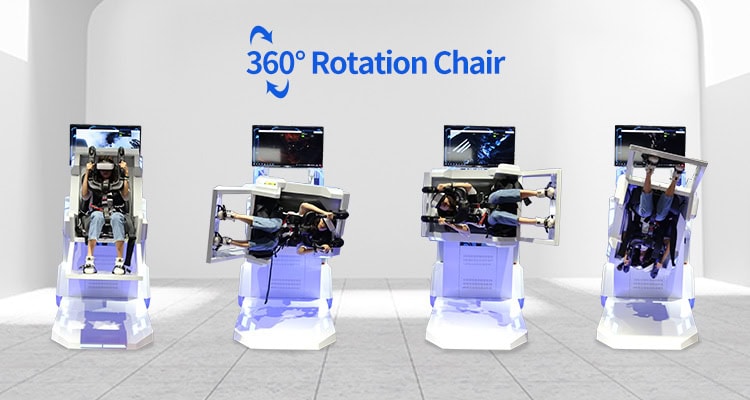
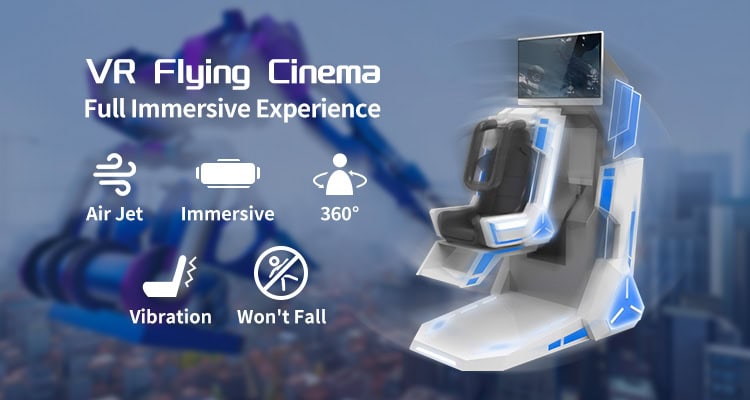
A static VR booth delivers one sensory channel — visual. This vr chair 360 layers four additional channels on top, each synchronized to the game timeline via a unified motion-control engine driven by an i3-10105F host PC with dedicated GTX 1650 graphics processing: **(1) 360-Degree Physical Rotation** — a servo-driven platform rotates the seat on its vertical axis in frame-locked synchrony with in-game camera pans, directional turns, and environmental shifts. The player physically turns with the action, eliminating the visual-vestibular mismatch that causes discomfort in static VR. **(2) Seat-Level Vibration** — haptic actuators embedded in the chair deliver directional impact feedback for explosions, collisions, and terrain transitions. **(3) Wind Effects** — directional fans integrated into the cabin interior trigger wind bursts during high-speed sequences — dives, acceleration, open-air flight. **(4) Spatial Audio** — multi-channel directional speakers with subwoofer output create positionally accurate sound that shifts with the player’s in-headset perspective as the chair rotates. The combined result is what the industry terms a 9d virtual reality experience — visual, auditory, tactile, and vestibular inputs arriving in a single, coherent sensory stream. For the arcade operator, this depth of immersion is what converts a first-time curiosity player into a repeat customer who brings friends.

vr-chair-360-degree-rotation-motion-platform-dynamic-display
Figure 3 — The VR chair 360 captured mid-rotation, demonstrating the full-axis 360-degree motion range that synchronizes with in-game content for a complete 9D virtual reality experience.

Full-Spectrum Safety Architecture: Protecting the Player, Protecting the Operator

Motion attractions require rigorous safety engineering — but if the safety protocol adds 60 seconds of staff-facilitated harnessing and briefing between every session, the throughput economics unravel. The vr chair 360 solves this with a multi-layered safety architecture designed for lightly-supervised or unattended operation: a multi-point safety harness (shoulder + lap belt) with an electronic lock-confirmation sensor prevents motion initialization until the harness registers as securely fastened; the fully enclosed transparent canopy eliminates limb-extension risk during rotation without requiring a staff member to stand guard; dual emergency-stop buttons — one at the exterior operator panel, one accessible from inside the cockpit — instantly cut power to the rotation drive and motion actuators when pressed; and a software-governed rotation speed controller with hard torque limits prevents overspeed in any software state. The harness release and re-secure cycle is designed for a sub-15-second turnaround — the solo player exits, the next sits down, the harness clicks in, and the session launches. No staff-intensive safety briefing required beyond the pre-recorded instructional audio played inside the cabin during the harness-check sequence.

22+ Pre-Installed Titles: A Content Library Built for Repeat Play

Content depth is the difference between a machine that thrives in its second year and one that fades after its novelty wears off. The platform ships with 22+ commercially licensed vr virtual reality 360 titles spanning roller coasters, deep-sea dives, outer-space combat, horror escape rooms, fantasy flight, and racing experiences — each specifically authored for the chair’s 360-degree rotation profile and multi-sensory effect triggers. With 22+ titles in rotation, even a daily regular has access to over two hours of unique content before repeating a scenario. The content library is curated to span demographic comfort zones: high-adrenaline titles for the teen and young-adult core arcade demographic, scenic flight and underwater exploration experiences for family traffic, and mid-intensity adventures that serve mixed-age groups. A touchscreen content-selection interface at the operator station allows session-by-session title changes with zero reboot time, enabling the operator to match the game to the queuing audience instantly. For the player, every visit can be a different virtual reality scene — a diversity of experience that protects the operator’s investment against content fatigue and sustain repeat-visit frequency over a multi-year operational horizon.

vr-chair-360-dimension-layout-virtual-reality-scene-customer-site
Figure 4 — Dimension reference diagram of the VR chair 360 alongside real customer-site photography showing the unit in active commercial operation at an arcade venue.

Enquire for VR Chair 360 Price and Wholesale Availability

Whether you are maximizing a cinema-lobby corner, adding a motion attraction to a space-constrained FEC floor, or launching a new virtual reality scene in a shopping mall, the single-seat vr chair 360 delivers the sensory depth, content breadth, and compact footprint that commercial operators benchmark. Contact our B2B sales team to request the current vr chair 360 price list, confirm production lead times, and discuss custom exterior branding or cabin-wrap options for multi-unit chain deployments.

VR Chair 360 — Technical Specifications
Players1
Occupier Area2.41 m²
Dimensions (W × L × H)2,400 × 2,100 × 1,150 mm
Net Weight200 kg
Computer Configurationi3-10105F / 8G RAM / 500G HDD / GTX 1650
Pre-installed Games22+
VR Headset3K HD VR Headset
Power / Voltage2.5 KW / 110V / 220V / 380V
The cabinet occupies just 2.41m² (W 2,400 × L 2,100 × H 1,150 mm). To put that in commercial context: this is smaller than a standard two-player racing cabinet, a typical claw-machine cluster island, or a photo-booth enclosure. The 1,150 mm installed height is well below standard commercial ceiling heights (typically 2,400 mm minimum), meaning the unit can be placed in basement arcades, mezzanine-level entertainment zones, or under low-hanging HVAC ductwork that would disqualify taller attractions. For operational clearance, we recommend a total zone of approximately 3.0 m × 3.0 m (9m²) to accommodate player entry/exit, the operator control station access, and a small queuing rail or stanchion area. The unit is a fully self-contained, pre-assembled module that requires a single 2.5 KW power connection (supporting 110V, 220V, or 380V, configurable at order) — no external PC tower, no base-station mounting, no structural floor reinforcement (200 kg distributed load is compatible with standard commercial flooring). This plug-and-play simplicity means the vr chair 360 can be repositioned within a venue as floor layouts evolve across lease cycles, rather than being locked into a fixed installation location.

For operators seeking a compact, low-infrastructure motion attraction that maximizes revenue per square meter without requiring dedicated construction or ceiling modification, the single-seat vr chair 360 is purpose-built for that deployment scenario.
A static VR booth delivers exactly one sensory channel: visual. Players put on a headset, see a virtual world, and stand or sit in place while their body registers zero physical motion — a visual-vestibular disconnect that, for a meaningful percentage of users, causes discomfort and shortens session duration. The vr chair 360 eliminates this gap by integrating four additional sensory channels, all driven by a unified motion-control engine running on an i3-10105F / GTX 1650 host PC that synchronizes every effect to the game timeline:

(1) 360-Degree Physical Rotation — a servo-driven platform rotates the entire seat on its vertical axis, frame-locked to in-game camera pans, directional turns, and environmental shifts. When the VR scene shows the player turning left, the chair physically turns left. This alignment between visual and vestibular input is the single most impactful differentiator in reducing motion discomfort and deepening the player's sense of presence. (2) Seat-Level Vibration — embedded haptic actuators deliver directional impact feedback — the chair rumbles during explosions, shudders during collisions, and vibrates during terrain transitions. (3) Wind Effects — directional fans integrated into the cabin interior trigger wind bursts during high-speed in-game sequences — dives, acceleration loops, and open-air flight scenarios. The wind intensity is authored per scene, not a binary on/off toggle. (4) Spatial Audio — multi-channel directional speakers with subwoofer output create positionally accurate sound that shifts with the player's in-headset perspective as the chair rotates, so audio cues remain spatially coherent regardless of the chair's physical orientation.

The commercial significance of this multi-channel approach is straightforward: a player who only sees a roller coaster is entertained. A player who feels the rotation, hears the wind, and physically drops with the virtual descent is captivated — and captivated players re-queue, bring friends, and generate the repeat-visit behavior that separates a high-grossing anchor attraction from a mid-tier cabinet that underperforms its floor rent. In an industry where word-of-mouth drives a disproportionate share of arcade footfall, a machine that creates "you have to try this" moments is a machine that earns its square meterage.
Payback timelines are inherently venue-dependent — they vary with footfall volume, per-play pricing strategy, session duration configuration, operating hours, and local lease costs. What we can provide is the operational framework that allows an operator to model their own numbers.

A single-seat configuration running 5-minute sessions at a conservative 35% occupancy rate during a 10-hour operating day generates approximately 42 ticketed sessions per day. At a per-play price point typical of motion-simulator attractions in mid-tier arcades, the monthly gross-receipt trajectory places the unit in a payback range that many single-unit operators report within 6 to 12 months, with higher-traffic venues achieving breakeven sooner. The compact 2.41m² footprint is the key multiplier here — because the vr chair 360 occupies roughly half the floor space of a 2-player motion-simulator cabinet, the revenue-per-square-meter density is inherently higher for venues where floor rent is the dominant fixed cost.

On a total-cost-of-ownership basis over a 3-year operational horizon, the combination of low infrastructure requirements (single power drop, no structural buildout), low labor overhead (designed for unattended or lightly-supervised operation), and a 22+ title content library that sustains repeat-play frequency without requiring per-title licensing fees positions the vr chair 360 as an accessible entry point into the motion-simulator attraction category. For a detailed vr chair 360 price quotation tailored to your specific venue profile — including shipping terms, lead time, and available custom exterior branding options — contact our B2B sales team directly.
The safety architecture is designed for reliable, lightly-supervised operation across high-volume commercial environments. Key protective layers include:

Multi-Point Safety Harness — a shoulder + lap belt system with an electronic lock-confirmation sensor. The motion sequence will not initialize until the harness registers as securely fastened, and the rotation drive remains locked until the confirmation signal is received. Enclosed Transparent Canopy — the fully enclosed cockpit prevents the player from extending arms or legs outside the cabin during rotation, eliminating limb-entrapment risk without requiring a staff member to monitor every session. Dual Emergency-Stop — one button at the exterior operator control panel, one accessible from inside the cockpit; either instantly cuts power to the rotation drive and motion actuators. Software-Governed Motion Limits — rotation speed and angular range are capped by hard torque limits in the motion-control firmware, preventing overspeed regardless of software state. An automatic power-off sequence engages if the control system detects a communication interruption between the motion controller and the host PC lasting more than 500 milliseconds.

For installation, we provide comprehensive remote guidance via video call with a dedicated technical engineer who walks your on-site team through unboxing, base-frame positioning, electrical connection, system commissioning, and full motion-calibration testing in real time. Supporting documentation includes a multilingual illustrated installation manual and a daily startup/shutdown operator checklist.

After-sales technical support is available via email and instant messaging during business hours (GMT+8), with a standard response window of under 24 hours. Critical downtime incidents receive prioritized remote diagnostics and guided component-level troubleshooting. Spare parts — including the rotation drive assembly, motion actuators, VR headset, control electronics, and power-supply unit — are stocked and dispatched directly from our factory warehouse via international express.

Hardware warranty terms covering manufacturing defects on major components are detailed in the wholesale purchase agreement and proforma invoice. Exact warranty duration, coverage scope, and exclusions are specified at the time of order confirmation.
50㎡ VR Zone Revenue Model: Scaling Profit Without Overexpansion

50㎡ VR Zone Revenue Model: Scaling Profit Without Overexpansion

Search for “vr arcade” and you will find two kinds of content: glossy renderings of 500㎡ mega-venues, and forum threads asking whether a small VR zone can actually make money. This article is neither. It is a data-backed, square-meter-by-square-meter revenue model for a 50㎡ virtual reality experiences zone—the kind you can install inside an existing […]

  • Venue Capacity: 50m²
  • Machine Fleet: 5

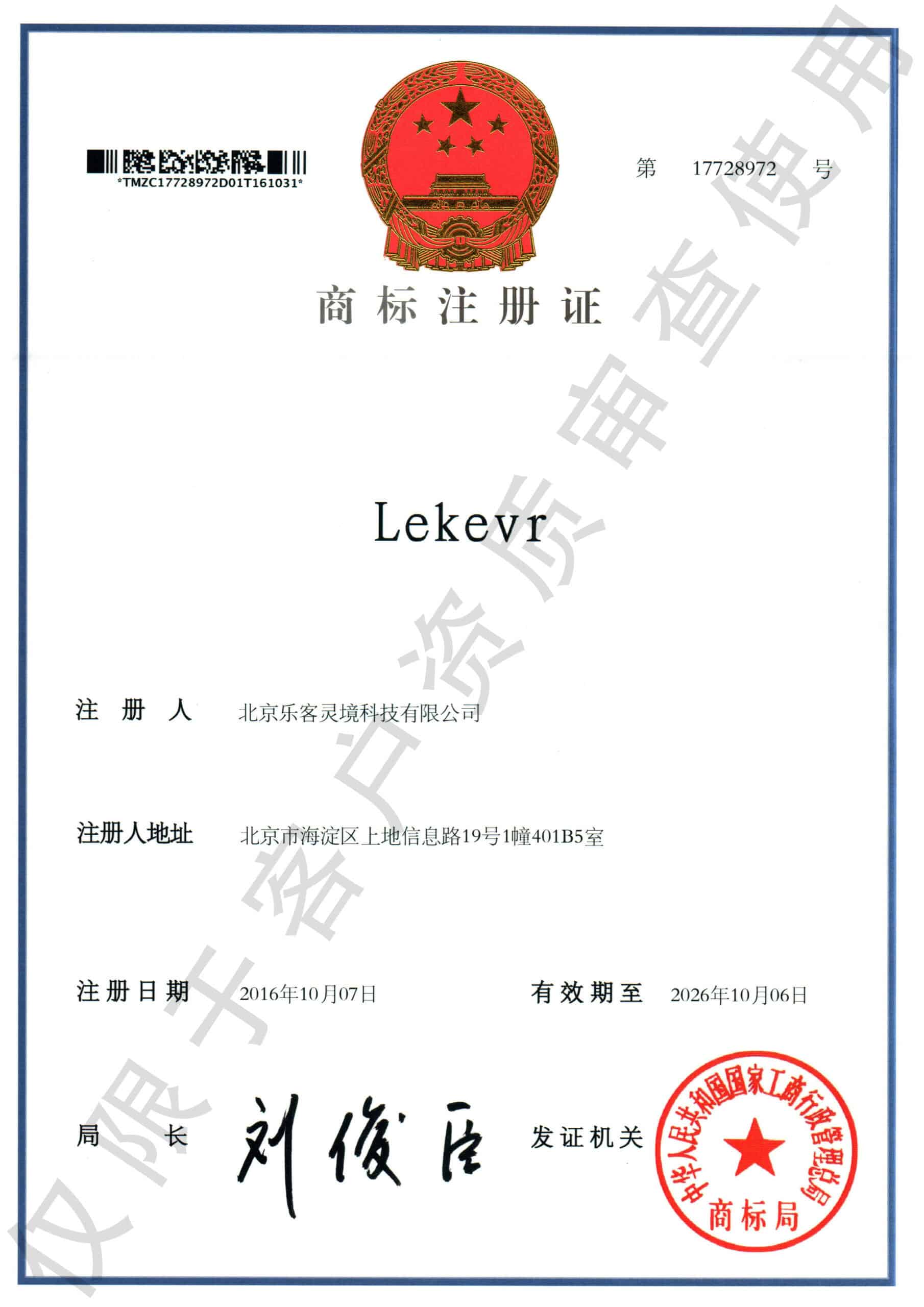
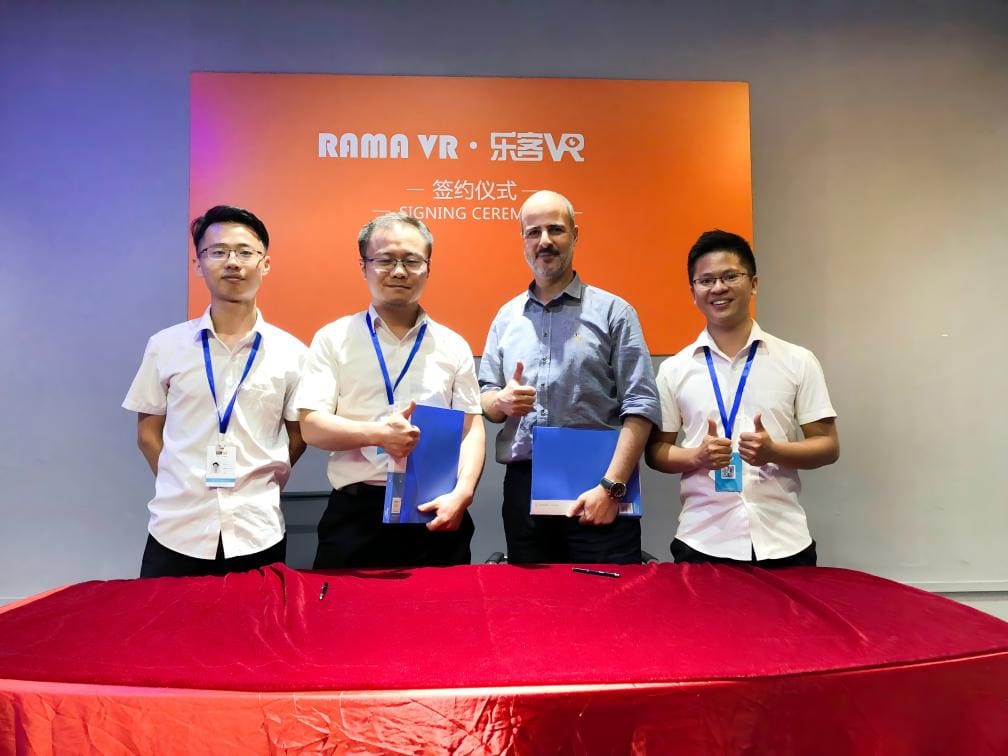
Guangzhou Leke VR Technology Co., Ltd. — backed by 12 years of R&D and production, we manufacture commercial VR simulators in-house and deliver turnkey VR park solutions. Every machine is assembled, tested and quality-audited in our ISO-certified factory before shipment.

  • Factory-Direct Manufacturing: no middlemen — competitive B2B pricing with direct engineering support.
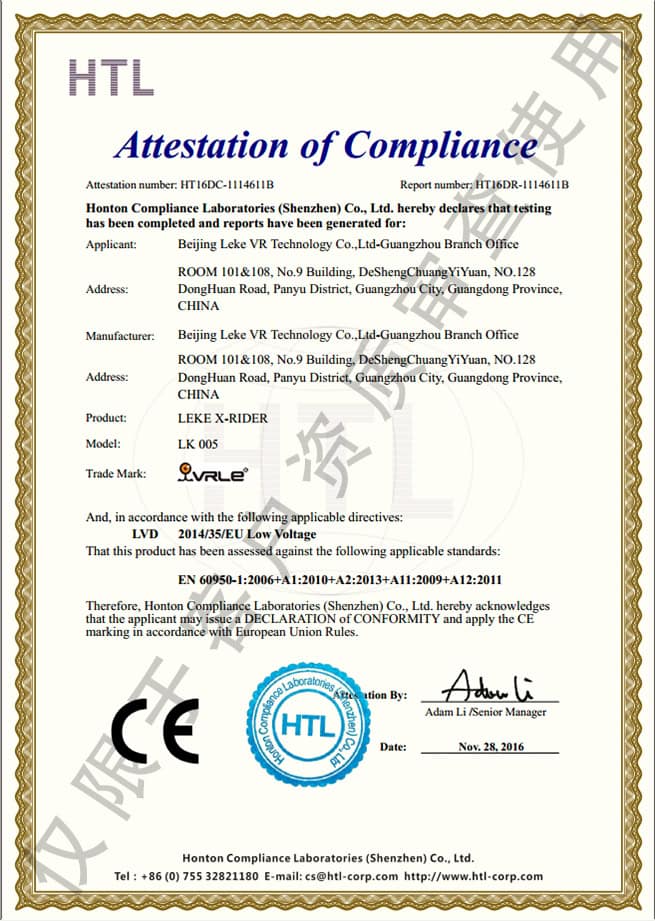
  • Certified Quality: CE / RoHS / FCC / SGS Audited / ISO 9001 compliant production line.
  • Turnkey Delivery: 3D venue layout, equipment mix, installation guidance and operator training.
  • R&D Capability: in-house engineers, 12 years of iteration, OEM / ODM customization available.
  • Global Support: 700+ commercial titles, deployments in 40+ countries, 24/7 spare parts and remote diagnostics.
12+Years R&D
700+VR Games
40+Countries
24/7Support

Certifications & Compliance

ISO 9001:2015
ISO 9001:2015
Export Registration
Export Registration
CE · Time Space Shuttle
CE · Explorer
CE · Explorer
CE · Time Flywheel
CE · Time Flywheel
CE · Egg Chair
CE · Egg Chair

Global Agency Partners

USA partner - LEKE VR
USA
Saudi Arabia partner - LEKE VR
Saudi Arabia
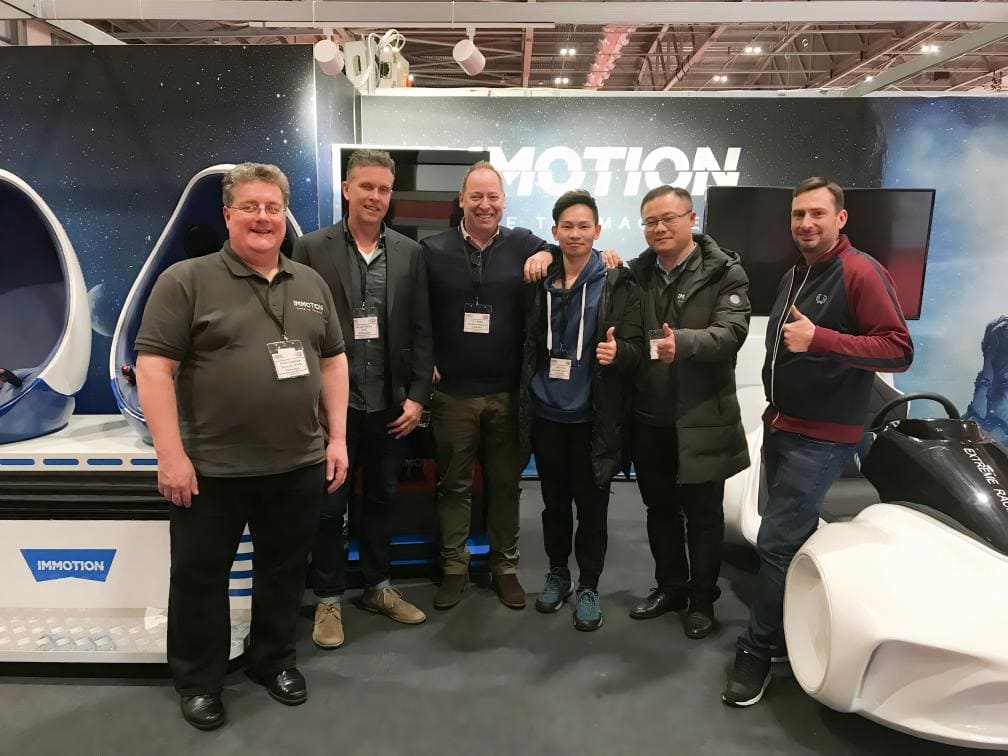
United Kingdom partner - LEKE VR
United Kingdom
Japan partner - LEKE VR
Japan
South Korea partner - LEKE VR
South Korea
Germany partner - LEKE VR
Germany
Book a Live Video Tour

4-Attraction Bundle (EUR) — A Proven Revenue Package

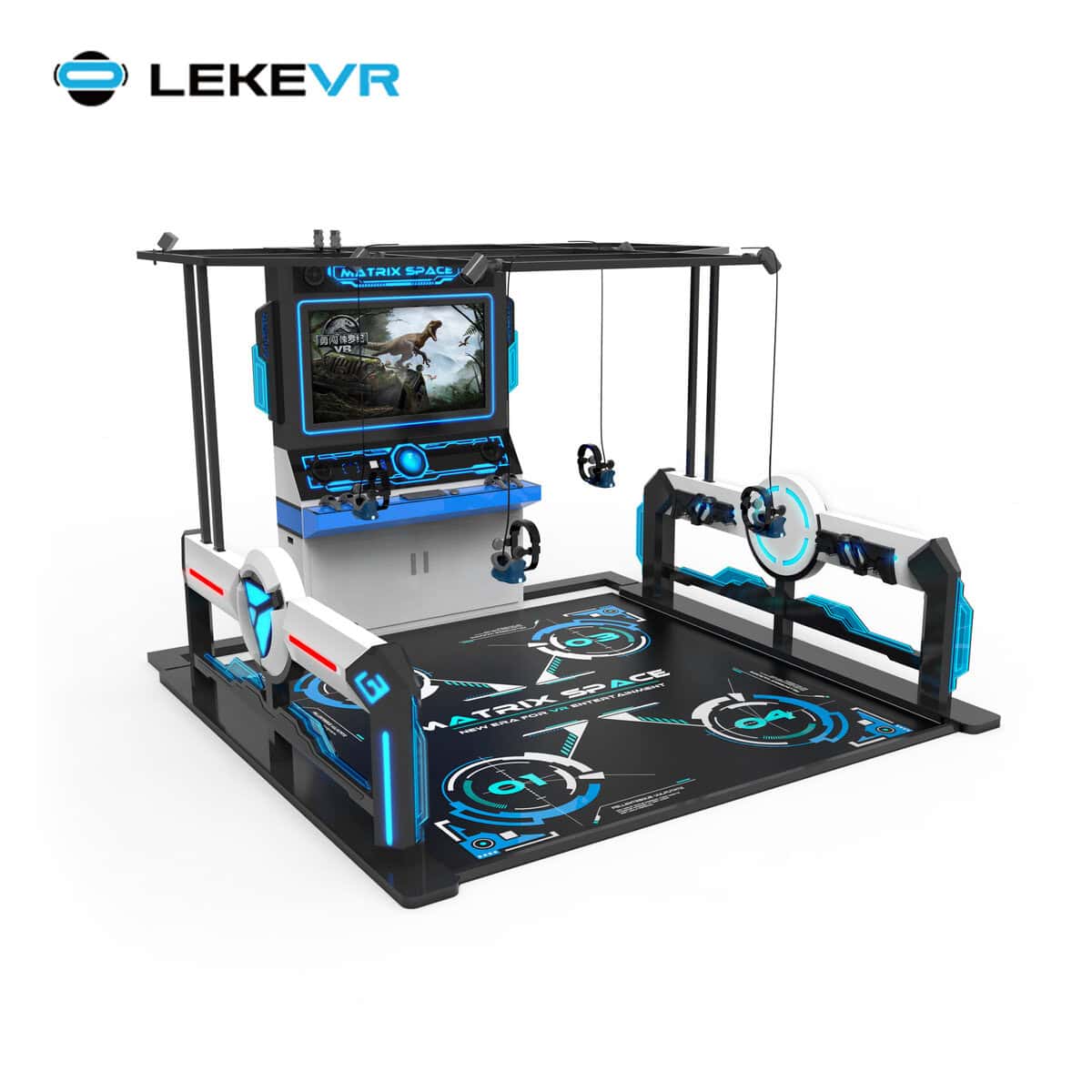
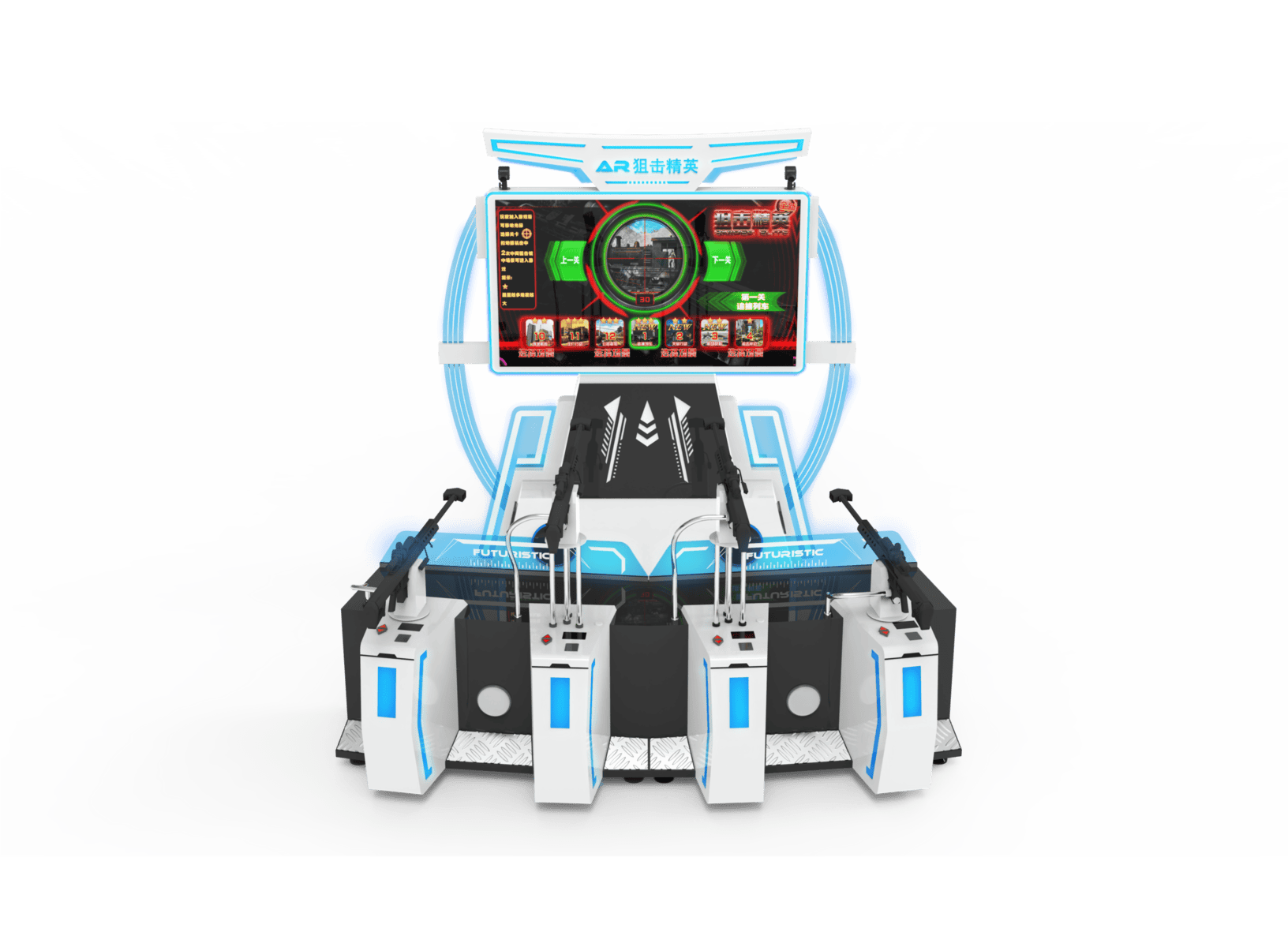
A complete, revenue-balanced four-attraction package engineered for shopping-mall FECs and standalone VR arcades. Mixes a group shooter, a premium cinema pod, a motion chair, and an AR gallery to capture both group bookings and walk-in family traffic.

The 4-Attraction Bundle

Key ROI Indicators (typical European urban venue)

53.7%Net Margin
€17,400Monthly Profit
€208,800Est. Annual Profit
$229,680Annual (USD)

1. Monthly Ticket Volume & Revenue (EUR)

Equipment ConfigurationTicket PriceMon (x4)
40/day
Tue (x4)
40/day
Wed (x4)
40/day
Thu (x4)
40/day
Fri (x4)
80/day
Sat (x4)
150/day
Sun (x4)
150/day
Monthly TurnoverSalaries (3 staff)RentMisc. ExpensesMonthly Profit
Space Shuttle 2.0 + Flying Cinema 360° + Corps Pro + AR Sniper Elite€10.00160160160160320600600€21,600€6,000€6,500€2,500€6,600
Space Shuttle 2.0 + Flying Cinema 360° + Corps Pro + AR Sniper Elite€15.00160160160160320600600€32,400€6,000€6,500€2,500€17,400

Ticket volume basis: Mon 40/day, Tue 40/day, Wed 40/day, Thu 40/day, Fri 80/day, Sat 150/day, Sun 150/day, over a 4-week month (2160 tickets/month). Fixed costs: 3 employees €6,000 + rent €6,500 + miscellaneous €2,500 = €15,000 / month. Profit = Turnover − Fixed Costs.

2. USD Reference (EUR converted at 1.1)

Monthly Metric@ €10.00 / ticket@ €15.00 / ticket
Monthly turnover$23,760$35,640
Fixed costs (staff + rent + misc.)$16,500$16,500
Monthly profit$7,260$19,140

USD figures are a reference conversion at an assumed EUR/USD rate of 1.1 for illustration only.

This is a modeling example based on a typical European urban venue, in EUR with a USD reference. Actual results vary by location, foot traffic, staffing costs, rent, and local pricing. Use it as a starting point for your own ROI projection — never as a guarantee. Request a custom projection for your venue's numbers.

50㎡ VR Zone Revenue Model: Scaling Profit Without Overexpansion

50㎡ VR Zone Revenue Model: Scaling Profit Without Overexpansion
.blog-cta-wrapper{text-align:center;margin:2rem 0;width:100%}

a.vr-cta-button, a.vr-cta-button:link, a.vr-cta-button:visited{ position:relative!important; display:inline-flex!important; align-items:center!important; justify-content:center!important; width:auto!important; min-width:unset!important; max-width:100%!important; padding:0.65rem 2.2rem!important; min-height:unset!important; height:auto!important; font-weight:700!important; font-size:0.9rem!important; line-height:1.3!important; text-decoration:none!important; text-align:center!important; color:#0b1320!important; background-color:#00f5ff!important; background-image:linear-gradient(135deg,#00f5ff 0%,#00c8e0 70%,#00b0cc 100%)!important; border:none!important; border-radius:30px!important; box-shadow:inset 0 1px 0 rgba(255,255,255,.2),0 4px 18px rgba(0,245,255,.28)!important; letter-spacing:.03em!important; cursor:pointer!important; box-sizing:border-box!important; transition:all .4s cubic-bezier(.16,1,.3,1)!important; white-space:nowrap!important; float:none!important; z-index:1!important; outline:none!important } a.vr-cta-button::before, a.vr-cta-button::after{display:none!important;content:none!important;opacity:0!important;visibility:hidden!important} a.vr-cta-button:hover{ background-color:#66f7ff!important; background-image:linear-gradient(135deg,#66f7ff 0%,#00e0f0 70%,#00c8e0 100%)!important; box-shadow:inset 0 1px 0 rgba(255,255,255,.25),0 8px 28px rgba(0,245,255,.5)!important; transform:translateY(-3px)!important; color:#060f1a!important; text-decoration:none!important; z-index:2!important } a.vr-cta-button:active{transform:translateY(-1px)!important;box-shadow:inset 0 1px 0 rgba(255,255,255,.15),0 4px 12px rgba(0,245,255,.3)!important} a.vr-cta-button:focus{outline:none!important} .vr-cta-button .cta-arrow{display:inline-block;transition:transform .3s ease;margin-left:0.3em;position:relative!important;z-index:3!important} .vr-cta-button:hover .cta-arrow{transform:translateX(4px)}

a.vr-cta-btn-outline, a.vr-cta-btn-outline:link, a.vr-cta-btn-outline:visited{ position:relative!important; display:inline-flex!important; align-items:center!important; justify-content:center!important; width:auto!important; min-width:unset!important; max-width:100%!important; padding:0.65rem 2.2rem!important; min-height:unset!important; height:auto!important; font-weight:700!important; font-size:0.9rem!important; line-height:1.3!important; text-decoration:none!important; text-align:center!important; color:#00f5ff!important; background-color:transparent!important; background-image:none!important; border:2px solid #00f5ff!important; border-radius:30px!important; box-shadow:none!important; letter-spacing:.03em!important; cursor:pointer!important; box-sizing:border-box!important; transition:all .4s cubic-bezier(.16,1,.3,1)!important; white-space:nowrap!important; float:none!important; z-index:1!important;outline:none!important } a.vr-cta-btn-outline:hover{ color:#0b1320!important; background-color:#00f5ff!important; background-image:none!important; border-color:#00f5ff!important; box-shadow:0 8px 28px rgba(0,245,255,.4)!important; transform:translateY(-3px)!important; text-decoration:none!important; z-index:2!important } a.vr-cta-btn-outline:active{transform:translateY(-1px)!important} a.vr-cta-btn-outline::before, a.vr-cta-btn-outline::after{display:none!important;content:none!important}

/* 行内产品链接 */ .vr-article a.inline-product-link{color:#00f5ff;text-decoration:underline;text-underline-offset:3px;font-weight:600;transition:color .2s} .vr-article a.inline-product-link:hover{color:#66f7ff}

/* 分隔线 */ .section-divider{width:60px;height:3px;background:linear-gradient(90deg,#00f5ff,transparent);margin:1rem 0 2rem;border:none;border-radius:2px}

@media(max-width:600px){ a.vr-cta-button,a.vr-cta-button:link,a.vr-cta-button:visited, a.vr-cta-btn-outline,a.vr-cta-btn-outline:link,a.vr-cta-btn-outline:visited{white-space:normal!important;padding:0.5rem 1.5rem!important;font-size:.85rem!important} }

.vr-faq{margin-bottom:2px;border:1px solid #4a6080;background:#161f33} .vr-faq summary{display:flex;align-items:center;justify-content:space-between;padding:1.1rem 1.3rem;cursor:pointer;font-weight:600;font-size:1.02rem;color:#00f5ff;list-style:none;outline:none;user-select:none} .vr-faq summary::-webkit-details-marker{display:none} .vr-faq summary::marker{display:none;content:""} .vr-faq summary:hover{background:rgba(0,245,255,.04)} .vr-faq .faq-label{flex:1;padding-right:1rem} .vr-faq .faq-icon-wrap{flex-shrink:0;display:inline-flex;align-items:center;justify-content:center;width:22px;height:22px;font-size:1.3rem;line-height:1;color:#00f5ff;transition:transform .3s ease} .vr-faq[open] .faq-icon-wrap{transform:rotate(45deg)} .vr-faq .faq-body{padding:0 1.3rem 1.2rem} .vr-faq .faq-body p{margin:0;color:#c8d6e5;font-size:.95rem;line-height:1.75} .vr-faq .faq-body a{color:#00f5ff;text-decoration:underline;text-underline-offset:3px;font-weight:600} @media(max-width:600px){.vr-faq summary{font-size:.95rem;padding:.9rem 1rem}.vr-faq .faq-body{padding:0 1rem .9rem}}


Search for “vr arcade” and you will find two kinds of content: glossy renderings of 500㎡ mega-venues, and forum threads asking whether a small VR zone can actually make money. This article is neither. It is a data-backed, square-meter-by-square-meter revenue model for a 50㎡ virtual reality experiences zone—the kind you can install inside an existing shopping mall, a supermarket retail strip, or an airport concourse. No overexpansion. No $500k gamble. Just a disciplined spatial architecture, a three-zone revenue layering strategy, and the throughput numbers to underwrite the investment. If you have ever searched for vr examples of compact, profitable setups—or wondered whether a rec room can evolve into a micro-entertainment hub—this is the blueprint.

Focus Keyword

vr arcade

Reading Time

12 minutes

Model Coverage

50㎡ · EU & SEA · CAPEX-to-Payback

Why 50㎡ Is the Strategic Sweet Spot for a VR Arcade

If 30㎡ is the entry-level precision format—compact, low-overhead, but fragile—then 50㎡ is the controlled scale model. It is the smallest footprint that unlocks what makes a vr arcade structurally profitable: revenue layering. At 30㎡, every machine must multitask; revenue is dependent on peak utilization; one machine going down can collapse the day’s income. At 50㎡, you can introduce dedicated zones, separate traffic types, engineer price differentiation, and smooth volatility.

A 50㎡ virtual reality experiences zone is:

  • Large enough to support multiple revenue streams simultaneously, introduce structured queue management, create visible attraction in malls, and offer pricing tiers.
  • Small enough to operate with 1–2 staff, maintain cost discipline, and avoid high-risk rent commitments.

Key Insight: 50㎡ is not about cramming more machines into a bigger room. It is about revenue layering—the difference between a machine cluster and a micro-entertainment hub. Among available vr examples, the 50㎡ model stands out as the format that balances investment discipline with revenue diversification. Explore LEKE VR’s compact zone solutions →

The Three-Zone Revenue Architecture

A stable 50㎡ VR zone does not succeed by accident. It succeeds because the equipment is organized into three distinct revenue zones. This separation prevents queue bottlenecks, revenue cannibalization, and underutilization during slow hours.

ZoneEquipmentAreaLEKE VR ProductRole in Revenue Architecture
Zone A
Group Anchor
4-Seat VR Cinema18㎡Venue Solution →High visual energy. Draws walk-in attention. Serves groups and families simultaneously. The venue’s visual billboard.
Zone B
High-Turnover
3× VR Chairs / Platforms10㎡Venue Solution →Fast rotation. Solo impulse plays. Volume driver. Fills gaps between group sessions. Sustains weekday baseline revenue.
Zone C
Premium
1× Racing Simulator6㎡3DOF Racing →Highest per-session ticket price. Premium upsell. Creates a psychological price anchor that makes other tiers feel appropriately valued.
Flex
Overflow
1× Shooting Unit6㎡Venue Solution →Mid-tier pricing. Absorbs overflow from Zone A. Provides a different play modality for variety-seeking guests.
Total6 Units50㎡10㎡ circulation & queue space included

Equipment Mix & Throughput Modeling

Revenue models live or die on throughput assumptions. Below is a blended utilization model assuming 5-minute sessions, 1-minute reset windows, and 55% blended utilization across a standard operating day:

EquipmentUnitsTheoretical /hrActual @ 55%LEKE VR Product
4-Seat VR Cinema14022Venue Solution →
VR Chairs / Platforms33016–17Venue Solution →
Racing Simulator18–1053DOF Racing →
Shooting Unit18–105Venue Solution →
Total686–9048–50Plays/hr total

Revenue Modeling by Region

🇪🇺 Europe / North America Scenario

EquipmentPlays/hr$/Play$/hrTier
4-Seat Cinema22$7$154Standard
VR Chairs (×3)17$6$102Standard
Racing Simulator5$8$40★ Premium
Shooting Unit5$7$35Mid-Tier
Combined48–50Blended $6.90~$331/hr4-tier pricing

8-hr day: ~$2,650 · 26-day month: ~$69,000 gross · Revenue density: $6.60/hr per ㎡

🇬🇲 Southeast Asia / Middle East Scenario

EquipmentPlays/hr$/Play$/hrTier
4-Seat Cinema22$3.50$77Standard
VR Chairs (×3)17$3$51Standard
Racing Simulator5$5$25★ Premium
Shooting Unit5$3.50$18Mid-Tier
Combined48–50Blended $3.40~$171/hr4-tier pricing

Monthly gross: ~$30,000–40,000 · Higher foot-traffic density in Asian malls partially offsets lower per-session pricing.

CAPEX, OPEX & Payback Timeline

CAPEX ItemEstimated RangeLEKE VR Product
4-Seat VR Cinema$30,000 – $45,000Venue Solution →
VR Chairs (×3)$18,000 – $27,000Venue Solution →
Racing Simulator$12,000 – $20,0003DOF Racing →
Shooting Unit$10,000 – $18,000Venue Solution →
Installation, Setup & Content$5,000 – $8,000Venue Solution →
Total CAPEX~$75,000 – $115,000All factory-direct pricing
Monthly OPEXRange
Rent (50㎡ commercial)$2,500 – $6,000
Staff (1–2 persons)$1,200 – $2,500
Power & Utilities$400 – $800
Maintenance & Content$300 – $600
Total Monthly OPEX~$4,500 – $9,000

Payback analysis (conservative): At a net margin of 30–40%, the European/North American scenario yields approximately $20,000–27,000 monthly net—4–6 month payback under stable traffic. The Southeast Asian/Middle Eastern scenario typically sees 6–10 month payback. These are conservative estimates based on reference data; actual performance depends on location quality, staffing efficiency, and content refresh cadence.

Strategic Insight — Why 50㎡ Outperforms a Traditional Rec Room: Three structural reasons. (1) Short 5-minute sessions with 1-minute resets create throughput density that passive entertainment cannot match. (2) Multi-layered pricing allows the same 50㎡ to extract different revenue rates from different customer segments simultaneously. (3) Group psychology—when a 4-seat cinema fills, bystanders are more likely to join the VR chairs or shooting unit rather than walk away, creating a self-reinforcing occupancy loop. A rec room filled with static gaming stations cannot replicate this dynamic because each station is a silo. A well-designed VR zone behaves as an ecosystem. Explore LEKE VR’s compact zone solutions →

Scaling Logic Beyond 50㎡

If a 50㎡ zone stabilizes for six or more months with consistent weekend throughput, the expansion path is not “double the floor space.” It is targeted scaling of what already works:

  • Duplicate the cinema — a second 4-seat unit doubles the highest-throughput zone without changing the operational workflow.
  • Add a second premium simulator — a 6DOF racing platform alongside the existing 3DOF unit creates a premium head-to-head tier.
  • Create a group party package — bundle Zone A + Zone C into a fixed-price group experience for predictable weekend revenue blocks.

Avoid: jumping directly to a 150㎡ arena without traffic proof. The discipline of 50㎡ is not a limitation—it is a verification stage.

Factor30㎡ Entry Format★ 50㎡ Controlled Scale100㎡+ Full Arena
Revenue StabilityModerateHigh — 3-zone diversifiedVery High
Staffing1 person1–2 persons3–5 persons
Pricing TiersLimited4 flexible tiersFull segmentation
ScalabilityConstrainedExpandable zone by zoneAlready at scale
RiskHigherLower — diversifiedModerate

Frequently Asked Questions

How much does it cost to set up a 50㎡ VR arcade, and how long is the typical payback period?+

Total CAPEX for a commercial-grade 50㎡ vr arcade ranges from approximately $75,000 to $115,000, covering a 4-seat VR cinema, three VR chairs or standing platforms, one racing simulator (such as the LEKE VR 3DOF Racing Simulator), one compact shooting unit, and installation. Monthly OPEX (rent, 1–2 staff, utilities, maintenance) runs approximately $4,500–9,000 depending on location. Under conservative assumptions with stable traffic, European/North American markets typically see a 4–6 month payback; Southeast Asian/Middle Eastern markets 6–10 months. Every location is different, and LEKE VR builds a customized projection during site assessment. Request a CAPEX estimate for your location →

What equipment should I put in a 50㎡ VR zone to maximize revenue per square meter?+

The optimal 50㎡ configuration follows a three-zone revenue architecture: Zone A (18㎡) — a 4-seat VR cinema as the group anchor and visual billboard; Zone B (10㎡) — three VR chairs or standing platforms for high-turnover solo plays; Zone C (6㎡) — one racing simulator as the premium upsell tier; plus a compact shooting unit (6㎡) as flex/overflow. At 55% blended utilization, this processes 48–50 plays per hour across four pricing tiers, yielding approximately $6.60/hr per square meter in revenue density. Explore the recommended racing simulator →

What kind of VR experiences generate the highest throughput in a compact commercial zone?+

Among available virtual reality experiences for compact commercial venues, three categories consistently deliver the strongest throughput-to-footprint ratio: (1) multi-seat immersive cinemas — zero skill barrier, 5-minute sessions, processes 4 guests simultaneously; (2) solo VR chairs or standing platforms — fast rotation, impulse-friendly, fills gaps between group sessions; (3) motion racing simulators — lower hourly play count but highest per-session ticket price, functioning as the premium tier that lifts the blended revenue rate. The key is combining all three in a zone architecture that prevents bottlenecks and revenue cannibalization. Tour the X-Space group anchor platform →


A 50㎡ vr arcade is not about being bigger than 30㎡. It is about layered revenue, operational resilience, price segmentation, and space engineering. When designed properly—with a three-zone architecture that separates group anchor traffic from solo impulse plays and premium upsells—it behaves like a micro-entertainment hub, not a machine cluster. Among the available vr examples for operators evaluating their first or next move, the 50㎡ model stands out as the format that best balances investment discipline with revenue diversification. One manufacturer. One accountable partner. A zone model that works from day one.

Get a Tailored Quote for the VR Chair 360 – Single-Seat 9D Virtual Reality Experience for Arcades

Share your floor plan dimensions, target country and budget. Our solutions team returns a tailored equipment mix, 3D venue layout and revenue projection. No cost. No commitment.