

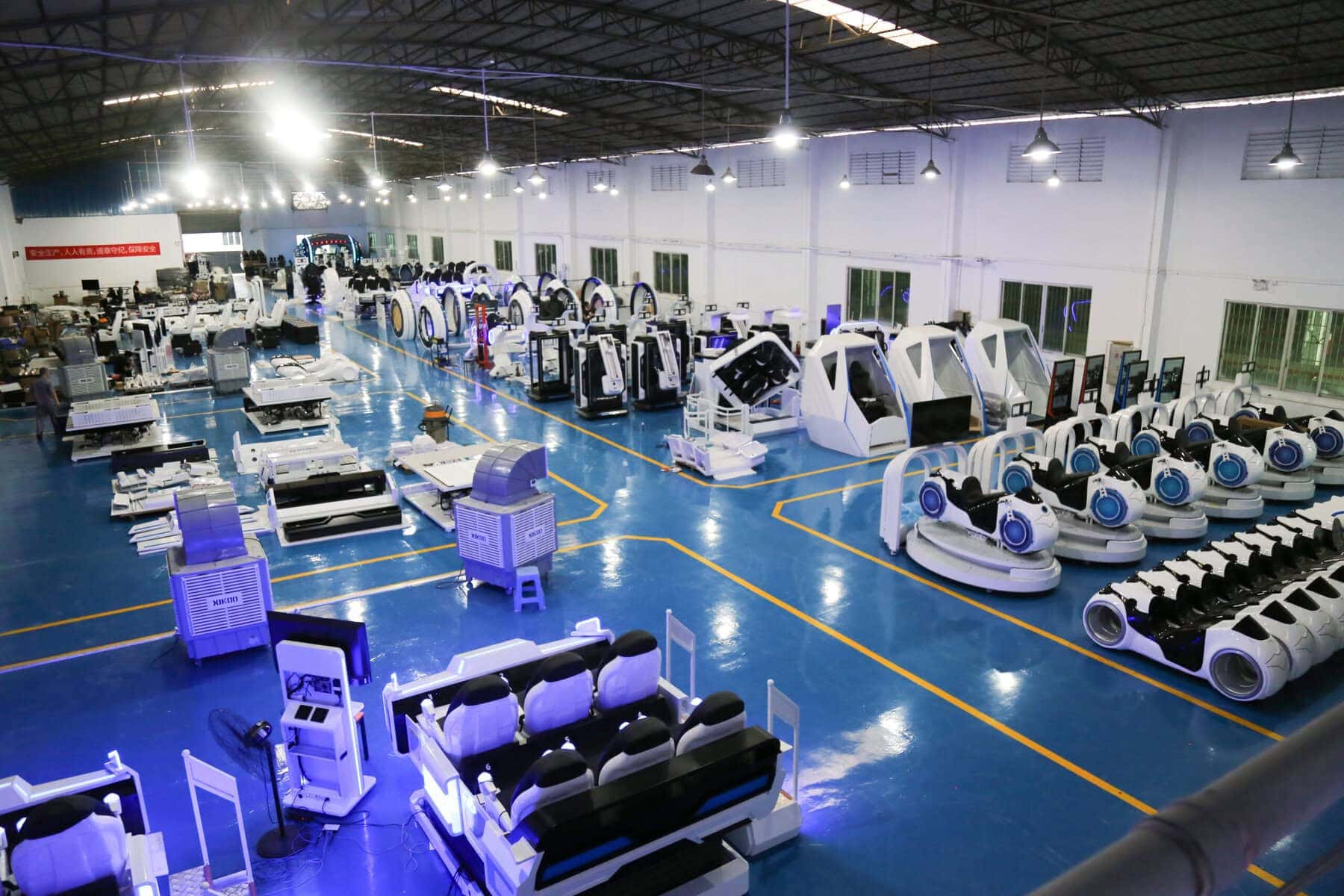
If you are evaluating vr manufacturing for a B2B venue, the single most important decision is not which device you choose — it is which vr manufacturing company you choose. The manufacturer determines your price transparency, your hardware quality ceiling, your content update pipeline, your spare-parts availability three years from now, and whether custom or OEM configurations are even possible. Yet most “best VR manufacturer” content on the internet either promotes consumer headsets or reads like a paid directory. This article is different: it gives B2B buyers an objective framework for evaluating vr for manufacturing decision-making — the ability to tell a genuine factory from a reseller, a real engineering team from a marketing team, and a long-term partner from a short-term transaction.
Below, we break the vr in manufacturing industry into its four real layers, define six standards you can use to evaluate any supplier, map the global landscape, and close with a benchmark case study of an integrated manufacturer. Everything here is written from the perspective of an operator who has to live with the purchasing decision — because in commercial VR, the wrong manufacturer costs far more than the invoice.
About This Analysis
This evaluation framework is based on 12 years of manufacturing and export experience, an ISO-certified in-house production facility, and deployment data from 700+ commercial venues across 40+ countries. It is written by the engineering and export team of LEKE VR, a commercial VR equipment manufacturer in Guangzhou, China. The framework is intentionally supplier-agnostic: the six standards below can be applied to any VR manufacturer anywhere in the world. This article is not a paid directory, and no supplier paid to be included. Ratings and criteria are based on observed manufacturing capability, verifiable certifications, and documented deployment records — not on marketing claims.
What “VR Manufacturing” Really Means in the B2B World
Before you can evaluate a vr manufacturing company, you need to know what actually exists in the market. The commercial VR supply chain is not one layer — it is four, and they are frequently confused with one another. Understanding the difference is the difference between buying from the source and buying from someone who bought from the source.
Own the production line. They do sheet-metal fabrication, fiberglass moulding, motion-actuator assembly, PCB integration, and final assembly under one roof. They can design, prototype, tool, and mass-produce a VR machine. They hold the manufacturing certifications. This is the category a serious B2B buyer wants — and the category that is hardest to verify, which is why the six standards below matter.
Don’t manufacture the core hardware. They combine commercially available components — a headset here, a motion platform there, off-the-shelf software — into a packaged experience. They add value in configuration, sourcing, and venue design, but they cannot control hardware quality, certification, or long-term spare-parts availability in the way a manufacturer can.
Create the experiences that run on the hardware. A factory without a content pipeline sells hardware that feels stale within 12 months — which is why repeat-visitation analysis shows content depth is the #1 driver of venue revenue. The best manufacturers either own a studio or have a structured, contracted update pipeline. How the hardware and content layers actually work together is worth understanding before you buy.
Buy from layer 1 and rebrand or re-export. They add a margin and, occasionally, a service layer. The risk is that you pay a premium for a product whose quality, certification, and parts pipeline you cannot trace to the source. There is nothing wrong with a good reseller — but you should know you are buying from one, and price accordingly.
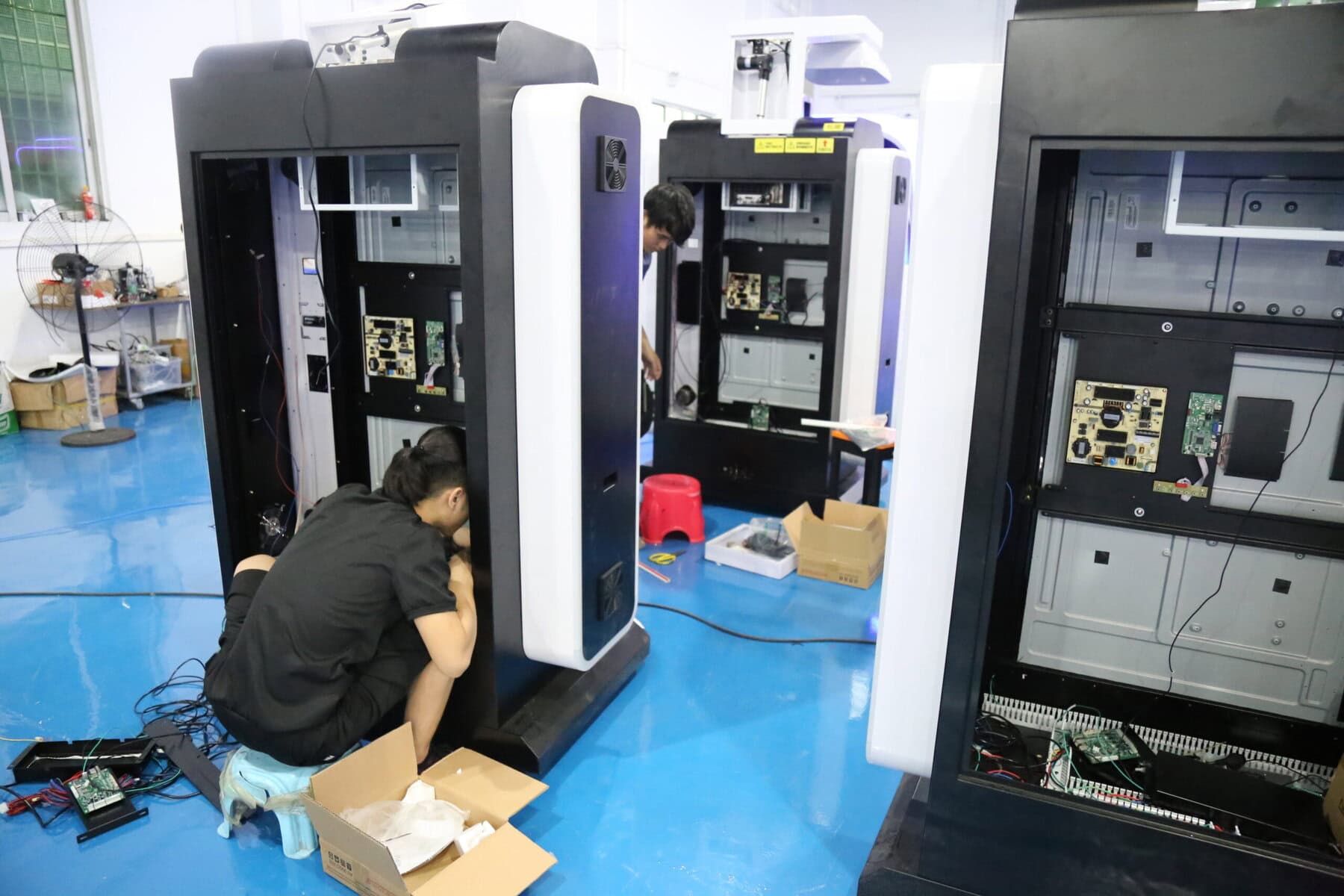
6 Standards for Evaluating a VR Manufacturing Company for B2B
Use these six standards as a checklist on every supplier you shortlist. They translate directly into the dimensions that decide whether your venue is profitable — hardware reliability, content freshness, and long-term support.
Ask for a live video walkthrough of the production floor, not a photo gallery. Ask for the factory address and verify it exists on a map. Ask how many units per month the line produces, and whether sheet-metal, fiberglass, PCB, and final assembly happen under one roof. A genuine manufacturer can show you all of this in five minutes. A trading company cannot.
Does the company employ hardware engineers, and does it own (or contract) a game studio with a structured content-update pipeline? Guests pay for the experience, not the motor wattage. A manufacturer with a 700+ title back-catalog and a release schedule is a different asset than a manufacturer selling a static demo machine. Content freshness drives repeat visitation, which drives revenue.
CE, TUV, RoHS, FCC, ISO 9001, and SGS are the documented prerequisites for customs clearance, commercial landlord approval, and public-liability insurance for international buyers. Request the actual certificate documents with issue dates and certificate numbers — not a “statement of compliance.” A real factory has the paperwork; a workshop often does not.
Ask for named reference venues you can actually contact, and video of equipment operating in a real venue — not a showroom. A manufacturer with deployments across 40+ countries can connect you with operators who will vouch for the hardware. If a supplier cannot produce a single verifiable overseas reference, treat their claims with skepticism.
Request a written spare-parts availability commitment covering at least three years, with specified lead times for critical components (headsets, motion-platform actuators, tracking sensors, main boards). Ask whether they offer remote diagnostics, on-site installation, and operator training. The cost of downtime in commercial VR far exceeds the cost of the part — reliability is a revenue factor, not a service footnote.
If you plan to build your own brand — custom shell design, custom software skin, private-label hardware — only a manufacturer with an in-house engineering team can do it properly. Ask for examples of OEM/ODM projects they have completed, and the minimum order quantity. This standard separates “buyers of stock” from “partners in product development.”
Documented Certifications — Sample of the Certificate Portfolio
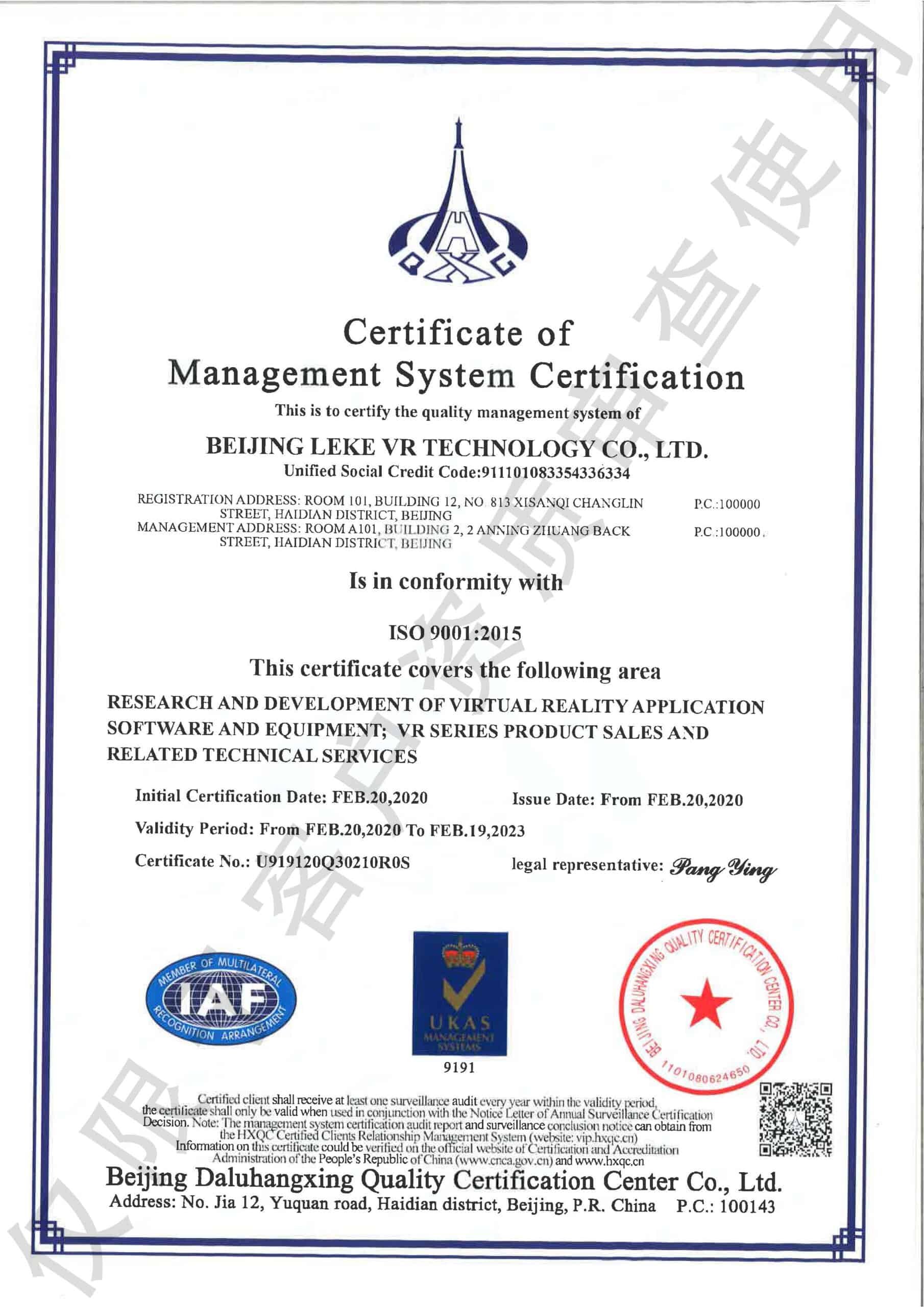
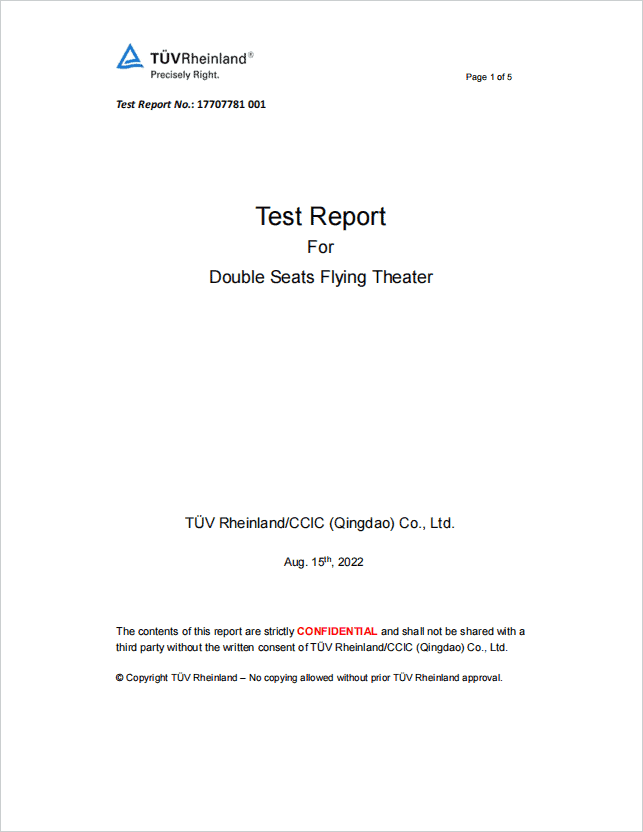
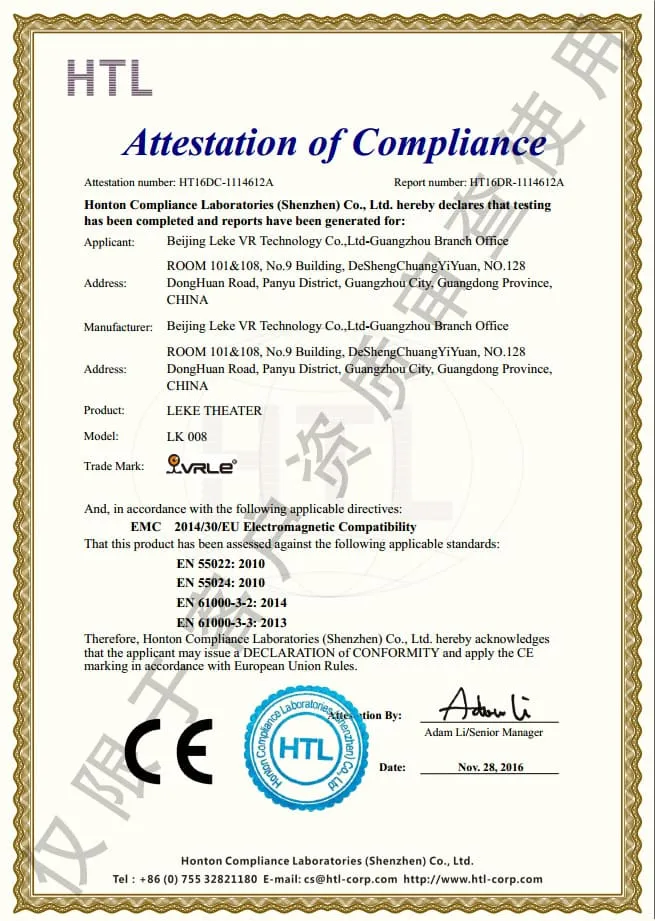
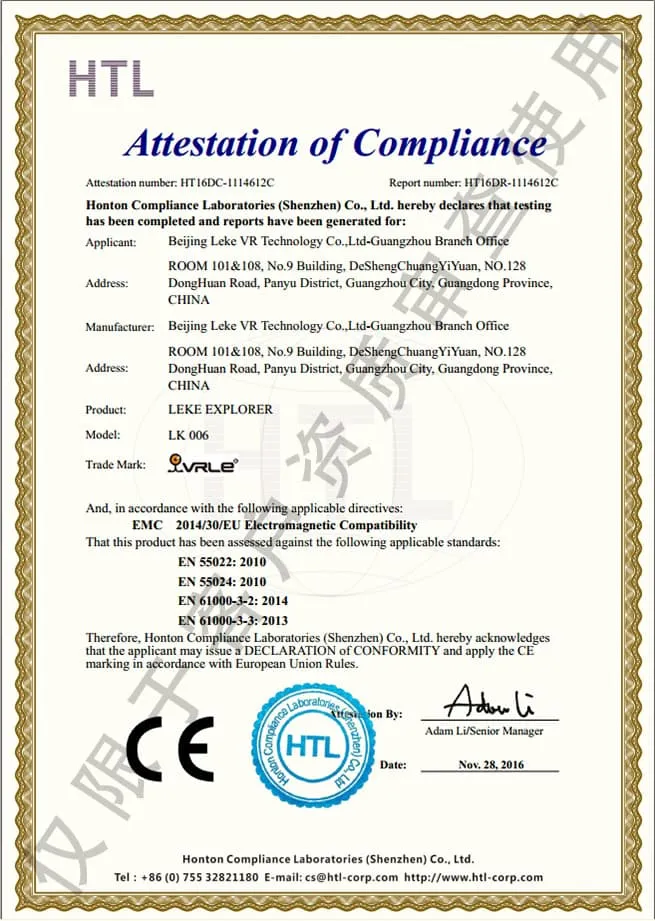
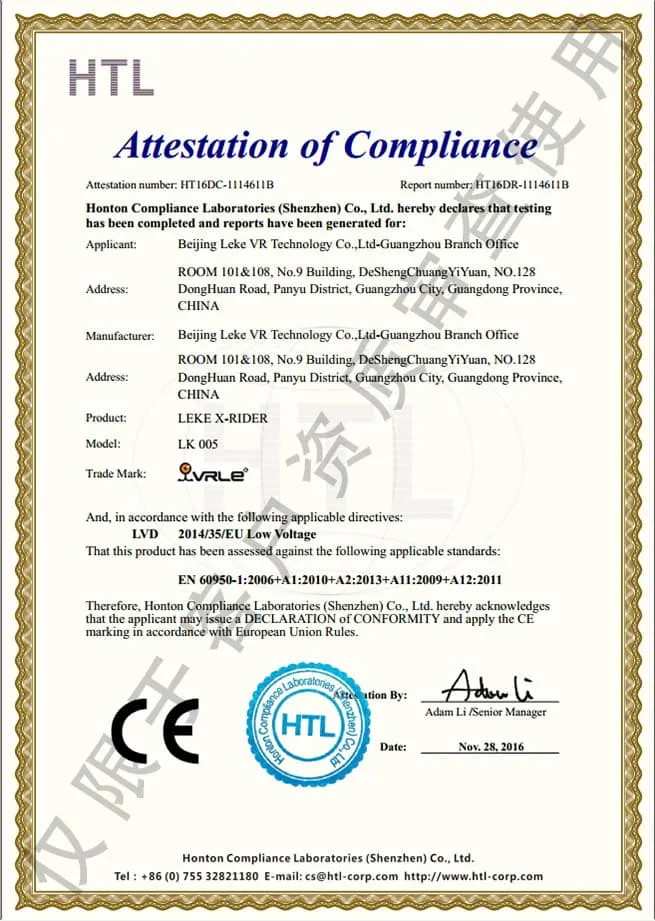
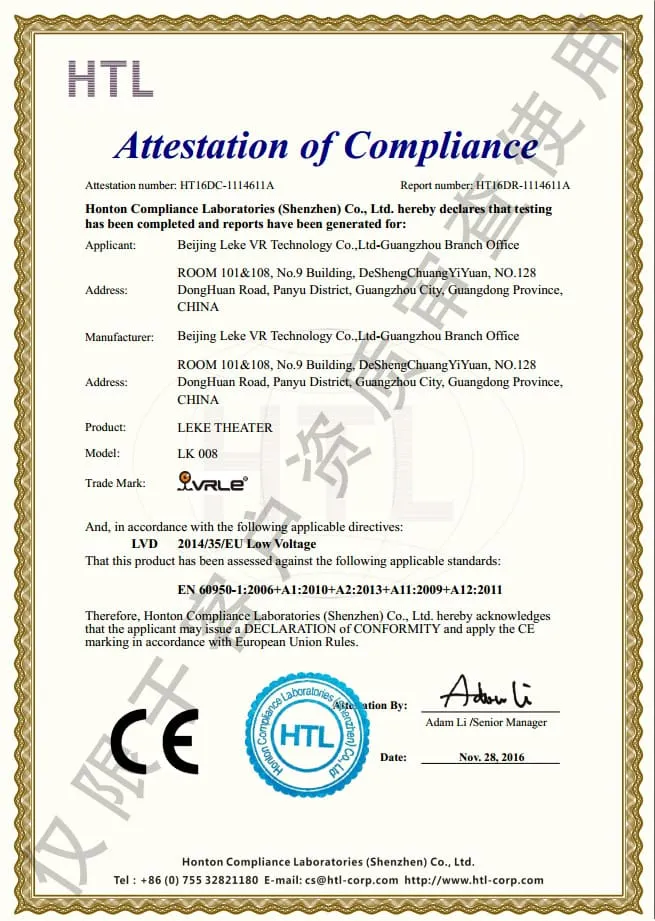
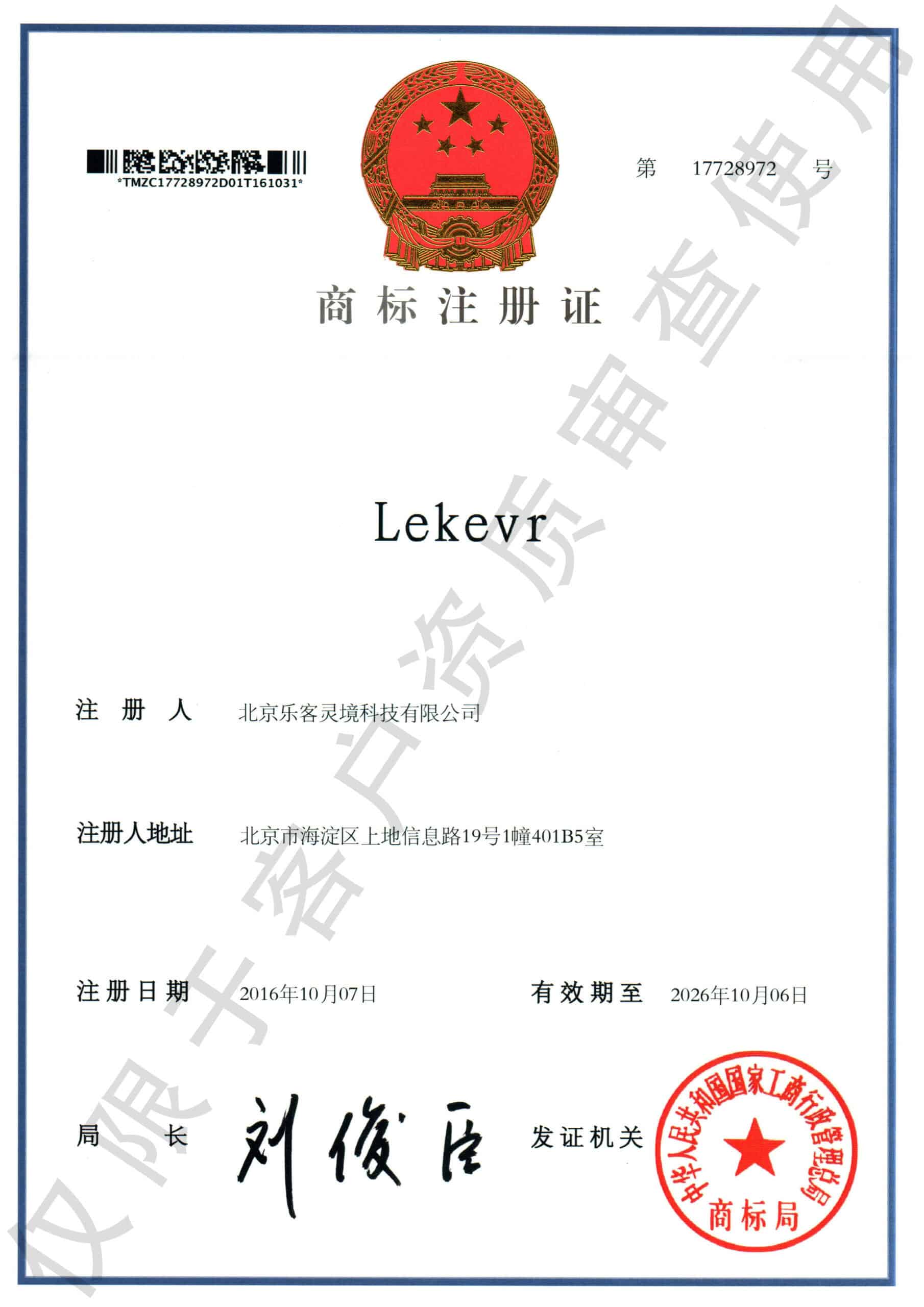
Sample of the certificate portfolio. Full dated certificate documents — including CE, TUV, RoHS, FCC, ISO 9001, and SGS — are available on request with issue dates and certificate numbers.
How the Global Commercial VR Manufacturing Industry Is Organized
The vr in manufacturing industry is not evenly distributed around the world. Three regions dominate, and each has a distinct profile a B2B buyer should understand before comparing quotes. Industry market sizing published by Statista confirms that commercial VR equipment remains a growth segment — but the framework below focuses on operational evidence rather than market forecasts.
Home to headset platforms, enterprise VR software, and high-end system integrators. Strength: cutting-edge technology, strong brand trust, localized support. Trade-off: higher hardware cost, and most commercial motion hardware is still produced overseas. For volume B2B deployments, buyers here often source hardware from Asia and localize support locally.
Guangzhou’s Panyu district and the surrounding Shenzhen corridor manufacture an estimated 60%+ of the world’s commercial VR entertainment hardware. The density of sheet-metal, fiberglass, motion-actuator, PCB, and game-development capability in one region makes structural cost advantages impossible to replicate elsewhere. The challenge for buyers is not finding suppliers — it is distinguishing real factories from the hundreds of small workshops.
Strong in content, arcade culture, and specialized attractions. Korea and Japan lead in VR arcade culture and game content. Southeast Asia and the Middle East are growing as deployment markets more than manufacturing hubs. For a buyer, these regions matter most as content and reference-venue sources, and for localized service partnerships.
Why China’s VR Manufacturing Hub Matters to B2B Buyers
For the B2B buyer, the concentration of commercial vr manufacturing in China’s Pearl River Delta is both an opportunity and a risk. The opportunity: factory-direct economics, a mature supply chain, and rapid prototyping that no other region can match. The risk: navigating hundreds of suppliers with wildly different capabilities — from ISO-certified export manufacturers with in-house studios to small workshops assembling machines from third-party components.
Learning to distinguish these tiers is the single most valuable skill a VR equipment buyer can acquire. Our companion guide Best VR Companies in Guangzhou — a B2B Buyer’s Guide walks through the tiered landscape, a head-to-head comparison framework, and a practical factory-visit checklist for that specific region. It complements the global standards framework in this article with on-the-ground specifics.
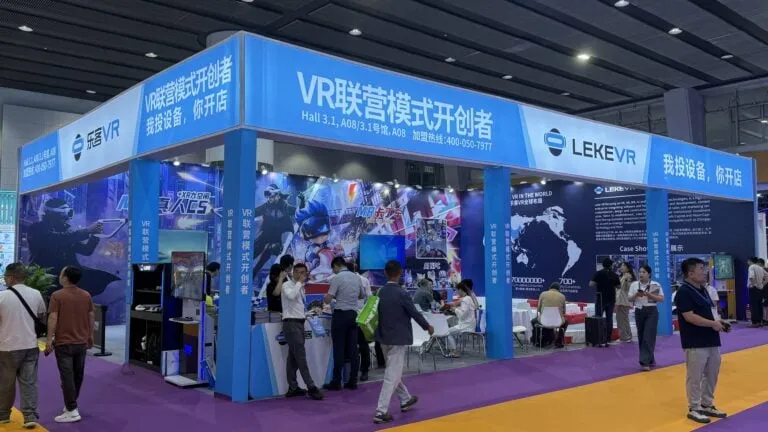
LEKE VR exhibiting commercial VR equipment at an international trade expo, 2026.
Benchmark Case: An Integrated VR Manufacturing Company
To make the six standards concrete, here is how they are met by LEKE VR — a Guangzhou-based VR manufacturer for B2B solutions writing this analysis. We use ourselves as a case study not because we are the only capable manufacturer, but because the framework is best understood through a complete, verifiable example you can benchmark any other supplier against.
12 years of OEM/ODM experience in an ISO-certified, full-scale facility — sheet metal, fiberglass, motion actuators, PCB integration, and final assembly under one roof. An in-house game studio maintains a 700+ title back-catalog with a structured release pipeline.
CE, TUV, RoHS, FCC, ISO 9001, and SGS — with dated certificate documents available on request. These cover the hardware prerequisites for international customs clearance and insurance.
700+ commercial venues across 40+ countries. Written three-year spare-parts commitments, remote diagnostics, on-site installation, and operator training as standard practice — not an upsell.
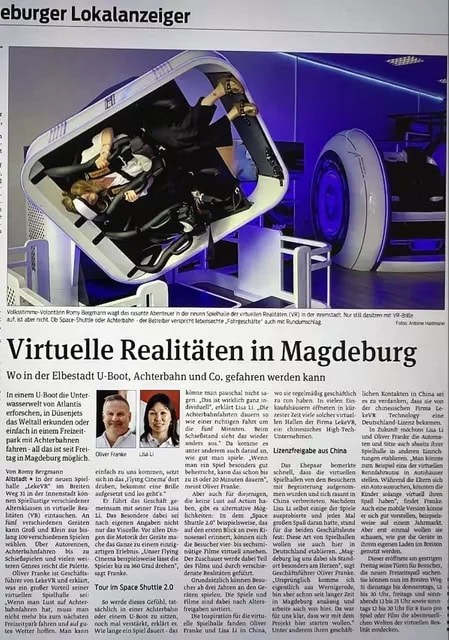
The product line spans the categories a full-manufacturer should own. The MR Go-Kart — trackless mixed-reality karting with six virtual themes and network multiplayer — is our flagship for full-body, repeatable experiences. The X-Space VR Arena covers free-roam multiplayer with 1-20+ players. The Space Shuttle 2.0 9D Cinema anchors passive premium cinema. If you are deciding which device types fit your venue first, our 5-category × 5-dimension device rating comparison and our cost-effectiveness evaluation model can help you build the shortlist.
5 Red Flags When Vetting a VR Manufacturer
The reverse side of the evaluation framework: five warning signs that should make you walk away or demand far more evidence before committing.
If a supplier cannot show you a dated CE/ISO certificate or a single operator you can call, the “manufacturer” claim is unverified. Everything downstream of that unverified claim is a risk.
If the address resolves to an office block or a small assembly room rather than a dedicated manufacturing campus with separate fabrication, molding, and assembly lines, you are likely dealing with an assembler or reseller — price accordingly and adjust your expectations.
Hardware without a content plan is a static box. If the supplier cannot explain what new experiences arrive in year two and how they are delivered, your repeat-visitation revenue is at risk.
If equipment, headsets, shipping, installation, and spare parts are bundled into one opaque number, you cannot compare suppliers on equal terms. Demand the same inclusions from every bidder before comparing.
“We always have parts” is not a guarantee. A three-year written spare-parts commitment with specified lead times is. If a supplier will not commit it to writing, treat support as non-existent and price the risk into your decision.
How to Buy From a VR Manufacturing Company — Step by Step
Once you have a shortlist of genuine manufacturers, a structured procurement path keeps the process fast and protects you. This is the sequence we recommend — and the sequence we follow when our own partners evaluate us.
Specify venue size, expected daily throughput, device types, headset model, and required certifications. Ask for a line-item quote and the answers to the six standards above. Identical questions make supplier responses comparable.
Video call the production floor. Ask to see sheet-metal, molding, PCB, assembly, and QC areas. Any genuine manufacturer can do this on short notice. If you are procuring at volume, plan a physical factory visit — it is worth the flight.
Check certificates, contact one or two named operators, and confirm the three-year spare-parts commitment in writing. If a manufacturer is confident, none of this is a problem.
Include the exact spec, certification list, spare-parts SLA, delivery schedule, and training scope. Agree on payment milestones tied to verifiable stages: deposit at order, balance on inspection before shipment.
Agree on on-site installation and operator training before the container ships. Confirm how new content is delivered in year two and what the update cadence is. The relationship that keeps your venue profitable starts the day after delivery, not the day of the sale.
Apply This Framework to Your Procurement
The six standards and five-step path above are designed to be applied — not just read. If you are evaluating vr manufacturing company options for a specific venue, our engineering and export team can walk you through the framework, share a live factory walkthrough, provide dated certificates, and connect you with existing operators. Every inquiry includes technical documentation, venue case studies, and a free custom CAD floor plan.
Chat on WhatsApp — Evaluate a Manufacturer
WhatsApp: +86-153 6087 7766 | Email: [email protected] | Response: 1 Business Day (GMT+8) | Footprint: 12-Year Factory · 40+ Countries · 700+ Venues
Frequently Asked Questions