

Search for a 4D VR cinema and you will find the same machine described as 4D by one supplier, 5D by another, and 9D by a third. The numbers sell, but they do not describe anything consistent. Two 9D cinemas from different factories can behave nothing alike.
What actually separates these systems is three things: how many axes the platform moves on, whether the audience wears a headset or watches a screen, and how the show is delivered. This comparison looks at 4D VR and 9D VR systems on those terms, and then at the arc-screen formats that remove the headset entirely, so you can tell which one belongs in your venue.
- 4D VR usually means a motion seat or small platform combined with a headset — strong immersion, limited seats per show.
- 9D VR at commercial grade means a multi-axis motion platform with synchronized effects; the “9D” label alone tells you nothing about axis count.
- Arc-screen formats remove the headset entirely, which changes hygiene, throughput, and staffing more than it changes the show itself.
1. What the Numbers Actually Mean
The 4D, 5D, 7D, and 9D labels came out of cinema marketing, not engineering. They were useful when the main difference between systems was how many effects fired during a show. As motion platforms improved, the labels stopped tracking anything real.
Here is the honest version of what each term usually refers to in commercial equipment:
| Label | Typically means | What to verify instead |
|---|---|---|
| 4D | Motion seats plus environmental effects (wind, vibration, spray) alongside a 3D screen | Seat count per show, effect types, screen format |
| 5D | Same family as 4D, sometimes with additional effects or a larger platform | Whether the name reflects hardware or just marketing |
| 7D | Motion seats with interactive shooting or game elements | Whether the interaction is built in or bolted on |
| 9D | Multi-axis motion platform, VR headset or arc screen, synchronized effects | Axis count, actuator type, headset or screen |
The number is not the specification. A supplier describing a 3-axis platform as “9D” is not necessarily misleading you — that is simply how the category talks. But it means you must ask for axis count, actuator type, and display format in writing before you compare anything.
2. Headset vs Arc Screen: The Decision That Matters Most
This splits the whole category in two, and it drives your operating model more than any other choice.
Headset-based cinemas
Headset-based systems cover both a single-seat 4D VR motion seat and a multi-seat 9D platform. In each case guests wear a headset and the motion platform moves in sync. The advantages are real: the experience is deeply immersive, the visual field is not limited by your room, and the display investment is comparatively low. The costs are also real, and they are operational rather than technical.
- Hygiene management. Every headset needs cleaning between guests. That is labor, and it is visible to the customer.
- Throughput. Fitting, adjusting, and sanitizing headsets adds time to every show cycle.
- Wear and tear. Headsets are the most frequently replaced component in the system.
- Comfort range. Some guests dislike enclosed headsets, and younger children may not fit them well.
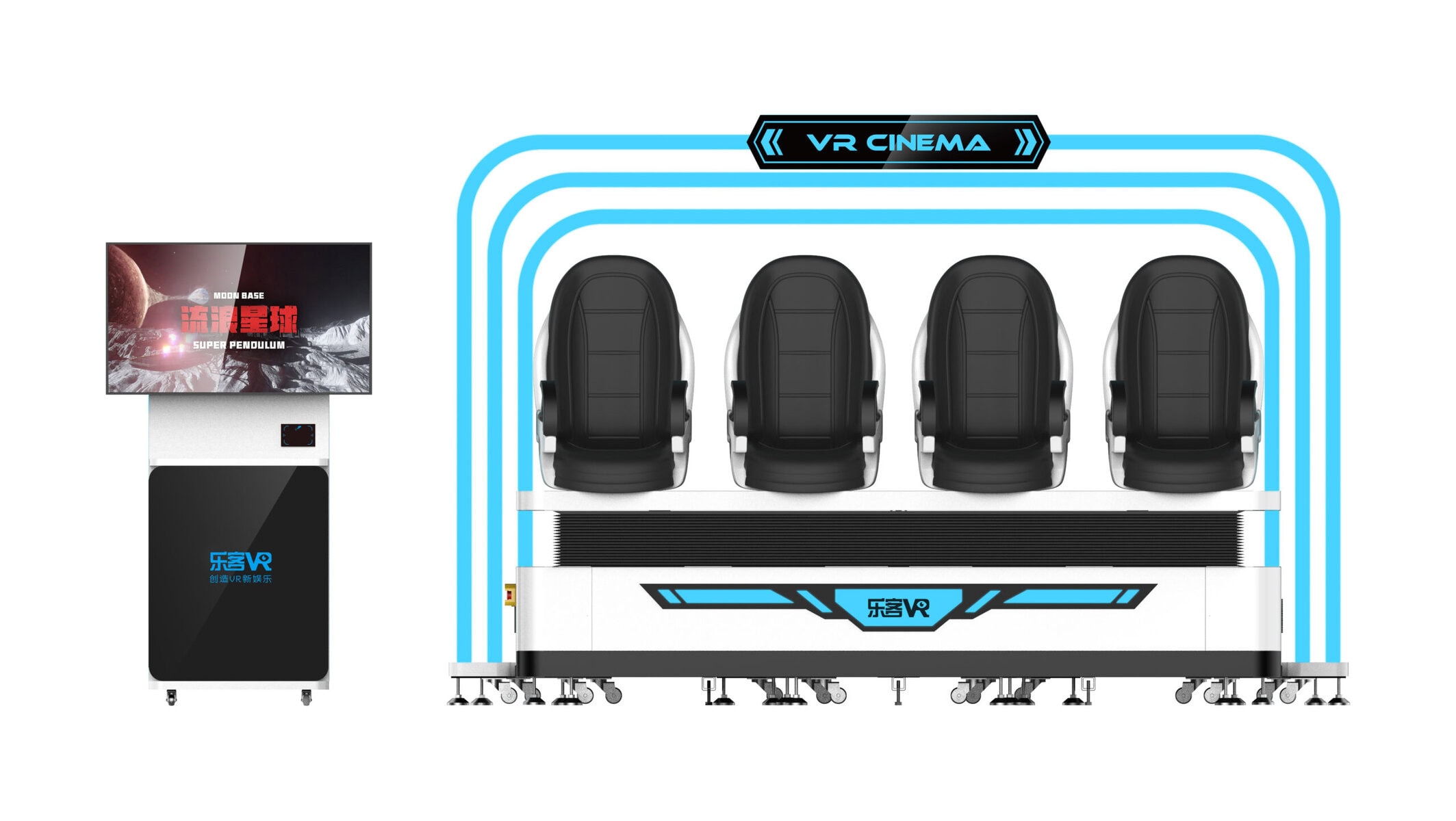
Lower display investment, but every guest needs a headset fitted and sanitized between shows.
Arc-screen cinemas, including naked-eye 3D
An arc-screen format replaces the headset with a curved screen and a projection or display assembly. In this category, Bermuda Cinema — Naked-Eye 3D Arc Theatre is the naked-eye variant: guests watch the 3D effect without wearing anything, and the curved screen carries the immersion.
The trade is the opposite of a headset system. The display investment is higher, and the room has to be planned around the screen and its viewing geometry. What you get back is a simpler show cycle — no headset fitting, no per-guest sanitizing, no replacement budget for worn headsets — which matters most in venues running continuous sessions with high foot traffic.
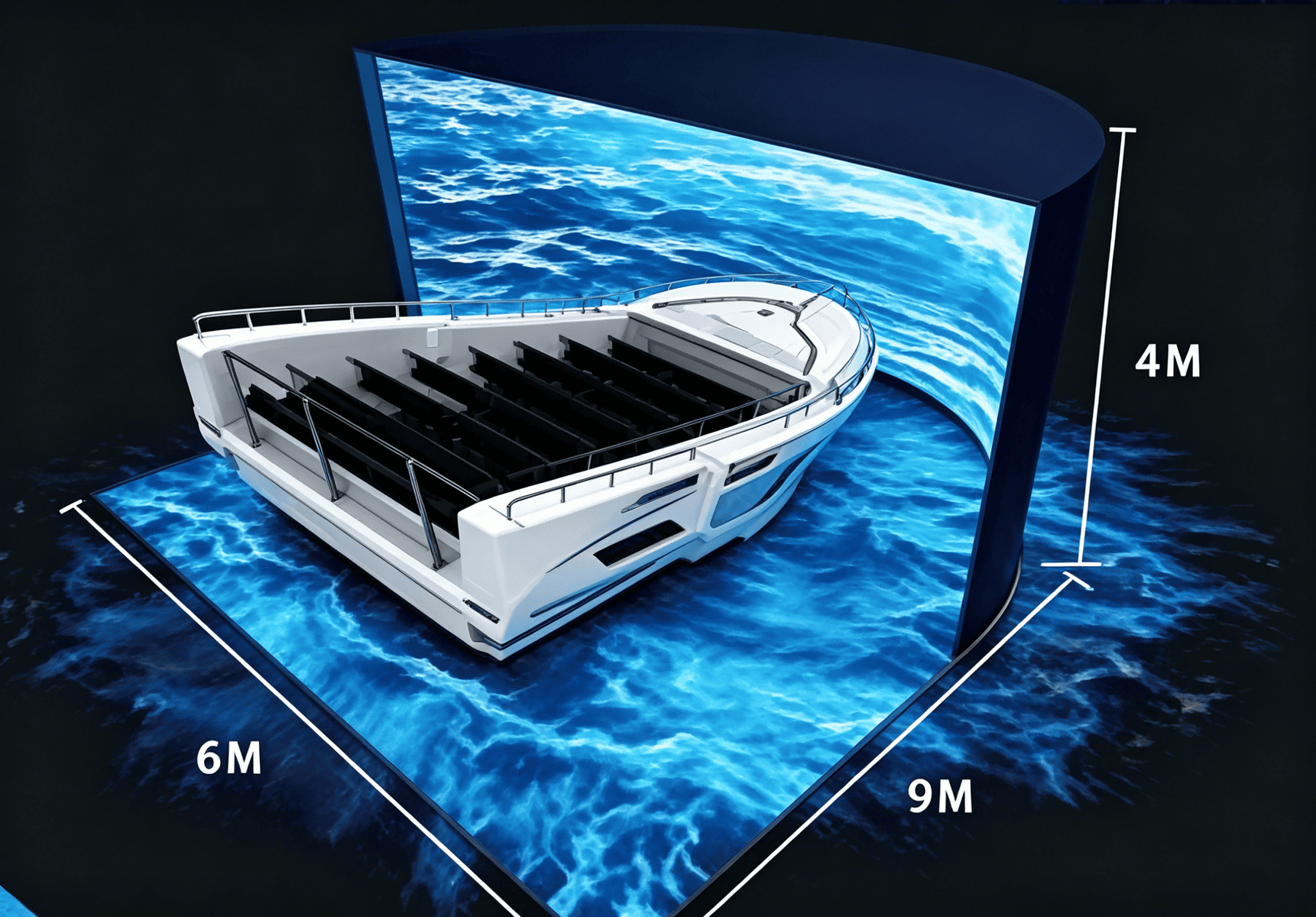
A curved theatre deployed commercially. No wearables, so the show cycle is shorter and the labor per show drops.
Choose the headset format for immersion per dollar. Choose the arc-screen format for guests per hour, per staff member.
3. Motion Axes and Actuator Type
Axis count is the number most worth understanding, because it changes the ride quality your guests feel and the maintenance profile your technician lives with.
- Pitch, roll, and sometimes heave
- Fine for family content and sensitive riders
- Limited sense of acceleration
- Lower actuator and maintenance load
- Adds translation and rotation on more planes
- Acceleration, banking, and direction changes feel physical
- Higher actuator count and control complexity
- The spec that actually justifies a premium price
Actuator type matters just as much:
Neither is better in the abstract. A hydraulic platform in a mall unit with no service access is a mistake. An electric platform asked to move a nine-seat cabin aggressively will feel underpowered. Match the actuator to the load, the location, and the content you intend to run.
4. Side-by-Side Comparison
The three formats your guests will actually experience, compared on the factors that decide the purchase.
| Factor | 4D VR cinema | 9D VR multi-axis | Naked-eye 3D arc theatre |
|---|---|---|---|
| Guests per show | Low — often 1 to 2 | Moderate — 2 to 9 by unit | Higher — screen serves the whole seating area |
| Immersion depth | High, headset-driven | High, headset plus strong motion | Strong but screen-bounded |
| Between-show labor | Headset cleaning per guest | Headset cleaning per guest | Seat and rail wipe-down only |
| Headset replacement | Ongoing, per unit | Ongoing, per unit | None |
| Display investment | Lower | Lower | Higher |
| Room requirements | Modest footprint | Modest footprint, heavier load | Needs planned viewing geometry and ceiling |
| Age range comfort | Limited by headset fit | Limited by headset fit | Broad — nothing to wear |
| Best fit | Small footprint, low headcount, premium per-head pricing | Family groups, higher seat counts, mixed-age parties | High-traffic venues running continuous shows |
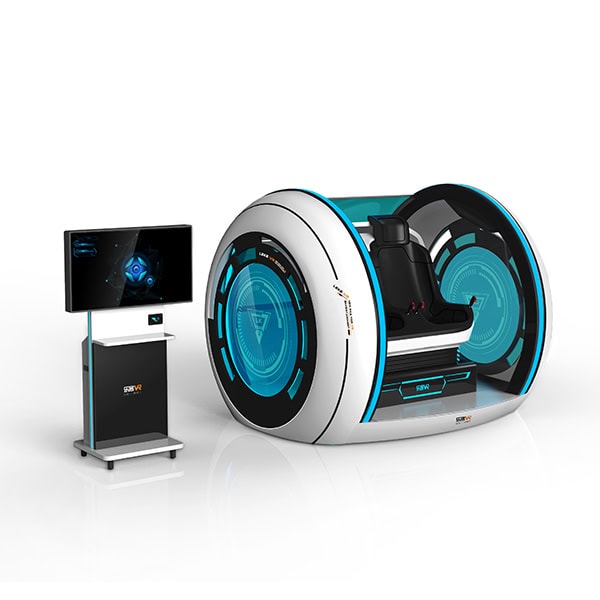
Multi-seat format for family groups and mixed-age parties.
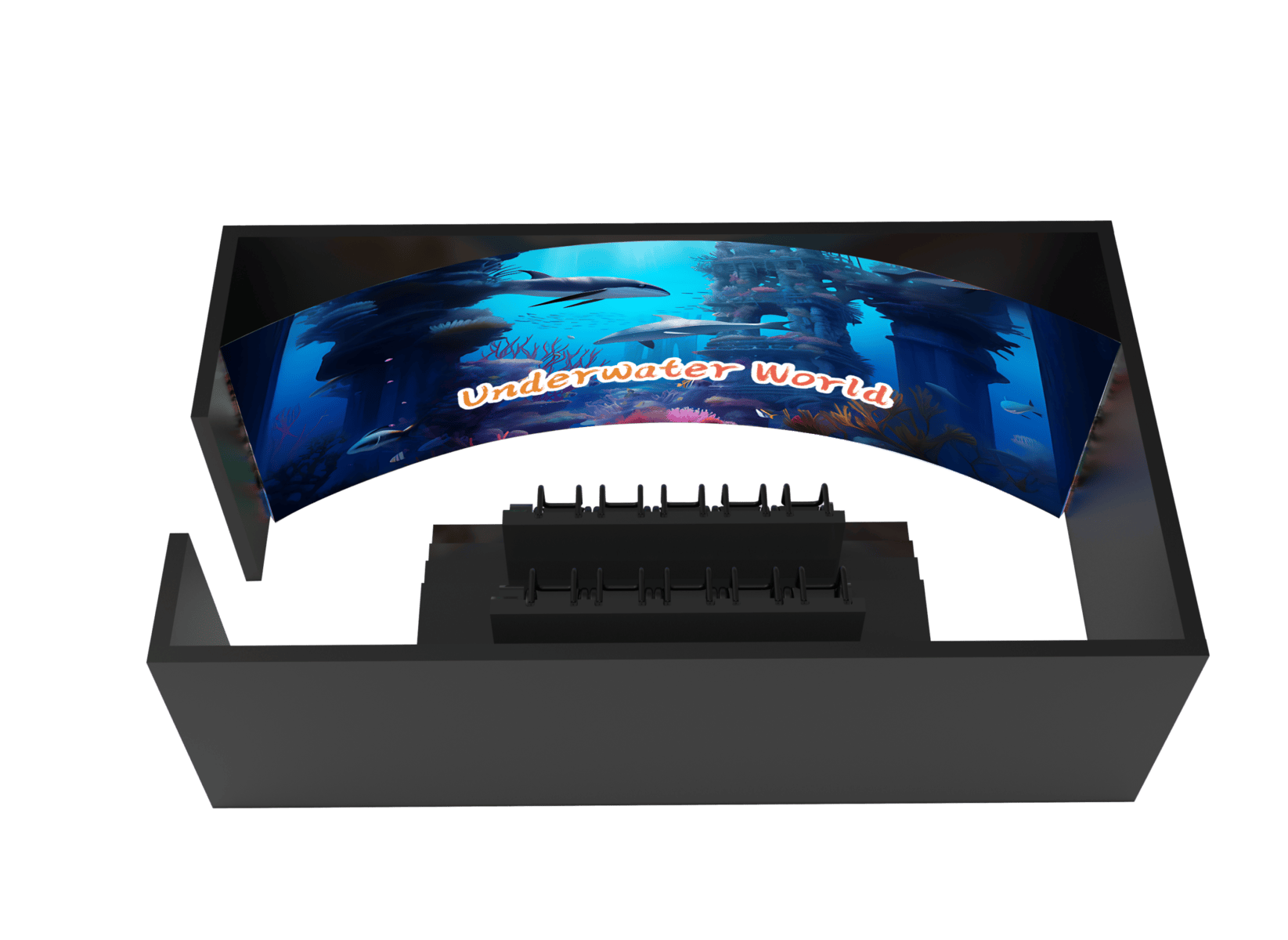
Screen-based format where the room, not a headset, carries the immersion.
5. Which Format Fits Your Venue
Work backwards from how your venue actually fills, not from which machine looks most impressive.
6. How LEKE VR Covers the Three Formats
LEKE VR builds all three format families rather than steering every buyer toward one. The cinema line covers 2-seat, 4-seat, 6-seat, and 9-seat 9D configurations, VR Chair 360°, Space Shuttle 2.0, and Bermuda Cinema — Naked-Eye 3D Arc Theatre.
Representative models include the 2-seat 9D VR egg chair, the 4-seat 9D cinema with headset motion seating, the 6-seat cinema for larger groups, and the arc display flying cinema for screen-based rooms.
Because the formats differ this much in operating logic, the useful first conversation is about your venue — floor area, ceiling height, power, expected group sizes, and who will run the machine — rather than about a model number. Content updates are delivered to your machines remotely through a dedicated operator back office; the update path depends on your configuration, so we describe the mechanism rather than promising a fixed schedule.
The full range with specifications is on our VR cinema line page, and if you want a view of what a configured system costs, see our breakdown of 9D VR cinema pricing.
FAQ: 4D VR, 9D VR, and Naked-Eye 3D
Tell us your floor area, ceiling height, and the group sizes you expect — we will tell you which of the three formats fits, and which one does not.