

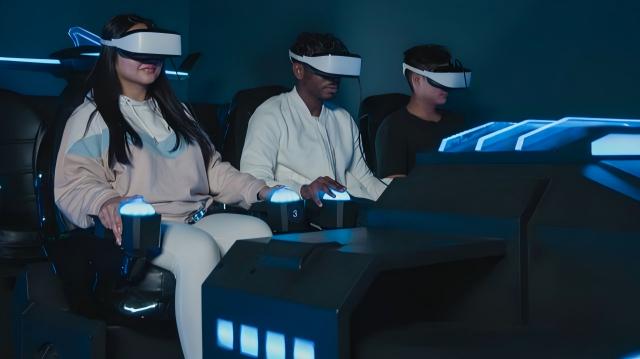
Which industries use 9D VR simulators? The short answer: more than you think. A 9d vr simulator is not confined to one type of venue. The same cinema simulator 9d vr pod that entertains families in a shopping mall on Saturday afternoon can deliver an astronomy lesson in a science museum on Monday morning, serve as a branded crowd-puller at a trade show on Wednesday, and operate as a scenic “indoor flying theater” at a resort hotel every night of the week. The question is not whether a commercial vr simulator 9d fits your industry — it is which use category unlocks the revenue model your venue needs.
Below, we break down a 9d vr cinema simulator across five distinct use categories — Entertainment, Education, Tourism, Retail & Brand Activation, and Temporary Events — each mapped to the specific industries, experience types, content selections, and revenue models where the 9d vr chair simulator and its multi-seat counterpart deliver measurable commercial results.
What Can a 9D VR Simulator Actually Do?
At its core, a 9d vr simulator is a motion-synchronized immersive cinema pod. Guests sit inside an enclosed cockpit, put on a VR headset, and experience a 5-8 minute film — a roller coaster, a deep-sea dive, a spacewalk, a dinosaur chase — while the motion platform delivers synchronized pitch, bank, heave, and vibration. Surround audio and environmental effects (wind, scent, leg ticklers on select models) complete the sensory envelope. The result: the brain perceives real motion, real danger, real wonder — inside a machine that occupies roughly five square meters of floor space.
This compact, self-contained architecture is what makes the 9d vr cinema simulator uniquely portable across industries. Unlike a free-roam VR arena that demands hundreds of square meters and dedicated staff, a 9D cinema pod can be installed in a corridor, a lobby, a museum gallery, a trade-show booth, or a cruise-ship deck. The content library — 80+ titles spanning roller coasters, space exploration, oceanic adventure, prehistoric worlds, horror escapes, sci-fi battles, and educational documentaries — determines which use category the machine serves.
Entertainment & Leisure
High-throughput volume engine for paid admission venues
Education & Popular Science
Immersive knowledge delivery for museums & schools
Tourism & Sightseeing
All-weather indoor flying theater for destinations
Retail & Brand Activation
Foot-traffic magnet for commercial spaces & brands
Events & Pop-Ups
Rapid-deploy crowd-builder for temporary activations
The Content Engine — 80+ Titles Spanning Every Use Category
A commercial vr simulator 9d is only as versatile as its content library. LEKE VR’s 9D cinema systems — the dual-seat Space Shuttle 2.0 and the compact 360-degree VR Chair — ship with 80+ pre-loaded cinematic titles organized across six content families: Roller Coasters & Thrill Rides (entertainment core), Space & Sci-Fi (education + entertainment crossover), Ocean & Nature (education + tourism), Horror & Adventure (entertainment peak), Historical & Cultural (tourism + education), and Custom Branded Content (retail activation). All titles are accessible via LEKE VR’s proprietary cloud OS with quarterly OTA updates — meaning the content library at your venue in year three will not be the same library you started with in year one.
Use Category 1: Entertainment & Leisure — The High-Throughput Volume Engine
What the 9D VR Simulator Does Here
In entertainment venues, the 9d vr simulator functions as a paid-admission volume engine. A 5-minute session — a roller coaster, a haunted-house chase, a fantasy flight — delivers a complete thrill arc at a per-ticket price accessible to impulse buyers. The enclosed cockpit supports 2 players simultaneously (Space Shuttle 2.0) or a rotating 2-player flow (360-degree VR Chair), yielding 8-12 complete sessions per hour at steady-state operation. Zero player skill required. Zero learning curve. A family of four walks in, sits down, and completes their experience inside the runtime of a single song.
Industries Where Entertainment 9D VR Delivers
Place 1-2 9d vr cinema simulator pods near the food court or cinema entrance. Captures family foot traffic during peak hours (weekends, holidays, school breaks). Per-session pricing at ¥30-50 yields high daily session volume. The motion platform’s physical movement — visible from 20 meters away — acts as a built-in spectator billboard, converting passersby into queued players at zero incremental marketing cost.
In a multi-attraction FEC, the 9d vr chair simulator and Space Shuttle 2.0 serve as the Volume Driver tier in a layered revenue architecture. While racing simulators and VR shooters capture the competitive/adventure demographic, 9D cinema captures everyone else — families with young children, couples, casual visitors who have never tried VR, and elderly guests. It sustains weekday baseline revenue when premium attractions see lower utilization.
The perfect pre-show window: a 5-minute session matches the 15-20 minute gap between ticket purchase and showtime. Same demographic as moviegoers. The compact 360-degree VR Chair fits narrow lobby alcoves where traditional arcade machines cannot. Captive audience, zero external marketing required.
In an arcade or dedicated VR store, the cinema simulator 9d vr pod is the gateway attraction for non-gamers. It draws customers who would never approach a competitive shooter or a complex racing rig, widening the venue’s total addressable audience beyond the core gaming demographic. Centralized pod clusters with LED ambient lighting create an iconic visual anchor for the space. (See real-venue video below.)
Use Category 2: Education & Popular Science — Immersive Knowledge Delivery
What the 9D VR Simulator Does Here
When loaded with educational content — a journey through the solar system, a descent into the Mariana Trench, a walk among sauropods in the Jurassic — a 9d vr cinema simulator transforms from a thrill ride into an immersive teaching instrument. The motion platform adds kinesthetic learning to visual and auditory input: students feel the rocket launch, the submarine descent, the earthquake tremor. Research consistently shows that multi-sensory learning produces retention rates 3-4× higher than passive video or text. For a science museum or school, a 9D VR pod is not an arcade machine — it is a curriculum-aligned experiential education tool.
Industries Where Educational 9D VR Delivers
Replace static exhibits with first-person immersion. A 9D VR pod running space-exploration content delivers more emotional impact — and longer dwell time — than a wall-mounted information panel. Museums worldwide are integrating immersive pods as premium add-on experiences within standard admission or as separately ticketed attractions. The commercial vr simulator 9d form factor fits standard gallery spaces without requiring structural renovation.
K-12 schools and extracurricular education centers deploy 9D VR pods as STEM engagement tools. Content categories — astronomy, marine biology, paleontology, physics simulations — align with national science curriculum standards. Group rotation models (30 students cycling through 2 pods in a class period) make per-student cost manageable. Study-tour bases (研学基地) in China increasingly list VR immersive education as a required facility category for government accreditation.
The edutainment sector — venues that blend education with entertainment for families with children aged 4-14 — is a natural home for the 9d vr chair simulator. Content is selected from the adventure and nature families (dinosaurs, oceans, space) rather than horror or high-thrill categories. The enclosed cockpit design provides a controlled, safe environment that parents trust for younger children.
Public libraries and community centers use 9D VR pods as low-cost public science outreach facilities. The modest footprint (5.59 sqm for Space Shuttle 2.0, ~4-6 sqm for the VR Chair) and plug-and-play power requirements make installation feasible in repurposed reading rooms and multipurpose halls. Grant funding and municipal cultural budgets increasingly cover immersive education equipment procurement.
Use Category 3: Tourism & Sightseeing — The All-Weather Indoor Flying Theater
What the 9D VR Simulator Does Here
A 9d vr cinema simulator configured with tourism content functions as an indoor flying theater — no helicopters, no weather dependency, no safety restrictions. The guest experiences a panoramic aerial tour of a city skyline, a fly-through of a UNESCO heritage site, or a seasonal landscape transformation (cherry blossoms, autumn foliage, snow festival) — all from inside a 5.59-square-meter cockpit. For tourist destinations, this solves three persistent problems: weather-dependent visitation, physical accessibility limitations for elderly or disabled guests, and the impossibility of showcasing seasonal scenery year-round.
Industries Where Tourism 9D VR Delivers
A 9d vr simulator serves as a premium indoor attraction within larger outdoor parks — a weather-independent fallback that sustains revenue on rainy days when outdoor rides close. It also functions as a queue-area attraction, absorbing waiting guests from adjacent high-demand rides. Fiberglass-reinforced construction (dual-layer high-gloss shell on the Space Shuttle 2.0) is engineered for the continuous-duty cycles that theme-park operations demand.
Place a cinema simulator 9d vr at the visitor center or scenic-area entrance. Content can be customized to the specific destination — a virtual flyover of the mountain range, a descent into the canyon, a historical recreation of the site 500 years ago. This creates an upsell opportunity (premium VR experience ticket) and extends the visitor journey for sites where the physical walking tour lasts only 30-60 minutes.
For resort properties and cruise lines, the 9d vr chair simulator provides all-weather, all-ages entertainment that operates 24/7 without an instructor. Multi-language content switching (English, Chinese, Arabic, Spanish — selectable per session) is critical for international guest demographics. Placement in hotel lobbies, kids’ clubs, or deck lounges converts idle guest time into ancillary revenue. On cruise ships, where space is at an extreme premium, the 2.46-5.59 sqm footprint is uniquely viable among immersive attractions.
Use Category 4: Retail & Brand Activation — The Foot-Traffic Magnet
What the 9D VR Simulator Does Here
A 9d vr chair simulator has a property that no static display possesses: its physical motion — the banking, the pitching, the vibration — is visible from across the room. This turns it into a self-powered crowd magnet. For a brand activation, a mall atrium pop-up, or a real-estate sales gallery, the machine does not just deliver an experience to the seated user; it broadcasts “something exciting is happening here” to everyone within a 20-meter sight line. The conversion rate from passerby to participant is orders of magnitude higher than a static product display.
Industries Where Brand-Activation 9D VR Delivers
A temporary 9D VR activation in a mall atrium generates foot traffic that benefits adjacent retail tenants. Mall operators may subsidize or co-invest in the equipment as a customer-acquisition tool for the property. The enclosed pod design contains sound and motion within the cockpit, addressing the noise concerns that often limit atrium activations.
Automotive brands, consumer electronics companies, and sportswear labels use 9D VR pods in flagship stores for product immersion — a virtual test drive, a first-person view of manufacturing, an athlete’s-perspective experience. The commercial vr simulator 9d supports custom-branded content development through LEKE VR’s in-house game studio, allowing brands to commission experiences that align with campaign creative.
Real estate developers deploy 9D VR to give prospective buyers a virtual tour of unbuilt properties — walking through a condo unit 18 months before construction completes, flying over a master-planned community, experiencing neighborhood amenities in simulation. A motion-synchronized pod adds physical presence that a stationary VR headset cannot convey. In China’s competitive pre-sale market, developers using immersive VR report 25-40% higher buyer engagement time in sales galleries.
Virtual test drives in a 9D VR pod allow customers to experience a vehicle’s acceleration, handling, and interior features without leaving the showroom — and without putting kilometers on a demo car. Premium and EV brands in particular use this format to differentiate the in-store experience and communicate technological sophistication.
Use Category 5: Events, Exhibitions & Temporary Pop-Ups — The Rapid-Deploy Crowd Builder
What the 9D VR Simulator Does Here
Trade shows, music festivals, corporate events, and seasonal markets share one brutal reality: hundreds of exhibitors and attractions compete for the same walking audience. A 9d vr cinema simulator solves this with physical visibility + queue creation. The motion pod’s external movement is a non-verbal broadcast: “this is worth stopping for.” Once a queue forms — even 4-5 people — social proof takes over. Passersby join because others are already waiting. This is the same behavioral dynamic that makes a busy restaurant look more appealing than an empty one. For event exhibitors, the 9D pod is a lead-generation machine disguised as an attraction.
Industries Where Event 9D VR Delivers
A 9D VR pod on a trade-show booth generates 3-5× more booth traffic than a standard display, according to exhibitor feedback across the VR/AR and entertainment-technology expo circuit. The pod’s physical motion is visible across aisles; the queue creates social proof; and the post-experience conversation (“That was amazing — so what does your company actually do?”) provides a natural lead-qualification opening. Plug-and-play setup (standard 220V power, no plumbing, no rigging) means installation is complete within hours of freight arrival.
At outdoor festivals and carnivals, a 9d vr chair simulator operates as a paid-attraction zone within the larger event footprint. Per-session pricing (¥30-60) generates direct revenue per festival day. The enclosed cockpit design isolates the VR experience from ambient festival noise and weather. Operators can run the pod continuously across 10-14 hour festival days — the commercial-duty-cycle engineering supports this without thermal throttling or motion-platform degradation.
Corporate annual meetings, product launches, and team-building retreats use 9D VR as a premium experience station. The compact footprint allows placement in ballroom foyers, breakout rooms, or outdoor pavilion areas. Branded content — a company-history flythrough, a product-manufacturing journey — can be commissioned through LEKE VR’s in-house studio for high-impact internal and client-facing events.
Christmas markets, Chinese New Year temple fairs, Halloween pop-ups, and summer night markets: seasonal events operate on compressed timelines where rapid setup and teardown are non-negotiable. The cinema simulator 9d vr form factor — self-contained, wheelable, single-power-connection — is purpose-built for temporary deployments. Seasonal operators lease or purchase units for recurring annual use across multiple holiday calendar slots.
At-a-Glance: 5 Use Categories Compared
How to Match 9D VR Content to Your Industry
Different industries need different content from the same hardware. A 9d vr cinema simulator running a horror chase is a thrill attraction. The same machine running a solar-system journey is a STEM teaching tool. The same machine running a city flyover is a tourism experience. Content selection — not hardware — determines use category. Below is a content-selection matrix mapping LEKE VR’s 80+ title library to the five use categories.
Content updates are delivered quarterly via LEKE VR’s proprietary cloud OS platform — no on-site technician visit required. The library your venue opens with is not the library it will have in year three. This ongoing content refresh is what allows a single 9d vr simulator to remain commercially relevant across years of operation, adapting to seasonal themes, new title releases, and evolving audience preferences.
Real-World Proof — 9D VR Cinema in Action
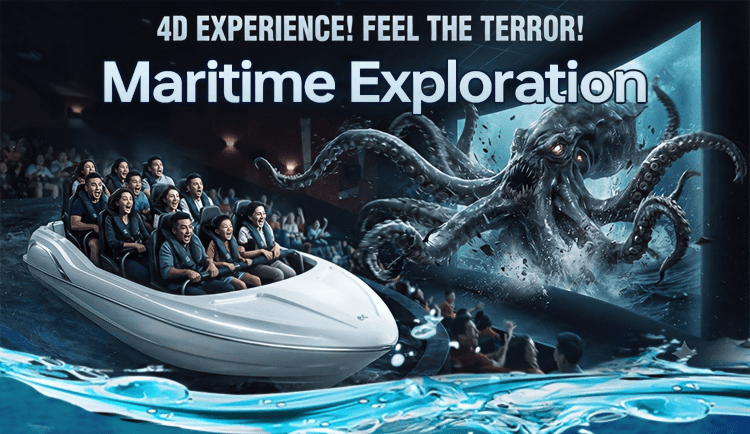
The five use categories above are not hypothetical. They are operating daily in LEKE VR partner venues across 40+ countries. Below: real footage of the Space Shuttle 2.0 9d vr cinema simulator in a commercial venue, showing actual customer experience flow — from onboarding to motion-synchronized immersion to post-session reaction.
Deeper Dive — Full Venue Case Study
For a complete walkthrough of a LEKE VR entertainment venue — including equipment layout, customer demographics, and operational data — visit the VR Entertainment Business Case Study on the LEKE VR solutions portal.
What to Look For in a 9D VR Simulator Supplier — 4-Point Checklist
Once you have identified which use category fits your industry, supplier selection is the next decision. Here are four criteria that separate a long-term operational partner from a one-time equipment seller:
A 9d vr simulator is only as versatile as its content. LEKE VR operates an in-house game development studio with 80+ titles and quarterly OTA updates across all product lines. Most Guangzhou manufacturers source content from third parties — meaning the title library you receive at purchase is the library you will have in three years. Ask every supplier: “Can I meet your game developers?” The answer tells you everything.
A commercial vr simulator 9d destined for a public venue must meet international safety and electromagnetic compliance standards. LEKE VR equipment carries CE, TUV, RoHS, FCC, ISO 9001, and SGS certifications — each available as a dated PDF document, included in every export shipment. For international buyers, these are not marketing badges; they are the documented prerequisites for customs clearance, landlord approval, and public-liability insurance.
LEKE VR assigns a dedicated after-sales engineer to each partner venue. Remote diagnostics via video call and system log analysis resolve most issues same-day. Hardware spare parts ship from the Shenzhen/Nansha hub within 48 hours of confirmed diagnosis, with DHL/FedEx delivery typically reaching global destinations within 3-7 business days.
LEKE VR is the only Guangzhou manufacturer that produces the full VR entertainment ecosystem — 9d vr cinema simulator (Space Shuttle 2.0, 360-degree VR Chair), X-Space VR Arena, MR Go-Kart, 3DOF Racing Simulator, and VR Stand Station — from a single factory campus. Every deployment includes a free custom CAD 2D floor plan and C4D 3D visualization. Zero franchise fees. 100% operator revenue retention. One partner for your entire venue.
Which Use Category Fits Your Industry? Let’s Map It.
Whether your venue is a shopping-mall FEC, a science museum, a scenic-spot visitor center, a hotel lobby, or a trade-show booth — the 9d vr simulator has a use category that fits. The next step is a direct conversation about your specific industry, venue dimensions, target demographic, and content requirements. Every inquiry includes a free custom CAD 2D floor plan, recommended content selection, and factory-direct equipment proposal.
Chat on WhatsApp — Get Your Free CAD Design & Content Plan
WhatsApp: +86-153 6087 7766 | Email: [email protected] | Response: 1 Business Day (GMT+8)