

Mixed reality · Model 4581
3DOF racing simulator — triple screen, no headset
A racing seat on a three-axis motion platform, facing three 4K screens. There is no headset: the player sees the track on the screens, the platform moves under the seat, and the wheel fights back through force feedback.
That choice changes what the machine does on a floor. Screens can be watched by anyone standing nearby, so the unit draws a crowd while it earns, and there is no headset to fit, focus or wipe between players. One rider per cycle, five titles installed.
- Triple 4K screens. A panoramic view with no headset to wear.
- 3DOF motion. Pitch, roll and heave driven by the physics in the game.
- Force feedback. Wheel resistance and seat transducers under the driver.
01 / Overview
What a 3DOF racing simulator is
This is a screen-based racing simulator. The player sits in a racing seat with a wheel and pedals, three screens wrap the view, and a three-axis platform moves the whole cockpit with the car. There is no headset and no wearable, so the experience is built entirely around what can be shown on a screen and felt through the seat and the wheel.
That makes it a public machine rather than a personal one. Spectators can follow the lap from behind the seat, which is what turns a queue into a crowd, and the changeover is a player getting out and the next one sitting down.
| Rider | One, in a fixed racing seat. |
| View | Three 4K screens, panoramic, no headset. |
| Motion | 3DOF platform: pitch, roll and heave. |
| Feedback | Force-feedback wheel, pedals and seat transducers. |
| Content | Five curated titles: four racing, one hybrid. |
02 / Watch a session
One driver, three screens, a crowd behind
The clip shows the simulator in use: the driver taking the seat, choosing a car and a track, then the platform moving under the wheel through the lap. Watch the people standing behind rather than the screen — the spectators are part of the commercial case for this machine, because the screen is visible to everyone in the aisle.
The cycle runs as follows.
03 / Screens, not headsets
What an open screen does that a headset cannot
A headset delivers immersion but hides the player. On a busy floor that is a commercial cost: the machine looks like a seated person with something on their head, and passers-by cannot see what is happening. Three screens do the opposite. The lap is visible from the aisle, the crash is visible, and the queue forms because people stopped to watch someone else drive.
The second effect is operational. A headset has to be fitted, focused, cleaned and put away; a screen has none of that. The changeover becomes a seat swap, which is why this unit can run a faster turn than any headset-based simulator in the same footprint, and why it is usually placed where the crowd already is.
Visible from the aisle
The lap is watchable, which is what turns a queue into a crowd.
No fitting
Nothing is worn, so the changeover is a seat swap.
No hygiene cycle
No headset to wipe between drivers; the seat is the only contact surface.
Three screens
4K panels across a panoramic arc, with no blind spot at the edges.
04 / Motion and feedback
Three axes, plus the wheel
The platform runs three degrees of freedom: pitch under braking and acceleration, roll through the corners, and heave on kerbs and crests. The motion is driven by the physics in the game rather than by a recorded sequence, so the movement matches what the driver actually did with the wheel.
The wheel is the second half of the feedback. Force feedback resists the steering as speed and grip change, the pedals carry braking firmness, and transducers in the seat add the sharp hits that a platform cannot deliver on its own. Together they cover the two things a screen cannot show: weight and grip.
Three axes is the right specification for a public floor, and it is the platform we quote by default. Our six-axis unit adds yaw, surge and sway for driver training and research work, where the motion profile itself is the product. For an arcade or an FEC, the extra axes are cost and commissioning time that a first-time driver will not notice.
Pitch
Nose-down under braking, nose-up under acceleration.
Roll
Body lean through corners, matched to the load transfer.
Heave
Vertical movement over kerbs, crests and surface change.
Wheel and seat
Force feedback on the rim, transducers in the seat, pedals that firm up.
05 / Space and power
Footprint, load and supply
The unit measures 2,450 mm wide, 2,150 mm deep and 1,830 mm high, on 400 kg of machine weight with a rated rider load of 200 kg. The height is modest for a motion unit, which means it can sit under a normal commercial soffit without a recess.
Power is 3,000 W. Because the platform moves a seated driver, the position needs clearance behind and beside the seat for the motion envelope, not just the footprint of the frame — that is the measurement people forget when planning a wall run. Supply and clearance are both confirmed against your plan before the order.
Send the position
Floor area, clearance around the seat, ceiling height and power position.
We confirm the fit
Motion envelope, boarding side and the screen sightline from the aisle.
Order and production
Frame finish, title set and wheel options fixed at order.
Delivery and commissioning
Positioned, powered, platform calibrated, handed over with staff training.
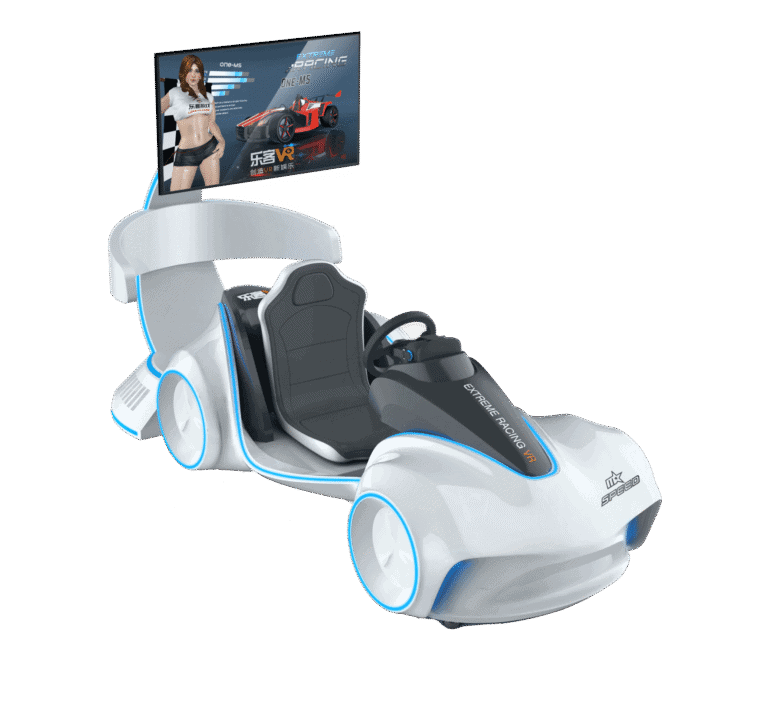
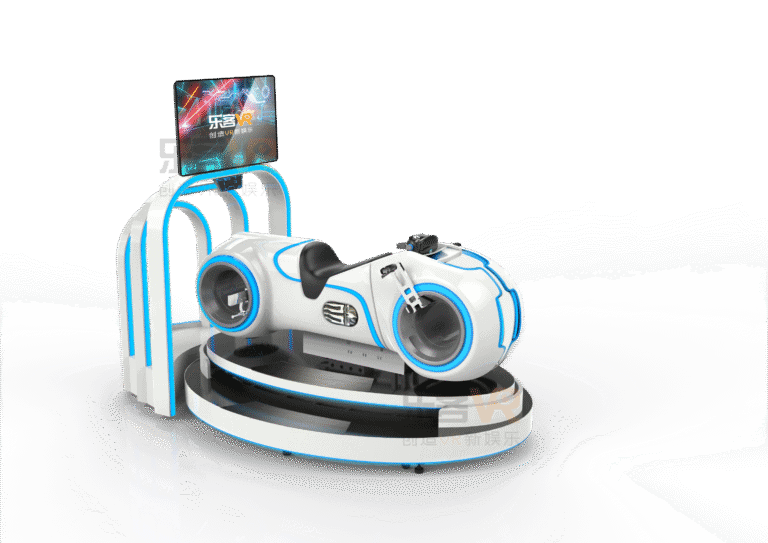
Where the venue wants a headset-based experience instead, the car-shaped VR racing unit covers that format; the VR motorcycle covers lean-based riding. Placement examples are on the solutions page.
Specification
| Model | 4581 |
| Dimensions | 2450 × 2150 × 1830 mm (W × D × H) |
| Weight | 400 |
| Riders | 1 |
| Footprint | 5.27 |
| Power | 3,000 W |
| Display | Three 4K screens; no headset. Force-feedback wheel and pedals. |
| Content | 5 titles: 4 racing + 1 hybrid |
| Output | Lap times on the cabinet display |
| Certification | ISO 9001:2015 · CE · FCC · RoHS, by model and destination |
| Lead time | Stated on the quotation |
06 / Commercial
What the quotation includes
Comparative quotes in this category are rarely like for like, and the difference is usually in the second column. Both lists are given before any figures are compared.
From LEKE VR
- The cockpit, the racing seat and the three-axis motion platform
- Three 4K screens and the PC running the titles
- Force-feedback wheel, pedals and seat transducers
- The five installed titles
- Export packing, documentation and delivery to port
- Installation, platform calibration and staff training
- Remote diagnostics and spare parts from our own stock
Budgeted on your side
- Freight, insurance and import duty to your market
- Floor preparation or any local building work
- Local electrical supply and its certification, signed off by your electrician
- Queuing rail, signage and spectator barriers
Structural questions remain with your structural engineer and electrical questions with your licensed electrician. We supply the drawings and load data they need.
Quality management is certified to ISO 9001:2015, with CE marking and RoHS and FCC compliance by model and destination. Certificates and test reports are available on request.
Our showroom and factory in Guangzhou can be visited. Projects listed below belong to operators, so access is theirs to grant. If a visit is not practical, we work from your floor plan instead. The rest of the racing line and the wider catalogue are listed under commercial VR products.
Where it goes
Where this machine is usually installed
Suited to family entertainment centres, shopping-mall units, e-sports halls and theme parks.
Layout, access and power are confirmed against your floor plan before the order is placed, so a site is not ruled out until the plan has been checked.
Reviews
What operators say about the 3DOF simulator
Swipe to see more →
Leave clearance for the motion envelope, not just the frame. That is the measurement that gets missed on a wall run.
The screens sell it. People stop to watch a lap, then queue for their own.
No headset means no fitting. The changeover is a seat swap, which is why it turns faster than a headset sim in the same space.
Five titles sounds thin, but the lap board does the work. Players come back to beat their own time.
Projects
Solutions we build
Swipe to see more →
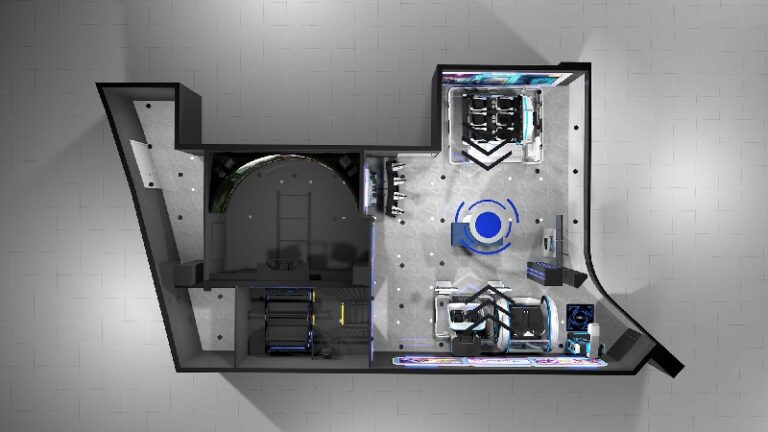
 50㎡ VR Zone Revenue Model: Scaling Profit Without OverexpansionFloor plan & case →
 Immersive VR Experience: A Real 80+m² Venue CaseFloor plan & case →
 Indoor Theme Park Design: A 240 m² Floor Plan | LEKE VRFloor plan & case →
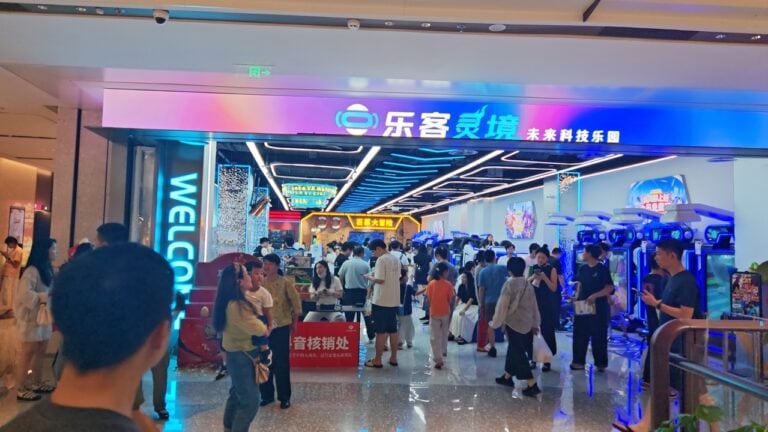 Virtual Reality Examples: Inside LEKE VR’s New 1,000㎡ Flagship at Shanghai PRISMA CenterFloor plan & case →
More machines
Elsewhere in the range
Swipe to see more →
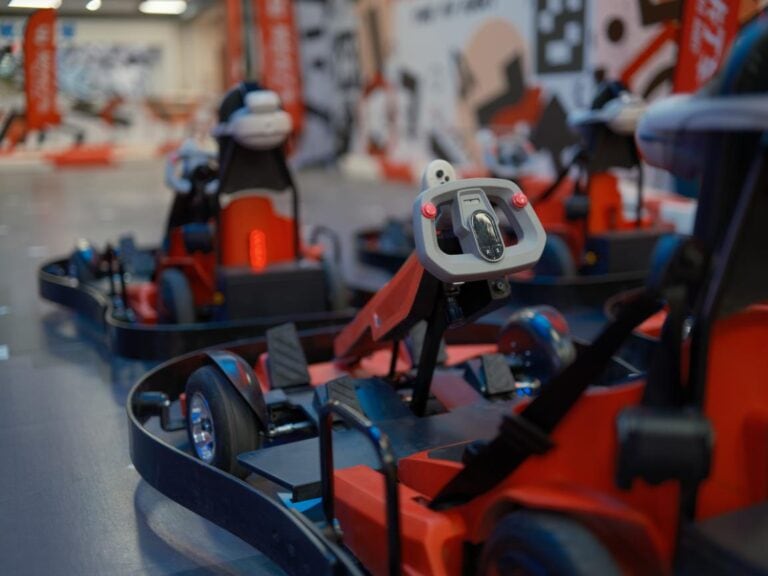
07 / Questions
Questions operators ask
Does it use a headset?
No. The view is three 4K screens, so nothing is worn and the lap is visible to anyone standing behind the seat.
What does 3DOF mean?
Three axes of motion: pitch under braking and acceleration, roll through corners, and heave over kerbs. The platform is driven by the game's physics, not a recorded loop.
How many people ride at once?
One, in a fixed racing seat. Spectators watch from behind, which is part of the appeal on a busy floor.
What space does it need?
2,450 × 2,150 mm of frame, plus clearance around the seat for the motion envelope — more than the frame itself.
What power supply does it need?
3,000 W on a single supply.
How many titles are included?
Five: four racing titles and one hybrid. They are curated rather than broad, and the lap-time board carries repeat play.
What support is included?
Remote diagnostics, video support while staff are on the floor, spare parts from our own stock, and after-sales maintenance.
Next step
Send the position, not a wish list
Send the floor area, the clearance around the seat and the power position. The motion envelope needs more space than the frame itself.
LEKE VR · Guangzhou Leke VR Technology Co., Ltd. · Guangzhou, China · contact
Figures come from the build sheet and commissioning records for this model and from our own venues. Maintained by the LEKE VR product team in Guangzhou and revised when a number changes.