

What Is the Best Type of Chair for Virtual Reality? Your Guide to Motion Racing Simulators
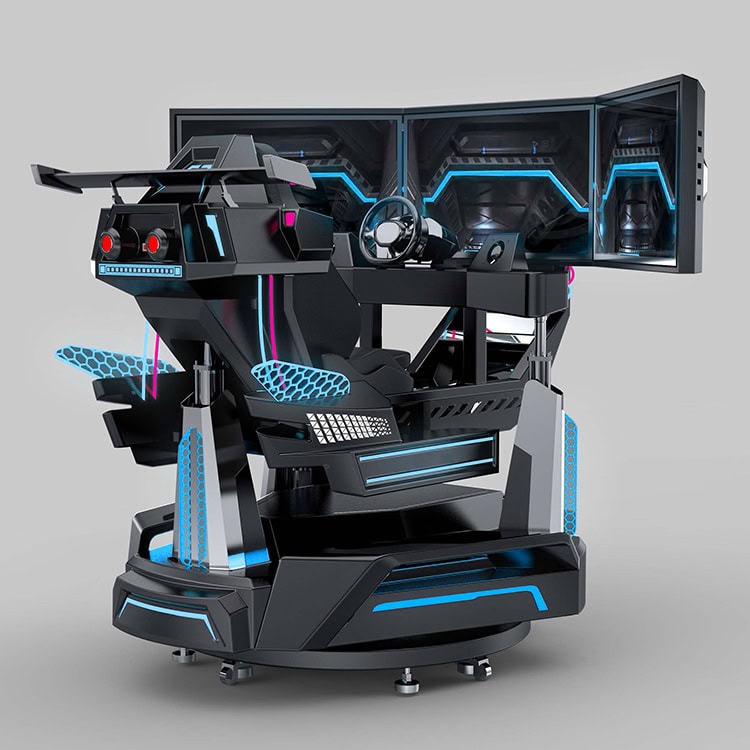
Here is a scene every VR arcade owner has witnessed: a guest sits in a standard swivel chair, slides on a headset, and dives into a racing game at 200 kilometers per hour. Their eyes register the hairpin turn. Their brain screams for the body to brace against G-forces. But the body? It feels nothing—just the static foam of an office chair. This is not immersion. This is sensory fracture. The real answer to what is the best type of chair for virtual reality is not a chair at all. It is a motion racing simulator that synchronizes every drift, collision, and acceleration surge with your physical body. At LEKE VR, we engineer 6dof racing simulator platforms and 3DOF motion rigs that close the gap between what you see and what you feel.
Why What You Sit On Defines Your Entire VR Experience
The human brain builds immersion from two data streams that must agree. The visual stream says “hard left at 160km/h.” If the vestibular stream—the inner ear’s balance and motion detector—replies “sitting still,” the brain flags the mismatch. Motion sickness, disengagement, and a one-time customer who never comes back. This is the hidden cost of treating VR seating as an afterthought.
A motion racing simulator solves this at the hardware level through two interlocking systems:
- ✓Haptic feedback — force-feedback steering wheels transmit road texture, understeer resistance, and collision impact directly into the driver’s hands. The palms learn the track before the eyes do.
- ✓Motion synchronization — 3DOF and 6DOF platforms tilt, pitch, roll, and rotate the entire cockpit in real time, matching every in-game dynamic—acceleration, braking, drifting, and collision—to a corresponding physical movement that the body registers as genuine speed.
When these two systems work together, the brain stops distinguishing between simulation and reality. That moment—when a guest removes the headset and says “I need to do that again”—is the 6dof racing simulator value proposition in a single sentence.
3DOF vs. 6DOF Motion Racing — Which Tier Fits Your Venue?
Not every FEC needs a six-axis full-motion platform. The right choice depends on your audience profile, floor budget, and the intensity level your guests expect. Here is how the two motion tiers compare.
3DOF Motion Racing — The New Standard for FEC Immersion
A 3DOF racing simulator operates across three rotational axes—pitch (nose-up under acceleration, nose-down under braking), roll (body lean into corners), and yaw (drift rotation). What elevates LEKE VR’s newly released 3DOF platform above a standard three-axis rig is the integrated 360-degree rotation base. When a guest spins out on a wet corner, the entire cockpit physically rotates to match the trajectory. The force-feedback steering wheel transmits every rumble strip and curb strike into the driver’s palms.
This platform ships with five built-in titles—four pure racing experiences plus one racing-combat hybrid—giving operators enough content variety to sustain repeat visitation. The 2400mm x 2300mm x 1880mm footprint fits most standard FEC floor plans without dedicated structural reinforcement.
6DOF Full-Motion Racing — The Apex of Sim Racing Precision
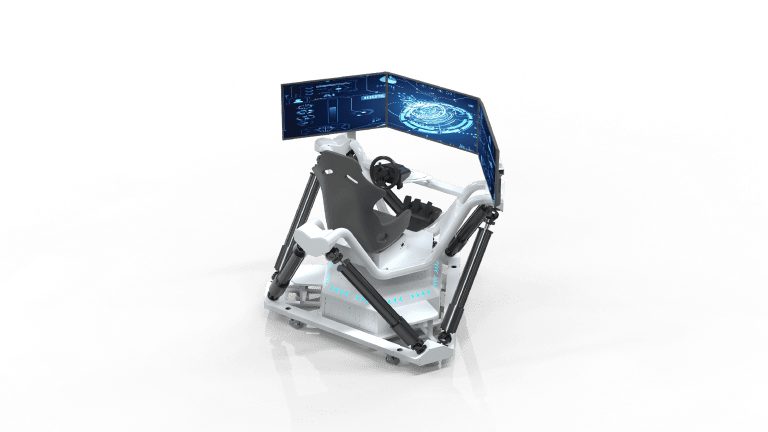
Where 3DOF rotates, 6DOF racing simulator platforms translate. In addition to pitch, roll, and yaw, a six-axis system adds surge (forward-backward displacement simulating acceleration and braking G-force), sway (lateral shift during aggressive cornering), and heave (vertical lift and compression over elevation changes). The result is a complete haptic vocabulary: the momentary weightlessness over a crest, the lateral shove through a high-speed chicane, the forward lunge out of a slipstream pass.
LEKE VR’s 6DOF triple-screen racing car is the flagship for operators targeting the competitive sim-racing demographic—players who demand professional-grade feedback and venues positioning themselves as premium esports-ready destinations. The same triple-screen panoramic architecture carries across both tiers, so the visual DNA of the experience remains consistent as operators scale their motion investment.
Triple-Screen Panoramic Display — A Competitive Edge for Commercial Racing
LEKE VR equips both 3DOF and 6DOF racing platforms with a 2400mm triple-screen panoramic display array. Compared to a single-monitor setup, the ultra-wide layout eliminates visual blind spots and recreates the natural peripheral awareness of a real cockpit—drivers track opponents on both sides without needing to turn their virtual head. This is particularly valuable in a commercial FEC environment where rapid session turnover means guests need to feel oriented and in control within seconds of sitting down.
An equally important advantage of the triple-screen architecture is spectator engagement. When bystanders can watch a photorealistic race unfold across a 2400mm panoramic display, the experience sells itself. Every onlooker becomes a potential next customer—no marketing copy required. The cockpit stays visually connected to the surrounding venue, turning each race into a live spectator event that builds its own queue.
For operators who also offer VR headset-based attractions elsewhere in the venue—such as free-roam arena experiences or motion-platform VR rides—the triple-screen racing simulator serves a complementary role. It provides a high-impact visual anchor on the arcade floor that draws walk-in traffic toward the broader attraction lineup, while offering guests a different mode of immersion: one that keeps them visually present in the real world as they race.
What Makes a Racing Simulator Commercial-Grade?
The price gap between a $600 living-room racing stand and a $48,000 commercial motion platform is not marketing markup. It is an engineering chasm. Four structural differences separate a venue asset that earns revenue for five years from a consumer toy that fails in month four:
- Industrial-grade motors vs. consumer servo actuators — a commercial 3DOF or 6DOF platform runs electric motors rated for 12+ hours of continuous duty, not the intermittent-use servos found in consumer racing wheels.
- Steel frame load capacity — LEKE VR platforms are engineered on steel chassis structures designed for commercial occupancy cycles, not aluminum extrusion kits rated for a single user.
- Turnkey content and hardware integration — consumer setups demand hours of driver installation, game configuration, and per-title calibration. A commercial unit arrives pre-configured: hardware, software, and content licensed and tested as one system.
- After-sales support SLA — when a consumer wheel fails, the owner files a retail return. When a commercial platform needs service, the operator calls a dedicated engineer team with a 48-hour parts-shipment guarantee. Downtime is not an abstraction in the FEC business.
Factory-Direct Economics: LEKE VR ships all motion racing platforms directly from our Shenzhen manufacturing campus. No regional distributor layers. No brand-franchise royalties. No mandatory revenue-sharing agreements. The hardware investment goes to the hardware—not to a chain of intermediaries. Inquire about factory-direct 3DOF pricing →
Comparing Your Path to a Motion Racing Setup
No single product fits every budget or venue profile. The table below maps three procurement paths against the variables that matter most to commercial operators:
| Factor | Consumer DIY Setup | LEKE VR 3DOF (New Release) | LEKE VR 6DOF (Flagship) |
|---|---|---|---|
| Motion axes | 0 (static frame) | 3DOF + 360° rotation | 6DOF full motion |
| Visual system | Single monitor / TV | Triple-screen 2400mm panoramic | Triple-screen 2400mm panoramic |
| Haptic feedback | Force-feedback wheel only | Force-feedback wheel + cockpit motion sync | Force-feedback wheel + full 6-axis haptic sync |
| Built-in game titles | Varies (purchased separately) | 5 (4 racing + 1 hybrid) | Multi-title racing catalog |
| Continuous-duty rating | 2–4 hours | 12+ hours commercial | 12+ hours commercial |
| Setup & integration | DIY assembly + per-game config | Pre-configured turnkey delivery | Pre-configured turnkey delivery |
| After-sales support | Retail return / forum troubleshooting | Dedicated engineer team, 48h SLA | Dedicated engineer team, 48h SLA |
| Best suited for | Personal home use | FECs, mid-scale VR arcades, entertainment centers | Premium venues, esports arenas, flagship FEC locations |
For the majority of FEC operators, the 3DOF new-release platform hits the sweet spot: authentic motion feedback, triple-screen visual presence, commercial-grade durability, and a footprint that fits standard venue layouts—all at a price tier that leaves room for additional attraction investment. The 6DOF flagship is the upgrade path for venues that have already validated racing demand and want to offer a premium tier to their competitive audience.
Frequently Asked Questions
What is the difference between a 3DOF and a 6DOF racing simulator?
A 3DOF platform rotates across three axes—pitch (forward/backward tilt), roll (side-to-side lean), and yaw (horizontal rotation)—plus an integrated 360° rotation base for drift and spin simulation. A 6dof racing simulator adds three translational axes: surge (forward-backward thrust), sway (lateral shift), and heave (vertical lift). In practical terms: a 3DOF rig tilts you through a corner; a 6DOF rig shoves you through it. The 3DOF is the ideal commercial entry point for FECs; the 6DOF is the upgrade for premium competitive venues. Compare LEKE VR’s 3DOF and 6DOF platforms →
How much space does a commercial motion racing simulator require?
LEKE VR’s 3DOF racing simulator has a physical footprint of 2400mm x 2300mm x 1880mm (approximately 7.9 ft x 7.5 ft x 6.2 ft). For commercial operation, we recommend an additional 1–1.5 meters of clearance on all sides for guest access, spectator queuing, and attendant supervision—bringing the total recommended bay area to roughly 4.5m x 4.5m (15 ft x 15 ft) per unit. The 6DOF platform occupies a similar footprint. Both units are floor-standing and require no structural ceiling reinforcement. Request a detailed floor-plan guide →
Can the triple-screen racing simulator integrate with my venue’s existing VR attractions?
Absolutely. As a professional VR equipment manufacturer, LEKE VR designs each product to work both as a standalone anchor attraction and as part of a broader immersive lineup. The triple-screen racing simulator draws walk-in attention on the arcade floor with its panoramic visual presence—creating natural cross-traffic toward VR headset-based attractions like free-roam arenas and motion-platform rides elsewhere in the venue. The 2400mm display also means guests can watch races in progress without wearing any equipment, lowering the commitment barrier for first-time visitors. For operators who want a complete product ecosystem, the racing simulator functions as the visual showpiece that anchors the floor while VR-helmet experiences deliver deeper immersion in dedicated zones. Explore LEKE VR’s full venue solution lineup →
Can a commercial racing simulator handle 12+ hours of daily operation?
Yes. LEKE VR motion racing platforms are purpose-built for continuous commercial duty. The 3DOF and 6DOF systems use industrial-grade electric motors—not consumer servo actuators—mounted on a steel chassis engineered for high-cycle occupancy. Each unit ships as a turnkey solution with pre-licensed game content, on-site installation support, and a dedicated after-sales engineer team backed by a 48-hour parts-shipment SLA. These are venue assets, not consumer electronics. Learn about the 6DOF commercial platform →
The question of what is the best type of chair for virtual reality ultimately answers itself through a single metric: does the seating platform close the gap between visual speed and physical sensation? A static chair—no matter how ergonomic—cannot. A 6dof racing simulator or 3DOF motion platform does. For FEC operators, the choice between tiers comes down to audience ambition: the new 3DOF release covers the commercial sweet spot with triple-screen immersion and full rotation; the 6DOF flagship pushes into competition-grade haptic territory for venues that race at the top of the grid. Both ship factory-direct from LEKE VR, pre-configured and ready to generate revenue from day one.