

Mixed reality · Model 2532
Flying cinema — naked-eye 3D on a curved arc
A curved screen that wraps the audience, showing 3D without glasses. Ten to forty people take the seats, watch the same film, and the cabin adds wind, mist, seat vibration and a leg tickler at the moments the film calls for them.
Nothing is worn. There is no headset to fit and no glasses to hand out or collect, so a full house boards and clears as a group — which is the reason this format can hold a 40-seat cycle that a headset cinema cannot.
- Naked-eye 3D. No glasses, no headsets, nothing to clean between shows.
- 10–40 seats. The seating is configured to your site boundary.
- Four effects. Wind, mist, seat vibration and leg ticklers, PLC-timed to the film.
01 / Overview
What a flying cinema is
This is a group cinema built around a curved screen. The arc wraps the audience’s peripheral vision, the 3D is produced by the screen geometry rather than by eyewear, and the seats carry the effects that make a flight feel like one — wind from overhead blowers, mist on a cloud pass, vibration through the seat.
It is a venue-scale product rather than a machine. At 54 m² and 3,000 mm high it needs a room, not a position, and the seating is configured to the site — which is why the same system serves a ten-seat boutique and a forty-seat hall.
| Audience | 10 to 40 per cycle, configured to the site. |
| Image | Curved arc display, naked-eye 3D, no eyewear. |
| Effects | Overhead wind, mist, seat transducers, leg ticklers. |
| Footprint | 54 m² at 3,000 mm high. |
| Content | 11 installed titles. |
02 / Watch a session
A full house, boarded and cleared
The clip shows the hall in operation: the audience filing in, taking seats across the arc, then the film running with the effects firing — wind across the rows, a mist pass, the seat vibrating on a descent. Watch the turnaround rather than the film: with no eyewear to issue or collect, a full house clears as quickly as it fills, and that is the number that decides how many shows an evening holds.
A show runs as follows.
03 / No glasses
What removing the eyewear does to a 40-seat hall
Every eyewear-based cinema carries a per-person cost that has nothing to do with the film: glasses handed out and collected, headsets fitted and wiped, a briefing for each group on how to wear it. At ten seats that cost is manageable. At forty it becomes the constraint, and it is why large-format 3D rooms usually run fewer shows than their seating suggests.
This system removes it. The 3D comes from the arc geometry and the screen, so a guest sits down and watches. Boarding is walking in, clearing is walking out, and the only per-show work is the hall reset. That is what makes a 40-seat cycle practical rather than theoretical.
No eyewear
3D comes from the screen, so nothing is issued, collected or cleaned.
No fitting
A guest sits down and the show starts; no per-person adjustment.
Group turnaround
A full house boards and clears as one, which sets the show count.
Wider audience
No eyewear means no one is excluded by glasses, hygiene or head size.
04 / Seating and throughput
Ten seats or forty, on the same system
The seating is the variable. A site with a 54 m² room and a modest queue can open with ten seats and a lower build cost; a tourist venue with coach parties can specify forty across the same arc. The screen, the control system and the effects are the same either way, so the decision is about the room and the audience rather than about which product to buy.
That matters commercially because it lets a venue open smaller than its ambition. Building for forty on day one means paying for forty seats before the footfall exists; configuring ten and adding rows later means the room grows with the queue. Row layout, aisle positions and the sightline to the arc are drawn against your plan before the order.
05 / Effects
Four effects, timed by the control system
The effects are what turn a curved screen into a ride. Overhead blowers push air across the rows during climbs and dives; atomising sprayers release a fine mist on cloud and water passes; transducers in the seats carry engine and impact frequencies; and a leg tickler fires when the film passes through terrain or a tunnel. All four are triggered from the show timeline rather than by an operator.
The reason to list them separately is maintenance. Wind and mist are the two that need servicing — filters, nozzles, water quality — while the seat and leg effects are largely sealed. Ask for the service schedule with the quotation so the running cost is known before the room is built.
Overhead wind
Blowers above the rows for climbs, dives and speed.
Mist
Atomising sprayers for cloud, sea and rain sequences.
Seat transducers
Low-frequency vibration for engines, impacts and turbulence.
Leg ticklers
Tactile hits as the film passes through terrain or tunnels.
06 / Space and power
The room is the constraint
The system occupies 6,000 mm by 9,000 mm and stands 3,000 mm high — 54 m² before the entry, the exit and the queue are added. That is a room, and the three numbers to check first are clear height, column positions and the route the arc sections take into the building.
Power is a 220 V commercial supply; the rated load depends on the seat count and the effects package, and is confirmed on the drawing at order. The electrical design is signed off by your licensed electrician and we supply the load figures. Because the arc arrives in sections, the delivery route is planned with the same care as the room.
Send the room
Floor area, clear height, column positions, delivery route and power available.
We draw the hall
Seat count, row layout, aisle positions and the sightline to the arc.
Order and production
Seat count, finish, effects package and title set fixed at order.
Install and commission
Arc assembled, seats set, effects calibrated, staff trained on the show timeline.
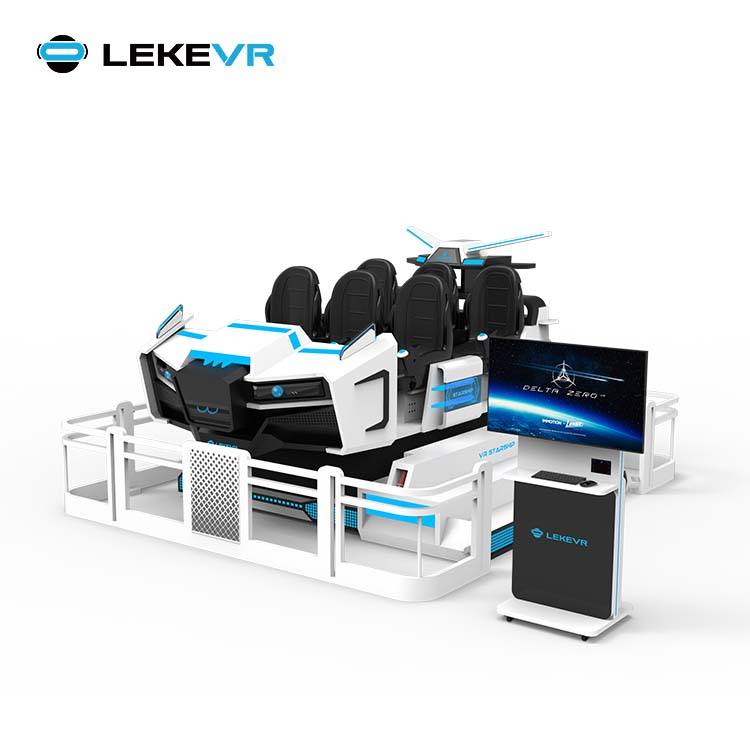
Where the room is smaller, the six-seat 9D cinema covers the group format in about 15 m². Placement examples are on the solutions page.
Specification
| Model | 2532 |
| Dimensions | 6000 × 9000 × 3000 mm |
| Footprint | 54 |
| Power | 220 V; |
| Display | Naked-eye 3D curved arc display; no eyewear |
| Content | 11 installed titles |
| Certification | ISO 9001:2015 · CE · FCC · RoHS, by model and destination |
| Lead time | Stated on the quotation |
07 / Commercial
What the quotation includes
Comparative quotes in this category are rarely like for like, and the difference is usually in the second column. Both lists are given before any figures are compared.
From LEKE VR
- The curved arc display in sections and its support structure
- The seating for the agreed seat count
- The four-effect package: overhead wind, mist, seat transducers, leg ticklers
- The show control system and the 11 installed titles
- Export packing, documentation and delivery to port
- Installation, arc assembly, effect calibration and staff training
- Remote diagnostics and spare parts from our own stock
Budgeted on your side
- Freight, insurance and import duty to your market
- Building works, room construction and acoustic treatment
- Entry, exit and queuing structures
- Local electrical supply and its certification, signed off by your electrician
- Water supply and drainage for the mist system
- Consumables and the mist system's service schedule
Structural questions remain with your structural engineer and electrical questions with your licensed electrician. We supply the drawings and load data they need.
Quality management is certified to ISO 9001:2015, with CE marking and RoHS and FCC compliance by model and destination. Certificates and test reports are available on request.
Our showroom and factory in Guangzhou can be visited. Projects listed below belong to operators, so access is theirs to grant. If a visit is not practical, we work from your floor plan instead. The rest of the range is listed under commercial VR products.
Where it goes
Where this machine is usually installed
Suited to family entertainment centres, theme parks and standalone venues.
Layout, access and power are confirmed against your floor plan before the order is placed, so a site is not ruled out until the plan has been checked.
Reviews
What operators say about the flying cinema
Swipe to see more →
The room decides this one. Clear height, columns and the route for the arc sections are settled before anything else.
Forty seats and no glasses to hand out. We run six shows an hour at peak, which no 3D room we had before could do.
Start with ten seats and add rows. Building for forty before the footfall exists is how a room sits half empty.
The mist is what guests mention. It also needs water quality checks, so put it on a schedule from day one.
Projects
Solutions we build
Swipe to see more →
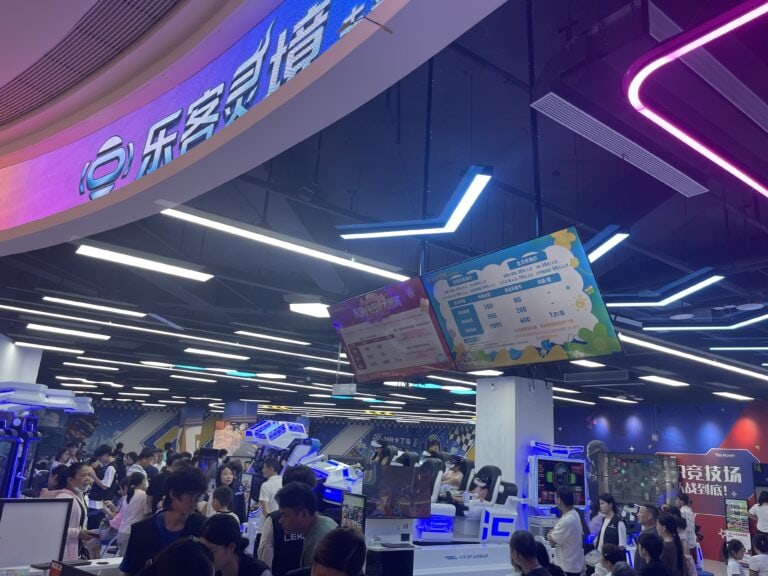 Virtual Reality Examples: A 1,000+m² VR ProjectFloor plan & case →
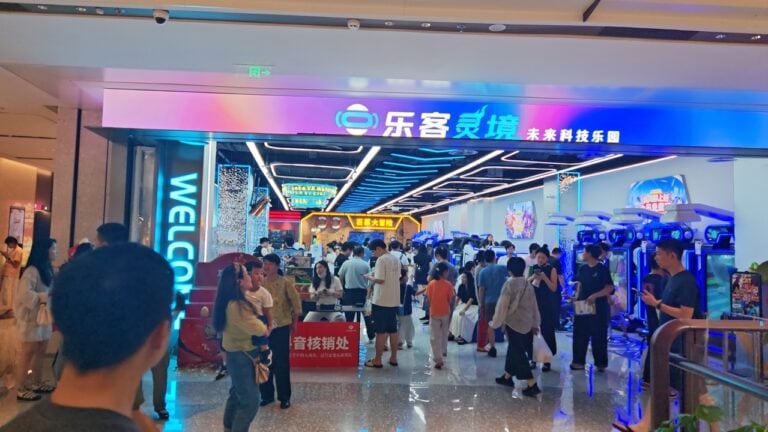 Virtual Reality Examples: Inside LEKE VR’s New 1,000㎡ Flagship at Shanghai PRISMA CenterFloor plan & case →
 VR Entertainment Business Case Study: A LEKE VR Store Generated $13,368 in a Single DayFloor plan & case →
 VR Entertainment Centers: Turnkey 150㎡ Setup — Real Plan, Real ROI | LEKE VRFloor plan & case →
More machines
Elsewhere in the range
Swipe to see more →


08 / Questions
Questions operators ask
Do the audience wear glasses or headsets?
No. The 3D comes from the curved screen geometry, so nothing is worn, issued or cleaned between shows.
How many seats does it have?
Between ten and forty, configured to your site boundary. The screen, control system and effects are the same at either count.
Why does that matter for throughput?
Because there is no per-person equipment, a full house boards and clears as a group. That is what makes a forty-seat cycle practical rather than theoretical.
What effects run during a show?
Overhead wind, atomised mist, seat transducers and leg ticklers, all triggered from the show timeline.
How much space does it need?
A room of 54 m² with 3,000 mm clear height, plus entry, exit and queue. Columns and the delivery route for the arc sections are checked first.
What power supply does it need?
A 220 V commercial supply; the rated load depends on seat count and effects package and is confirmed on the drawing.
How many titles are included?
Eleven installed titles.
What maintenance does the mist system need?
Filters, nozzles and water quality are the items that need a schedule. Ask for it with the quotation so the running cost is known.
Next step
Send the room, not a wish list
Send the floor area, the clear height, the column positions and the delivery route. We draw the hall and the seat count on your plan before quoting.
LEKE VR · Guangzhou Leke VR Technology Co., Ltd. · Guangzhou, China · contact
Figures come from the build sheet and commissioning records for this system and from our own venues. Maintained by the LEKE VR product team in Guangzhou and revised when a number changes.