

VR in FEC: How Immersive Attractions Reshape Family Entertainment
Family entertainment centers are at an inflection point. After decades of relying on the same rotation of bumper cars, ball pits, and redemption arcades, operators across the globe are watching per-capita spend stagnate while younger demographics gravitate toward at-home digital experiences. A well-chosen vr attraction for FEC changes that equation overnight—it transforms a standard family outing into a destination event that commands premium pricing and earns repeat visits.
At LEKE VR, we have spent years engineering turnkey immersive entertainment solutions that help FEC owners break free from the commoditized mid-market and build a defensible competitive moat around content-rich, high-throughput virtual reality experiences.
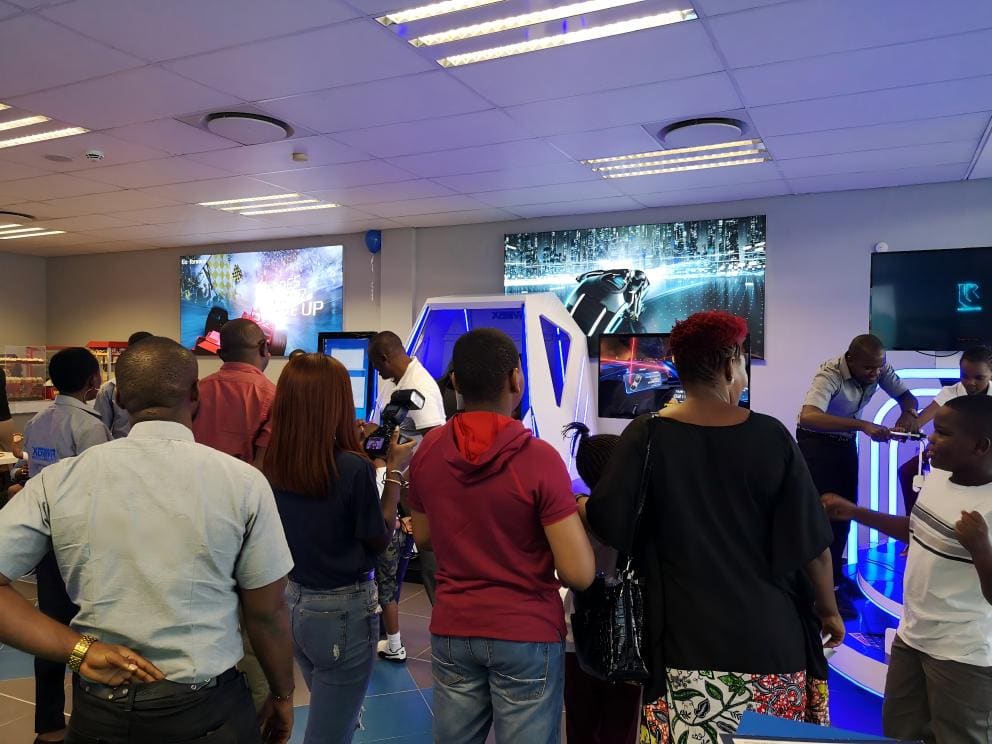
Why Traditional FECs Are Losing Their Competitive Edge
The operators who are thriving today all share one common thread: they introduced an anchor attraction that cannot be replicated at home. That is precisely where virtual reality for family entertainment centers enters the picture.
Three structural challenges now define the traditional FEC:
- Floor-space inefficiency — physical rides consume hundreds of square feet but serve only a few players simultaneously.
- Novelty decay — once a family has experienced the climbing wall or go-kart track three times, the marginal excitement collapses.
- Labor dependency — many legacy attractions require continuous staff supervision, eroding thin operating margins.
A purpose-built vr attraction for FEC addresses all three. A single 30-square-meter bay can process 60 to 120 players per hour. Content libraries refresh quarterly rather than remaining static for a decade. Modern free-roam systems operate with minimal attendant oversight, keeping labor costs in check.
The Rise of Immersive Entertainment in Family Entertainment Centers
Global investment in location-based virtual reality experiences continues to climb, with family entertainment centers absorbing the largest share of that growth. The driver is straightforward: VR generates the kind of social-media sharing that functions as free customer acquisition—parents filming their children ducking virtual obstacles is organic content no billboard can match. The attraction draws crowds not just once, but repeatedly—so long as the content stays fresh.
What Defines a High-Return VR Attraction for FECs
Not every headset-and-sensor bundle qualifies as a viable vr attraction for FEC deployment. Operators evaluating hardware should measure every vendor against five non-negotiable criteria:
-
✓
Content refresh cadence — does the supplier release new titles at least twice per year? A static library kills repeat visitation. -
✓
Player throughput per bay — what is the realistic hourly capacity under peak Saturday traffic, not just the lab-tested maximum? -
✓
Hardware durability rating — consumer-grade headsets fail under FEC duty cycles within months; commercial-grade builds are mandatory. -
✓
System interoperability — can the platform ingest third-party content or is the operator locked into a single vendor’s release schedule? -
✓
After-sales response SLA — a 48-hour parts-shipment guarantee separates revenue-preserving vendors from revenue-threatening ones.
From Standalone Units to Turnkey Immersive Entertainment Solutions
There is a meaningful distinction between buying a pair of VR headsets and deploying a full-scale arena. Standalone units work for kiosk-scale testing, but the operators who report the strongest results are those who adopt integrated immersive entertainment solutions—multiplayer free-roam platforms, synchronized motion rigs, and competitive eSports bays that turn the FEC into a group-destination venue.
The difference shows up in two key metrics. Average session length: 18 to 25 minutes for arena-scale versus 6 to 10 minutes for kiosk-scale. Per-head ticket pricing: operators routinely charge a premium for a synchronized multiplayer experience versus a solo headset session.
Evaluating the Investment: Virtual Reality for Entertainment Events
Ask ten FEC operators about virtual reality for entertainment events and nine will lead with the same question: what does the investment actually look like? The answer depends on arena scale, hardware tier, and procurement path. The table below maps the key variables operators should evaluate when building their budget model:
| Consideration | Traditional Arcade Zone (80 m²) | 2-Bay VR Arena (80 m²) |
|---|---|---|
| Initial hardware investment | $35,000 – $55,000 | $48,000 – $72,000 |
| Annual content / consumables restock | $8,000 – $12,000 | $2,400 – $4,800 (software license) |
| Staffing requirement | 1.5 FTE (prize counter + tech) | 0.5 FTE (attendant) |
| Hourly throughput (players) | 18 – 30 | 60 – 120 |
| Typical ticket price per session | $6 – $10 | $14 – $22 |
Industry Insight — The Factory-Direct Advantage: Most FEC operators who procure VR equipment through regional distributors or brand-license bundles pay a 35–60% markup over ex-factory pricing. LEKE VR ships directly from our Shenzhen manufacturing campus, which means operators pay manufacturer pricing without intermediary layers. Combined with our zero-franchise-fee model—no mandatory revenue sharing, no recurring royalty obligations—operators retain full control over their cost structure and pricing strategy. Explore LEKE VR’s turnkey FEC solutions →
Content Is King — Why Your Virtual Reality Experiences Library Matters
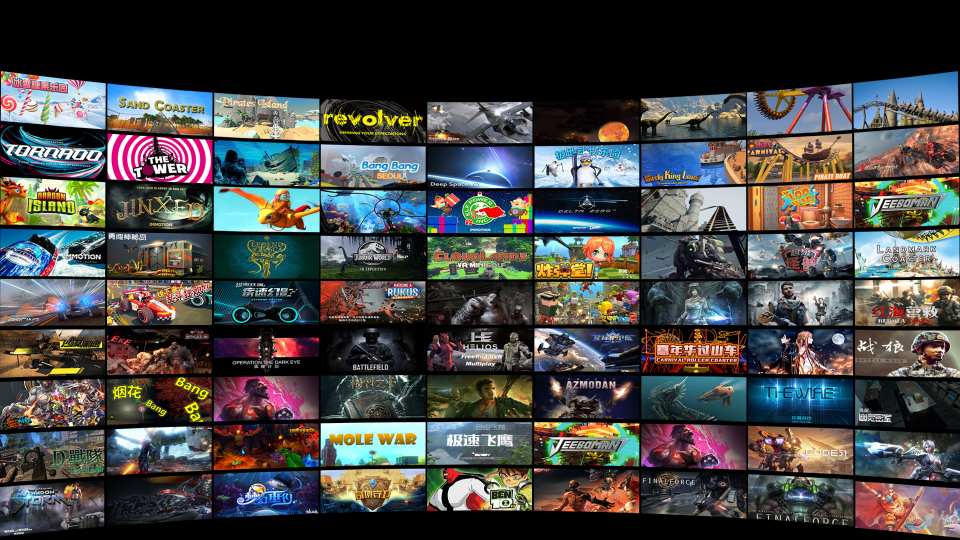
Hardware specs matter on day one. Content depth matters on day 365. An FEC that installs impressive virtual reality experiences hardware but runs the same six launch titles will see attendance decay by month four. The operators who sustain long-term growth curves are those who can tell returning families: “There are three brand-new adventures since your last visit.”
This is where library architecture becomes a competitive asset. LEKE VR equips every FEC deployment with 18 specific titles — 12 original IP games developed in-house and 6 customized blockbuster adaptations — plus pipeline access to a back-catalog of 700+ licensed experiences that can be rotated in based on seasonal demand, demographic mix, and operator preference.
A Halloween horror wave in October. A festive family co-op title in December. A competitive e-sports mode for summer leagues. The hardware stays constant while the software keeps the value proposition perpetually fresh.
How to Choose the Right VR Partner for Your FEC
The VR supply chain has bifurcated into three distinct procurement models. The choice between them is the single largest variable in long-term operator satisfaction:
| Procurement Model | Upfront Cost | Content Freedom | Ongoing Fees | After-Sales Support |
|---|---|---|---|---|
| Factory Direct (LEKE VR) | Mid-range, no distributor markup | High — open platform, multi-vendor content | None — buyout model, no royalty | Direct engineer team, 48h SLA |
| Regional Distributor | High — 35–60% markup | Moderate — depends on brand agreements | Variable — often bundled service contracts | Third-party, variable quality |
| Brand Franchise Package | Very high — brand premium included | Low — locked into proprietary ecosystem | High — 8–15% revenue share typical | Brand-managed, standardized |
For independent FEC operators who want to retain pricing autonomy and content flexibility, the factory-direct path eliminates the structural costs built into the other two models. No mandatory revenue-sharing. No franchise royalties. Full control over your business.
Frequently Asked Questions
How much does it cost to install a VR attraction in a family entertainment center?
The total installed cost for a commercial-grade vr attraction for FEC ranges from approximately $48,000 for a two-bay compact setup to $180,000+ for a full free-roam arena. That covers commercial headsets, tracking infrastructure, content licenses, shipping, and on-site commissioning. The dominant variable is arena scale—a 4-player kiosk occupies a different budget tier than a 12-player synchronized free-roam platform. Operators who procure factory-direct, bypassing regional distributors, typically save 35–60% on hardware. Request a tailored quotation based on your floor plan →
How often does VR content need to be updated to keep customers coming back?
Operating FEC data shows audience retention stays healthy when at least two to four new titles are introduced per quarter. A library that remains static for six months will typically see a noticeable drop in repeat visitation. LEKE VR ships every installation with 18 specific titles (12 original IP games plus 6 customized blockbuster adaptations) and maintains a rotating back-catalog of 700+ licensed experiences—operators can schedule seasonal content drops without renegotiating per-title licenses.
Is a VR attraction safe for children and long-term operation in an FEC?
Yes—when deployed with commercial-grade hardware and proper operational protocols. LEKE VR systems include three safety layers: (1) hardware—headsets with adjustable IPD calibrated for ages 7 and up, hygienic replaceable face gaskets, and physical-guardian boundary systems that prevent wall collisions; (2) hygiene—UV-C sanitization stations integrated into the operator workflow between sessions; (3) SOP documentation—a full operational playbook covering attendant-to-player ratios, session-time limits by age bracket, and emergency-stop procedures. These measures meet or exceed ASTM F24 amusement-ride safety standards applicable to immersive attractions.
Family entertainment is not a declining category—it is a category undergoing a technology-driven evolution. The operators capturing disproportionate share today are those who recognized early that virtual reality for family entertainment centers is not a gadget add-on but a core engagement engine. With the right immersive entertainment solutions partner, factory-direct economics, and a content library that stays perpetually fresh, the FEC transforms from a commodity play-space into a high-value destination venue. LEKE VR exists to make that transition repeatable and sustainable for operators worldwide.