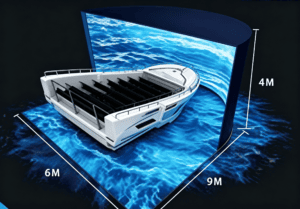
Multiplayer VR Shooting Arena | Commercial VR Laser Tag Equipment
The Next Evolution of FEC Attractions: X-Space VR Arena Traditional static virtual reality setups no longer satisfy the modern consumer's demand for high-tier...
B2B Factory-Direct · Request a Custom Quote
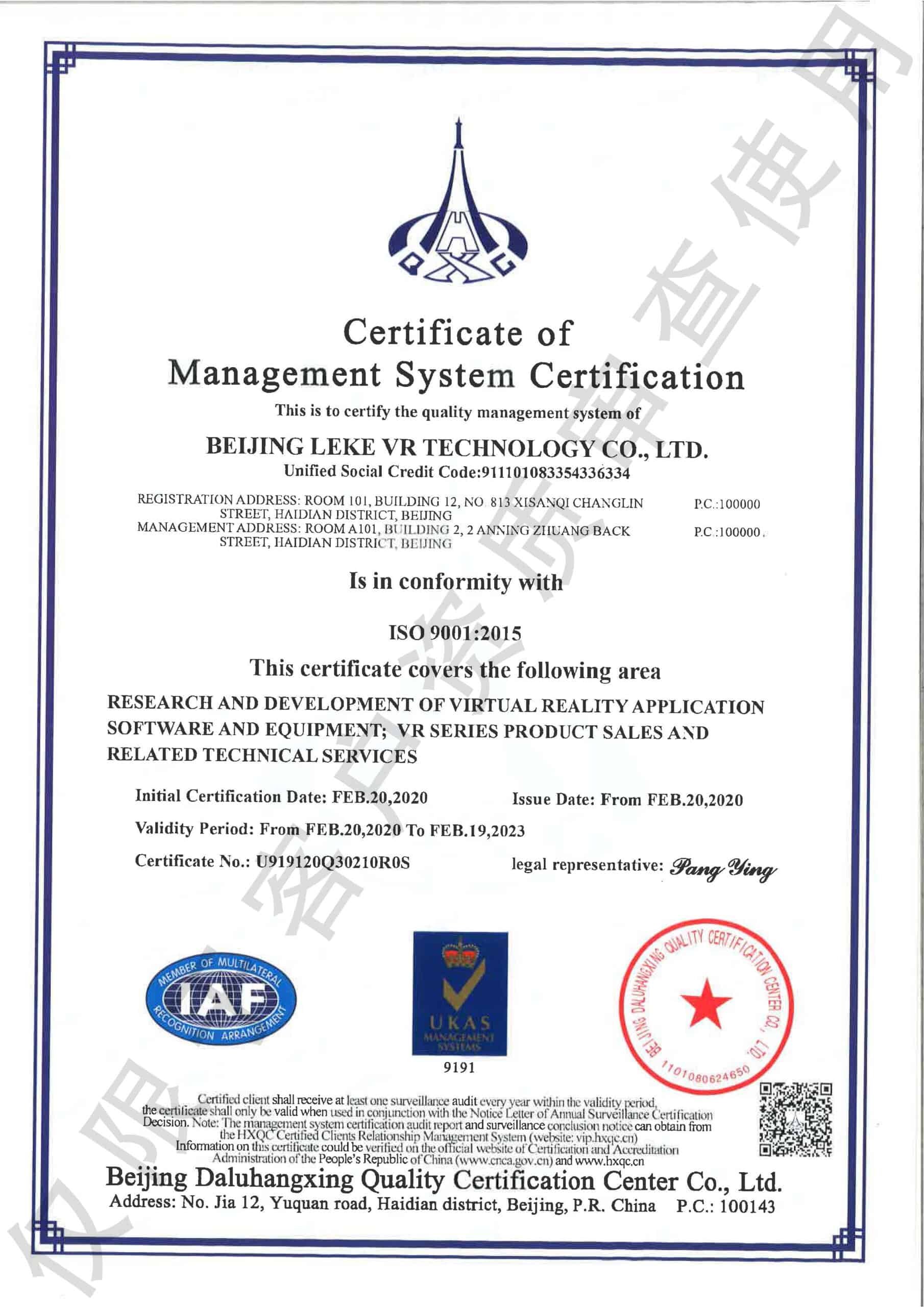
ISO 9001 FactoryCE / FCC / RoHSLekeVRTurnkey Delivery
The Next Evolution of FEC Attractions: X-Space VR Arena
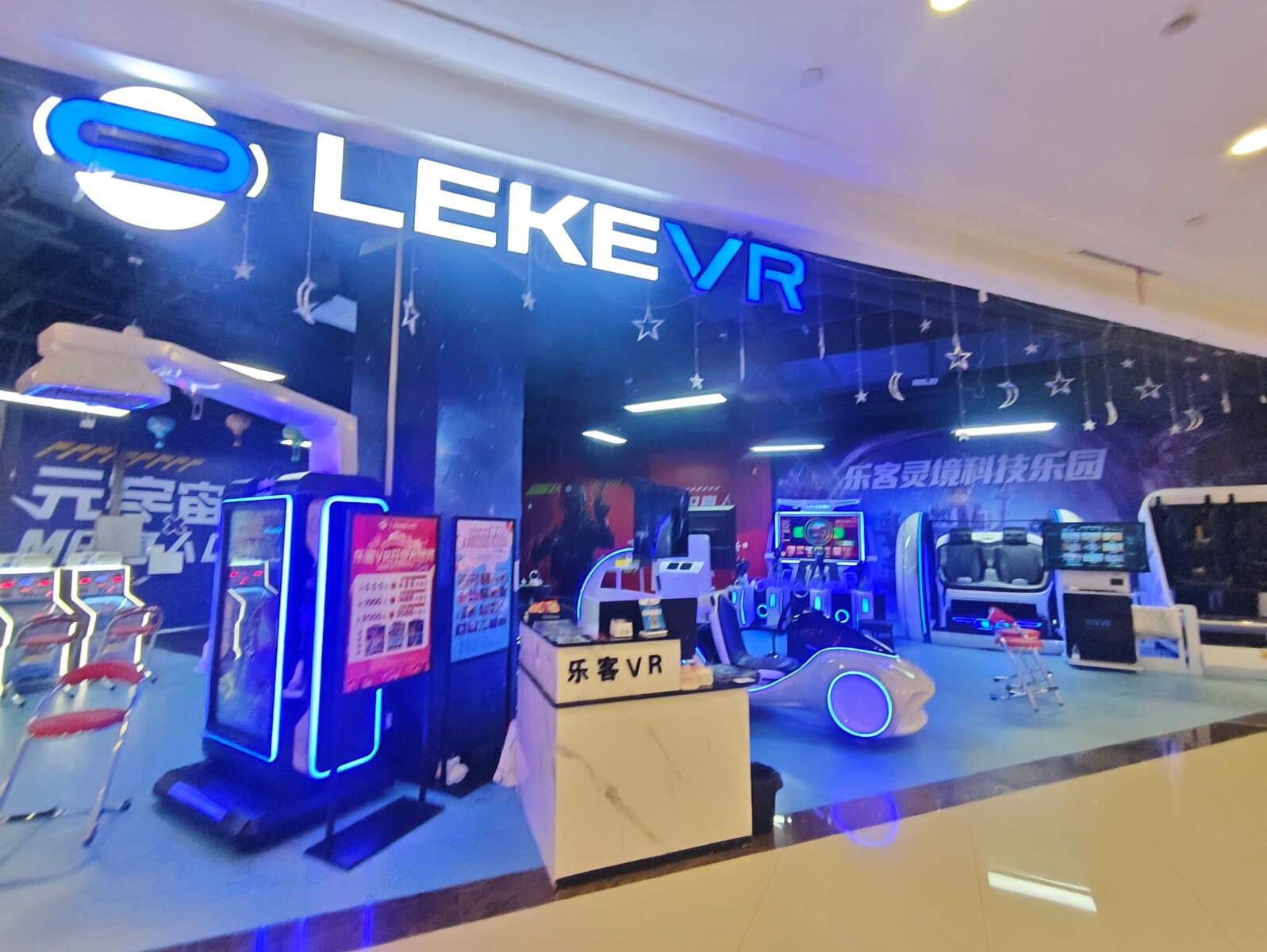
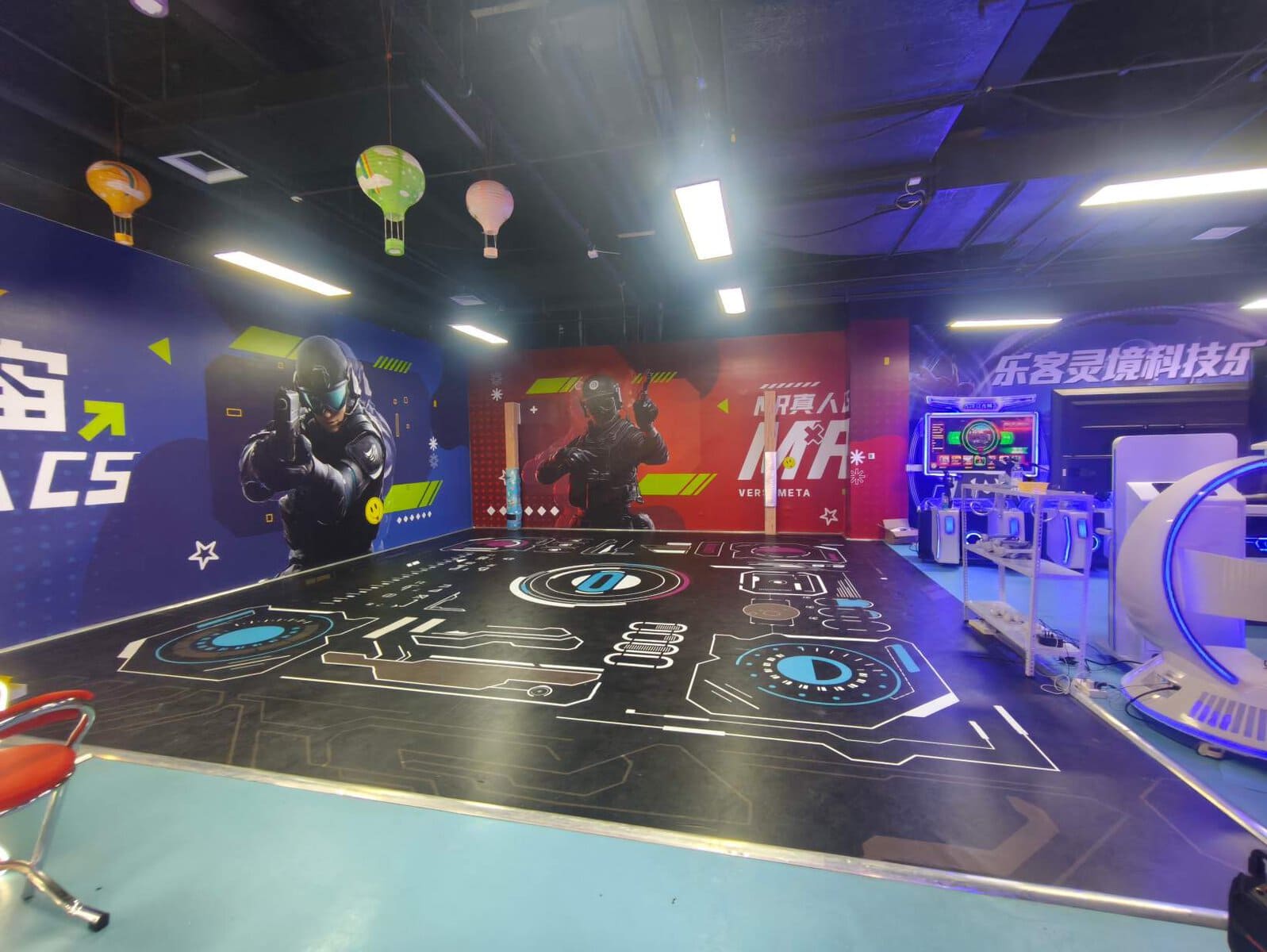
Traditional static virtual reality setups no longer satisfy the modern consumer’s demand for high-tier social engagement. The X-Space VR Arena completely redefines spatial efficiency and foot-traffic retention for Family Entertainment Centers (FECs) worldwide, specifically optimized for high-growth markets across the United States and South America. By breaking the constraints of physical tracks, this high-capacity multiplayer vr arena offers a highly interactive, free-roam commercial ecosystem designed for rapid ROI and unmatched premium replayability.
Engineering excellence lies at the core of the X-Space infrastructure. Unlike restricted hardware layouts that demand high setup fees, our trackless design eliminates expensive physical grid installations entirely.
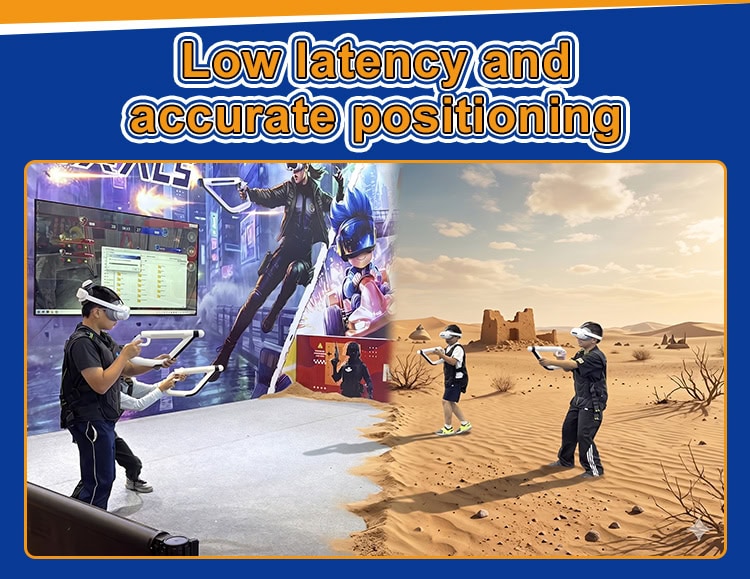
Millimeter-Level Spatial Positioning: Advanced anchor-to-entity positioning algorithms lock physical steps directly into the virtual environment without drift.
True Zero-Latency Synch: Commercial-grade networking infrastructure prevents player motion sickness and guarantees lag-free PvP matches.
Enterprise PICO 4UE Integration: Leverages commercial VR headsets to ensure crystal-clear visual density and reliable continuous daily uptime.
Tournament-Ready Eco: Automated Leaderboards & Corporate Event ROI
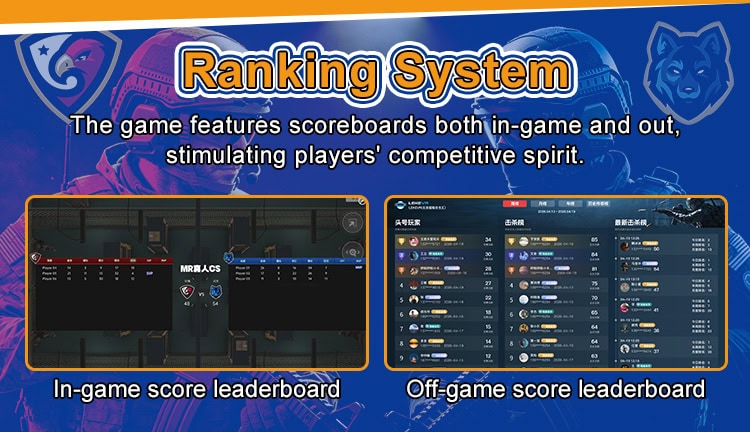
For amusement park operators and commercial arcade buyers, the true value of vr multiplayer arena equipment is its ability to scale beyond standard single-player tickets. X-Space features a localized cloud-synchronized tournament ranking system that serves as a massive hook for corporate team-building events, local eSports leagues, and high-margin group party rentals.
Commercial-Grade Tactical Gear for Seamless Game Tracking
To guarantee fluid operational rotation and high-density player throughput, the hardware peripherals are engineered strictly for heavy-duty commercial environments:
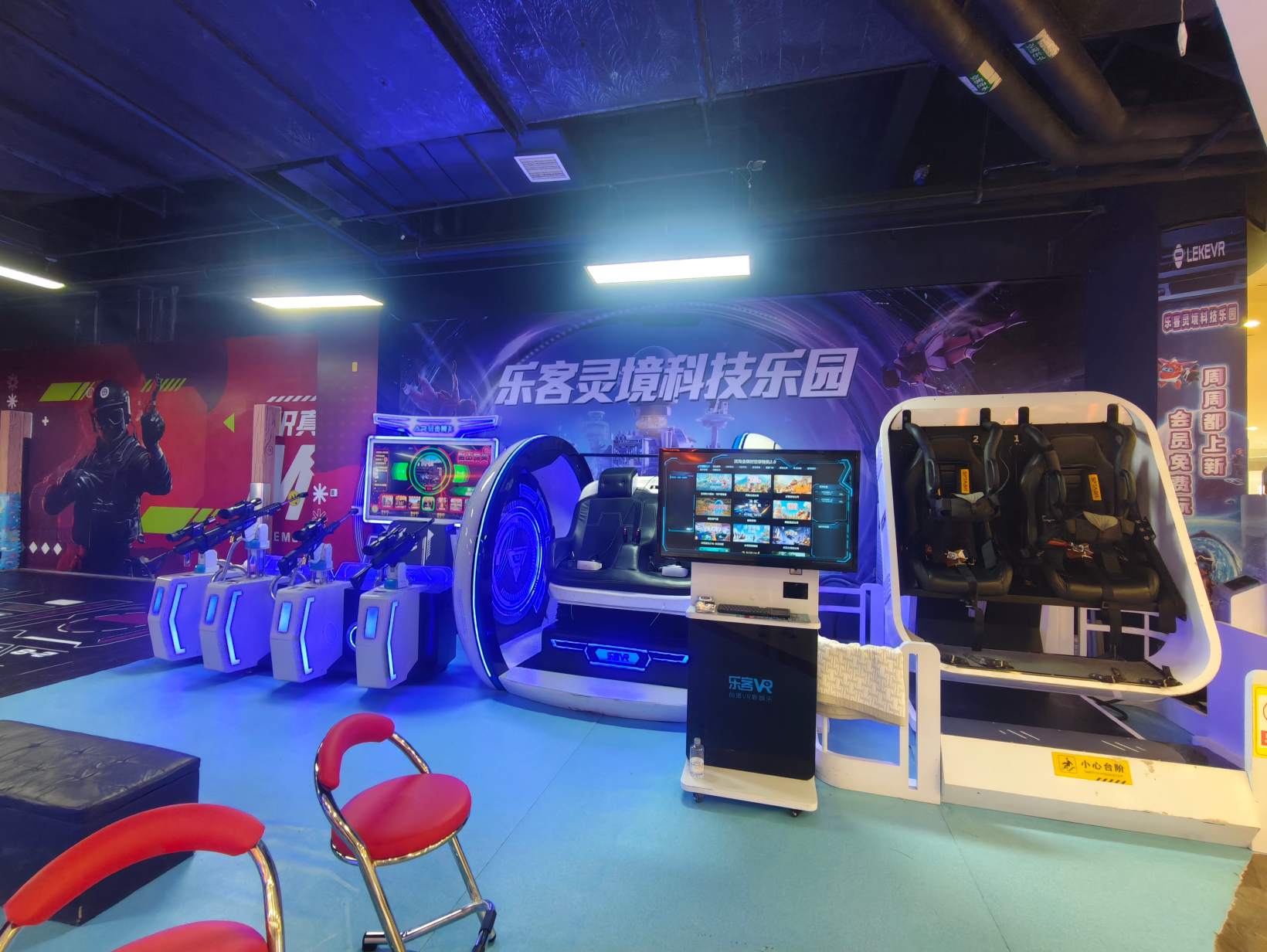
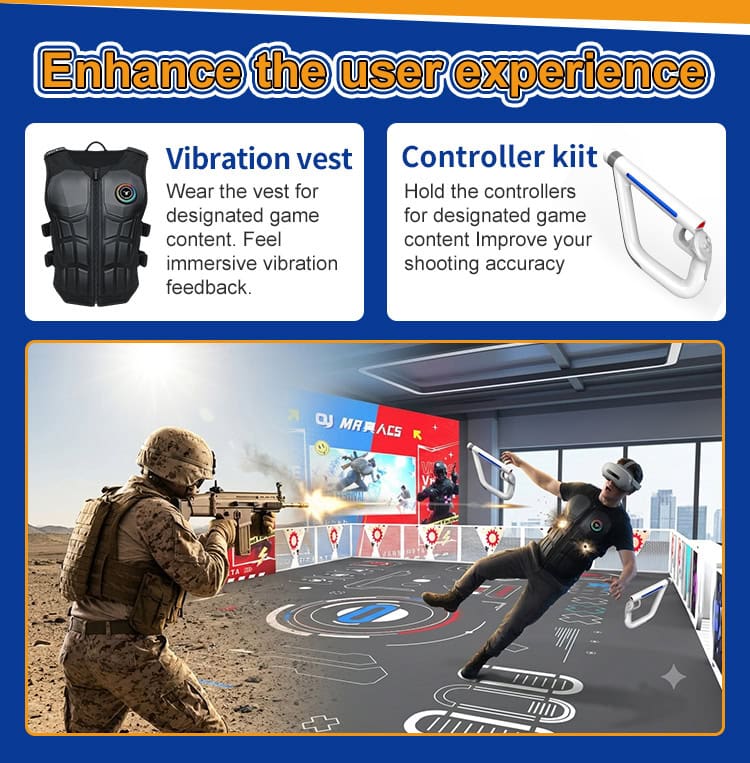
Ergonomic Weapon Controllers: Purpose-built gun controllers designed to match immersive in-game shooting mechanics perfectly, featuring a light and balanced form factor for natural handling.
Heavy-Duty Structural Integrity: Constructed with high-tensile components to withstand relentless daily usage from large tourist crowds without tracking disruption.
Integrated Haptic Feedback: Multi-node wearable vests provide immediate, subtle tactile sensations aligned with virtual actions to maximize player engagement.
Beyond Shooting: Interactive Cinematic & Team Content Library
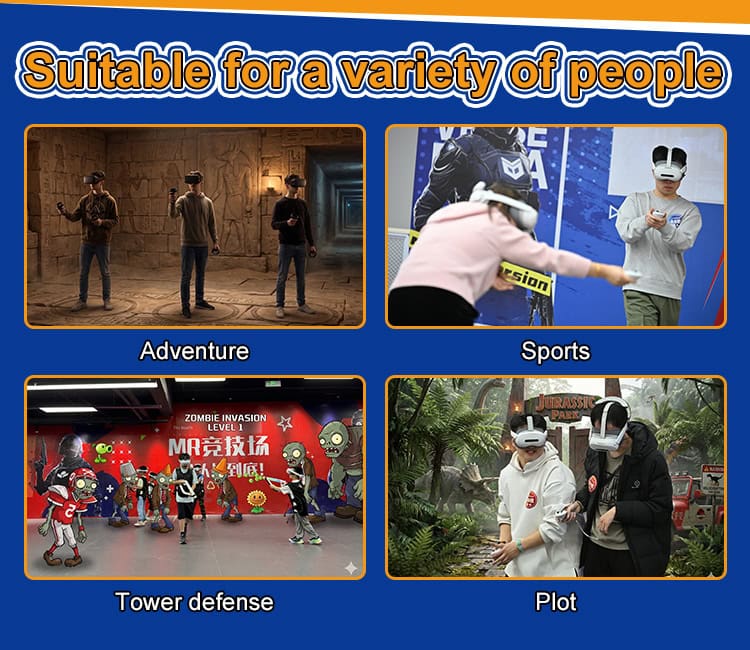
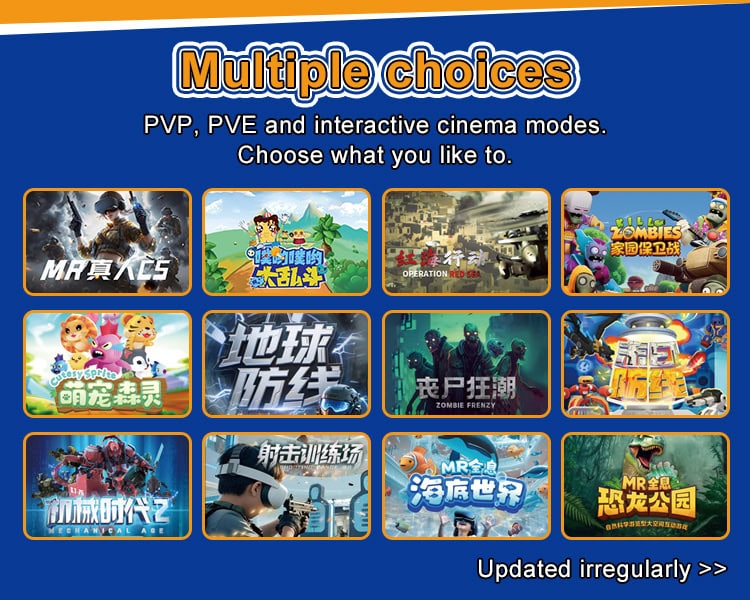
X-Space is not restricted solely to heavy-combat vr laser tag arena scenarios. It operates as a multi-functional content hub. The included 12+ curated commercial games library features a versatile mix of hardcore sci-fi PvP shooters, family-friendly cooperative tactical defense games, and highly immersive cinematic team-viewing interactive simulations[cite: 2]. This flexible content range removes all age barriers, allowing operators to maximize demographic reach from kids’ birthday parties to professional corporate events[cite: 2].
Optional DIY / Standard Blue & White & Black / Gridless Available
The X-Space system utilizes a trackless tracking system that operates on flat commercial flooring. It requires zero expensive overhead structural mapping, physical rails, or complex grid installations, making layout adaptation fast and flexible for FEC venues.
The automated localized cloud ranking dashboard tracks real-time competitive scores. This allows venue operators to organize structured tournaments, competitive match play, and high-margin corporate team-building events that drive massive group ticket bundles.
The system comes with 12+ pre-installed premium commercial titles with continuous future library updates. The software suite spans tactical PvP sci-fi shooters, cooperative defense, and interactive cinematic viewing experiences, providing family-friendly alternatives with zero commercial age-rating friction.
Yes. As an experienced vr shooting arena supplier, we provide fully customizable DIY carpet options. Venue owners can select our standard Blue, White, and Black high-density layout or request tailored brand decals and gridless patterns to match their facility.
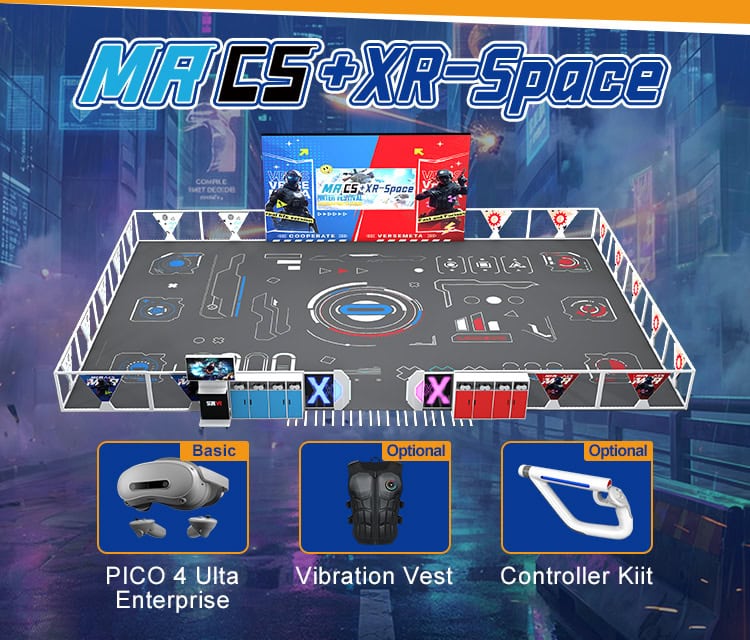
The standard professional setup features the Enterprise Edition PICO 4UE headsets, combined with commercial-grade multi-node tactical haptic feedback vests and highly durable physical gun controllers optimized for seamless in-game tracking and rapid player rotation.
Guangzhou,China
Virtual Reality Examples: A 1,000+m² VR Project
One of the clearest virtual reality examples at commercial scale is now live in Guangzhou, China. In Zengcheng district, LEKE VR delivered an ~1,000 m² venue running 8 attractions plus a free-roam X-Space VR arena—a mix of MR karting, multiplayer battle, racing, cinema pods, and a 6-seat motion theatre—that opened on August 22. This article […]
Venue Capacity: 1000+m²
Machine Fleet: 9
Target Market: Guangzhou,China
VR Entertainment Centers: Turnkey 150㎡ Setup — Real Plan, Real ROI | LEKE VR
VR Entertainment Centers: Turnkey Setup Guide — Real Plan, Real Store, Real Reference You want to open a vr entertainment center. You have searched for vr examples. You have browsed equipment catalogs. But three questions keep you from signing anything: how do these machines fit together on a real floor plan, how long until the […]
Venue Capacity: 150m²
Machine Fleet: 6+
Virtual Reality Examples: Inside LEKE VR’s New 1,000㎡ Flagship at Shanghai PRISMA Center
If you have ever searched for vr examples and found only renderings, marketing brochures, or staged product shots—this article is different. On July 6, 2026, LEKE VR opened a 1,000㎡ flagship vr experience center inside Shanghai’s PRISMA Xinjia Center, a newly opened premium commercial complex. We walked through the store with a camera on an […]
Venue Capacity: 1000+m²
Machine Fleet: 12+
50㎡ VR Zone Revenue Model: Scaling Profit Without Overexpansion
Search for “vr arcade” and you will find two kinds of content: glossy renderings of 500㎡ mega-venues, and forum threads asking whether a small VR zone can actually make money. This article is neither. It is a data-backed, square-meter-by-square-meter revenue model for a 50㎡ virtual reality experiences zone—the kind you can install inside an existing […]
Venue Capacity: 50m²
Machine Fleet: 5
Changsha
VR Entertainment Business Case Study: A LEKE VR Store Generated $13,368 in a Single Day
VR Entertainment Business Case Study: A LEKE VR Store Hit $13,368 in a Single Day On May 30, 2026, LEKE VR opened its doors on the third floor of Bubugao Meixi Xintiandi in Changsha, Hunan Province. Through its early operations, the store has averaged approximately $8,000 in daily revenue — and hit a single-day peak […]
Venue Capacity: 1000m²
Machine Fleet: 10
Target Market: Changsha
Guangzhou Leke VR Technology Co., Ltd. — backed by 12 years of R&D and production, we manufacture commercial VR simulators in-house and deliver turnkey VR park solutions. Every machine is assembled, tested and quality-audited in our ISO-certified factory before shipment.
Factory-Direct Manufacturing: no middlemen — competitive B2B pricing with direct engineering support.
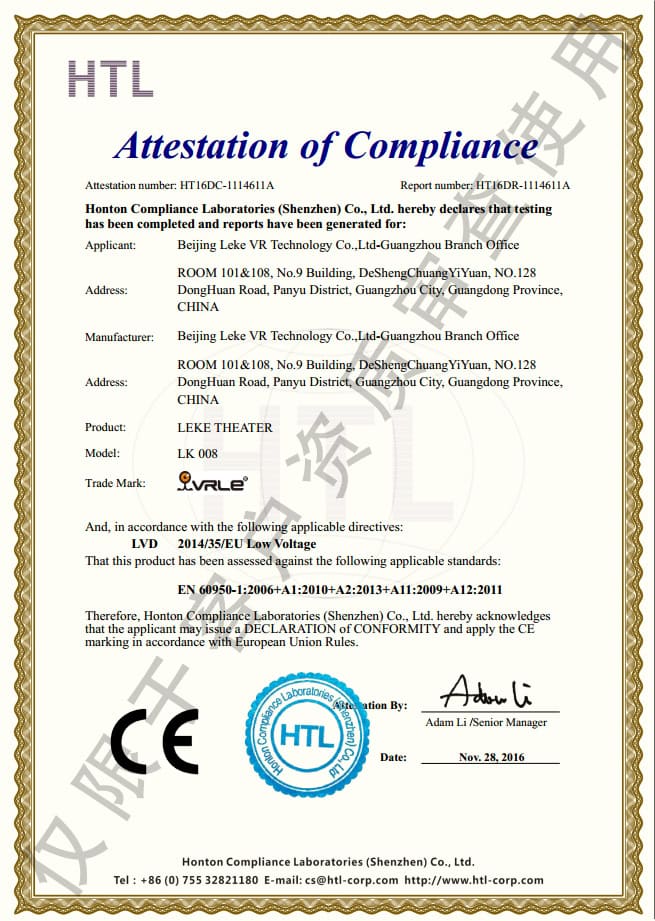
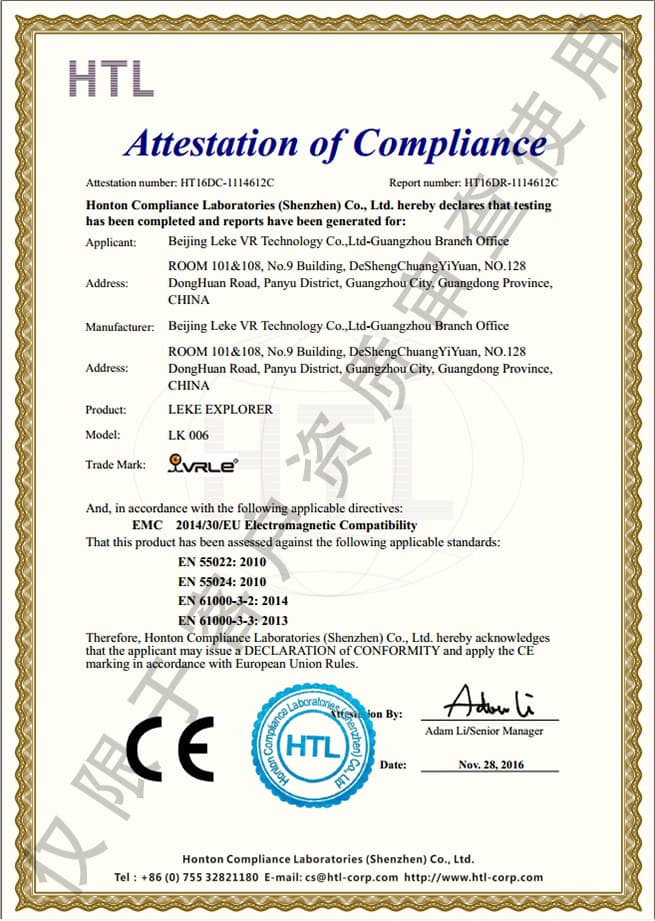
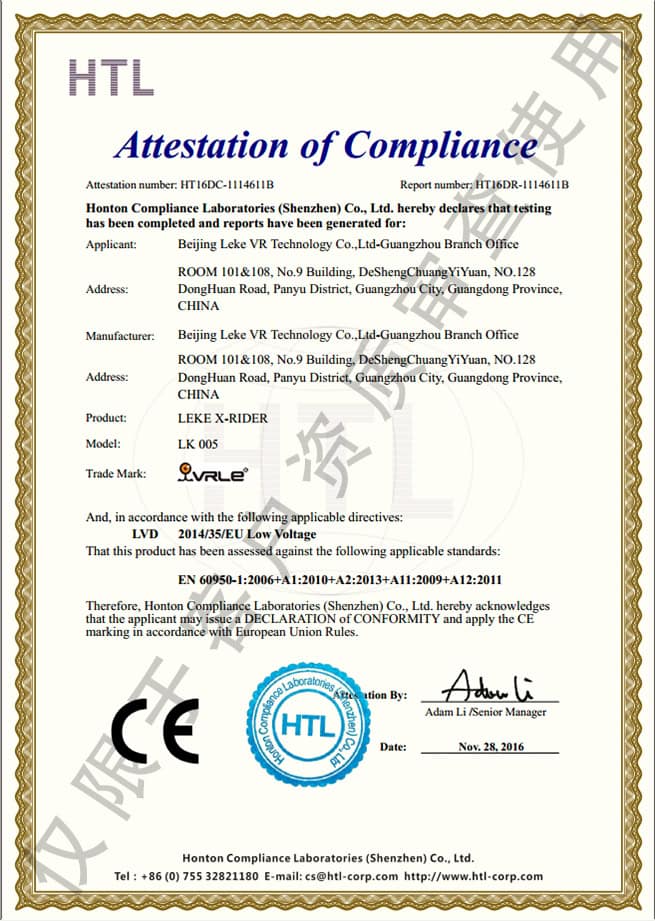
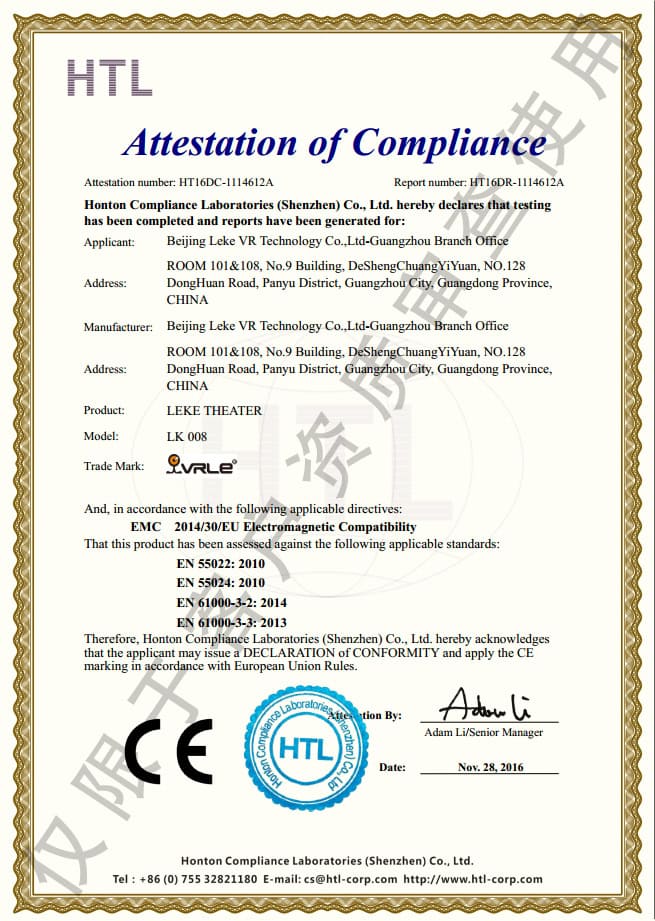
Certified Quality: CE / RoHS / FCC / SGS Audited / ISO 9001 compliant production line.
Turnkey Delivery: 3D venue layout, equipment mix, installation guidance and operator training.
R&D Capability: in-house engineers, 12 years of iteration, OEM / ODM customization available.
Global Support: 700+ commercial titles, deployments in 40+ countries, 24/7 spare parts and remote diagnostics.
12+Years R&D
700+VR Games
40+Countries
24/7Support
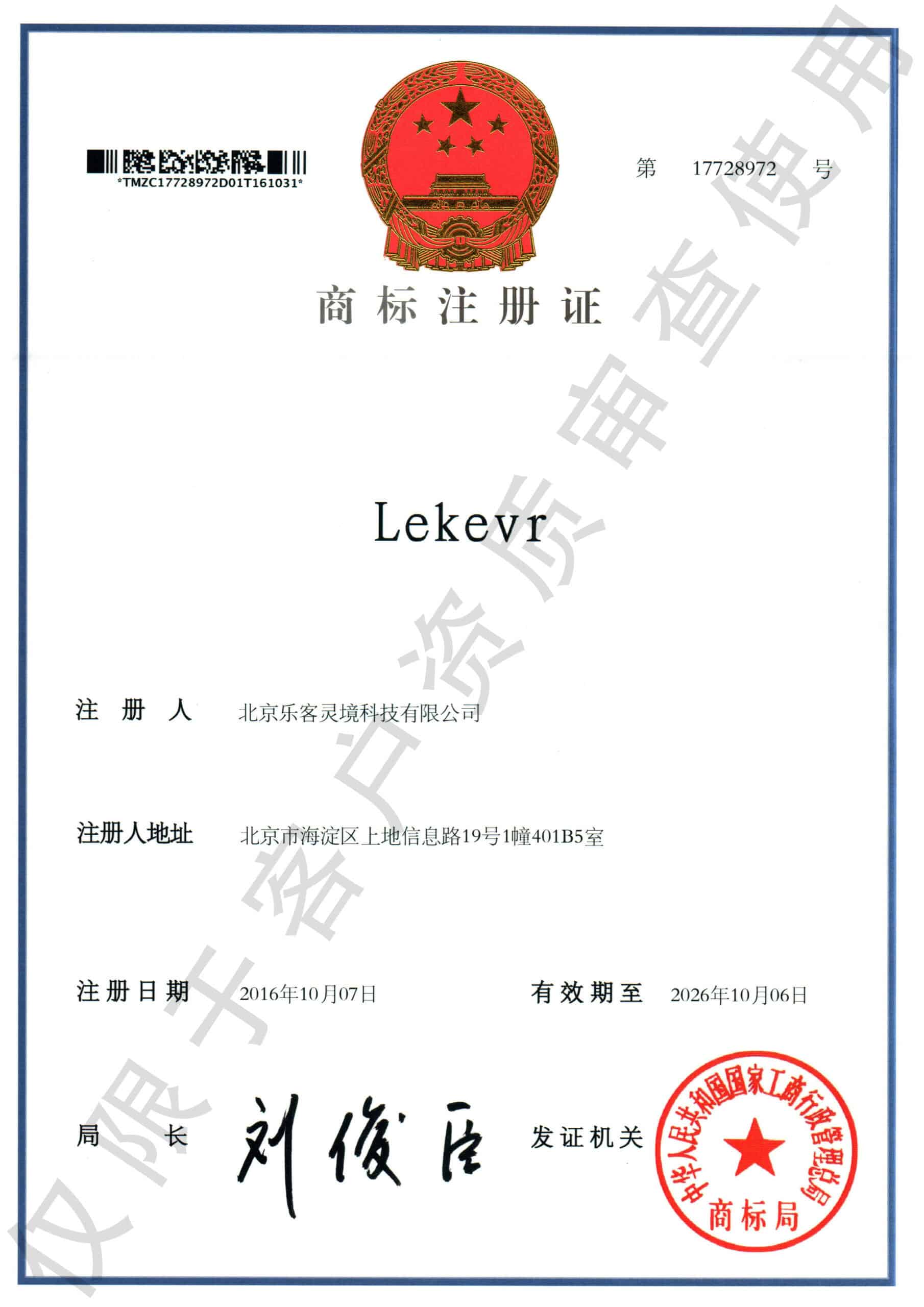
Certifications & Compliance
ISO 9001:2015Export RegistrationCE · Time Space ShuttleCE · ExplorerCE · Time FlywheelCE · Egg Chair
4-Attraction Bundle (EUR) — A Proven Revenue Package
A complete, revenue-balanced four-attraction package engineered for shopping-mall FECs and standalone VR arcades. Mixes a group shooter, a premium cinema pod, a motion chair, and an AR gallery to capture both group bookings and walk-in family traffic.
USD figures are a reference conversion at an assumed EUR/USD rate of 1.1 for illustration only.
This is a modeling example based on a typical European urban venue, in EUR with a USD reference. Actual results vary by location, foot traffic, staffing costs, rent, and local pricing. Use it as a starting point for your own ROI projection — never as a guarantee. Request a custom projection for your venue's numbers.
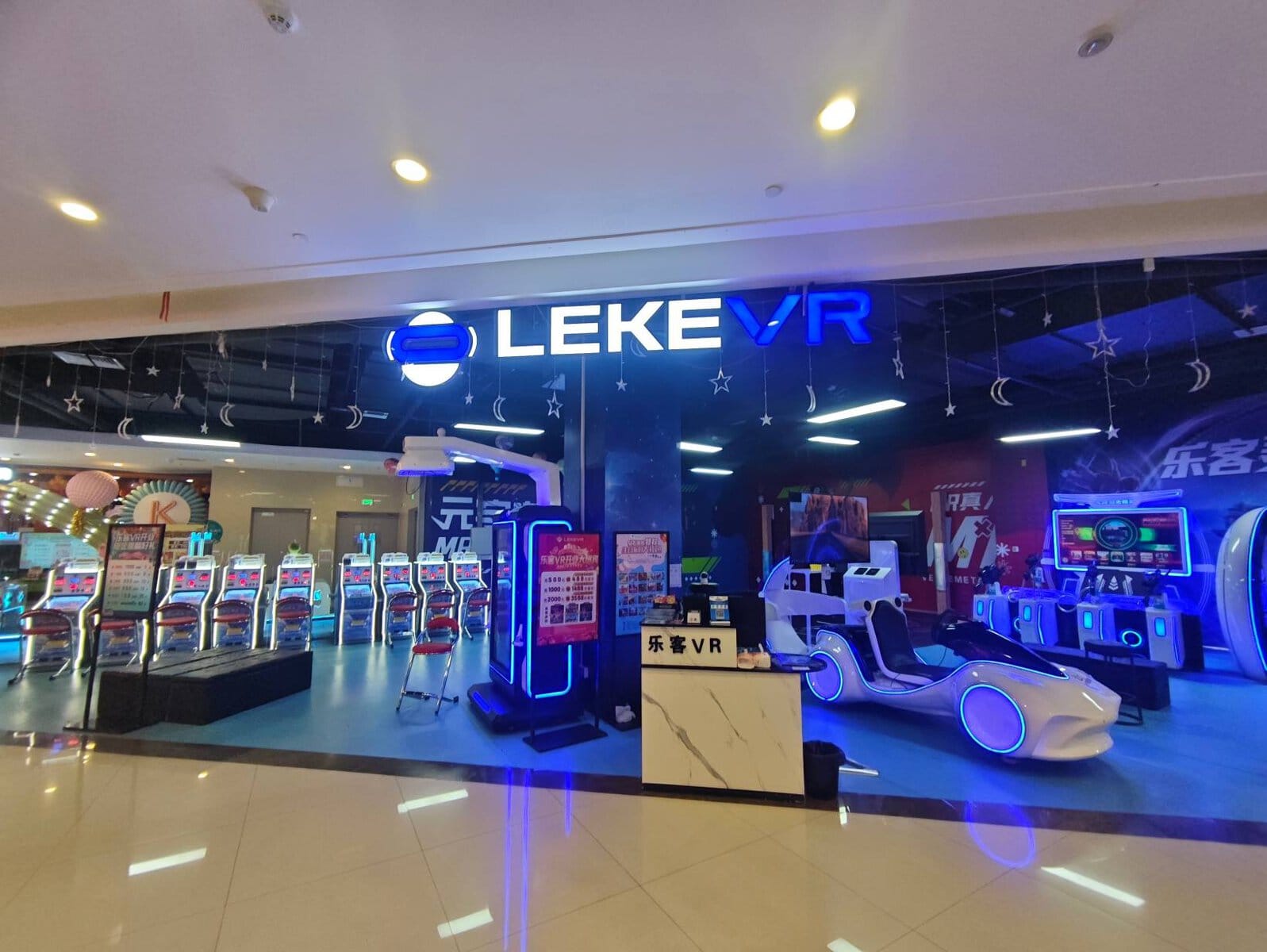
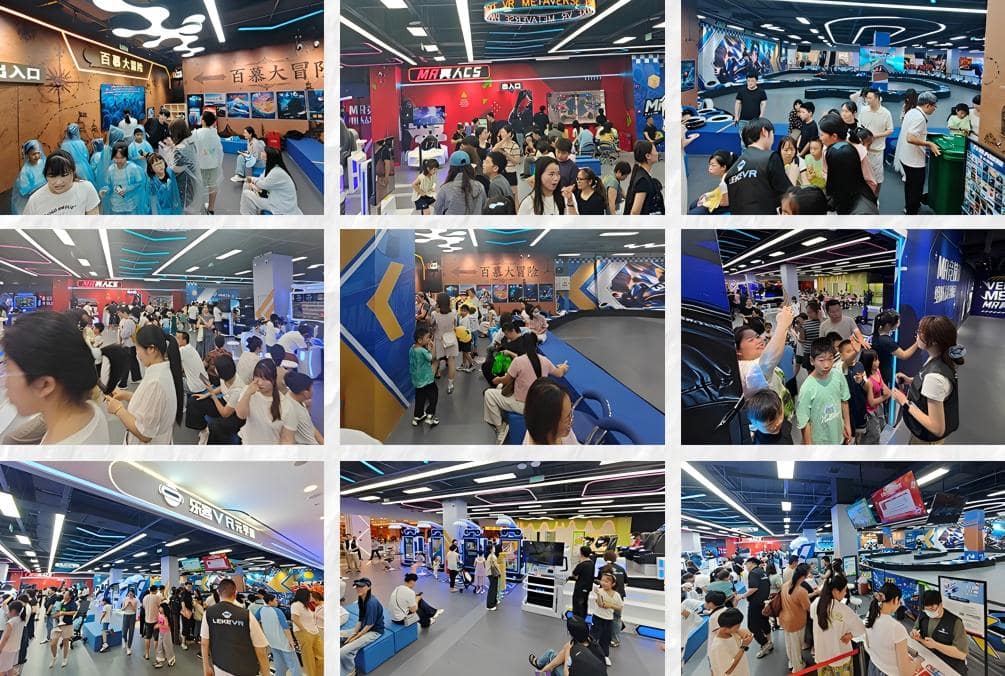
One of the clearest virtual reality examples at commercial scale is now live in Guangzhou, China. In Zengcheng district, LEKE VR delivered an ~1,000 m² venue running 8 attractions plus a free-roam X-Space VR arena—a mix of MR karting, multiplayer battle, racing, cinema pods, and a 6-seat motion theatre—that opened on August 22. This article walks through the venue, the exact equipment lineup with real product photos, the floor plan, and opening-day footage, so operators planning a large vr project can see precisely what one manufacturer can deliver.
A 1,000 m² VR Project in Guangzhou — Venue Overview
The Guangzhou Zengcheng venue is a full-scale vr entertainment venue rather than a kiosk or single-simulator setup. It combines passive cinema, active multiplayer, racing, and free-roam formats in one footprint—so every demand layer (families, friend groups, competitive players) is covered on the same floor. The core operating data below is presented as a professional reference for operators evaluating a large vr project:
Project Metric
Value
Location
Guangzhou, Zengcheng district, China
Total venue area
~1,000 m²
Opening date
August 22 (launch)
Experience count
8 attractions + 1 free-roam arena (9 experiences)
Format coverage
Cinema · Multiplayer · Racing · Free-roam · AR shooting
Delivery model
One manufacturer — layout, manufacturing, logistics, installation & training
8 Virtual Reality Examples in One Lineup
Each of these virtual reality examples targets a different revenue layer, from walk-in family volume to high-ticket group battles and competitive racing. The X-Space VR Arena anchors the space as a free-roam multiplayer system (1–20+ players, untethered PICO 4UE headsets, millimeter-level positioning), while the eight attractions below fill the rest of the floor. Combined, they form one of the most complete commercial vr arcade configurations a single supplier can build. Click any unit for full specifications.
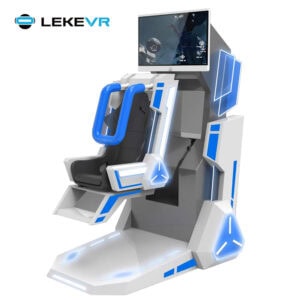
Dual-seat 9D motion chair with 360° rotation, zero-skill family entry. Specs →
AR Sniper
Group Battle
4
4-player AR shooting cabinet, 12 built-in games, group + party bookings. Specs →
Bermuda Naked-Eye 3D
Group Cinema
12–40
Naked-eye 3D arc-screen motion theatre, zero headsets, 6-axis platform, ~54 m². Specs →
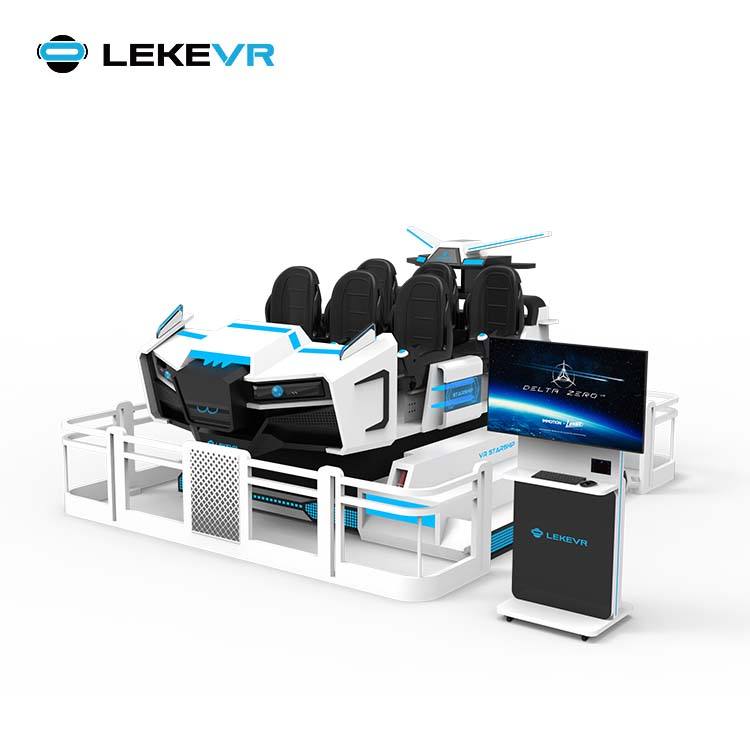
9D VR Cinema 6-Seat
Multi-Seat Cinema
6
Six-seat 9D motion cinema, high-capacity group throughput. Specs →
All product photos are official LEKE VR media from the manufacturer’s product pages. Capacities and footprints shown are reference values — final specs per product datasheet; the arena footprint is configured to the venue during the free CAD review.
Floor Plan & Zoning for the 1,000 m² Venue
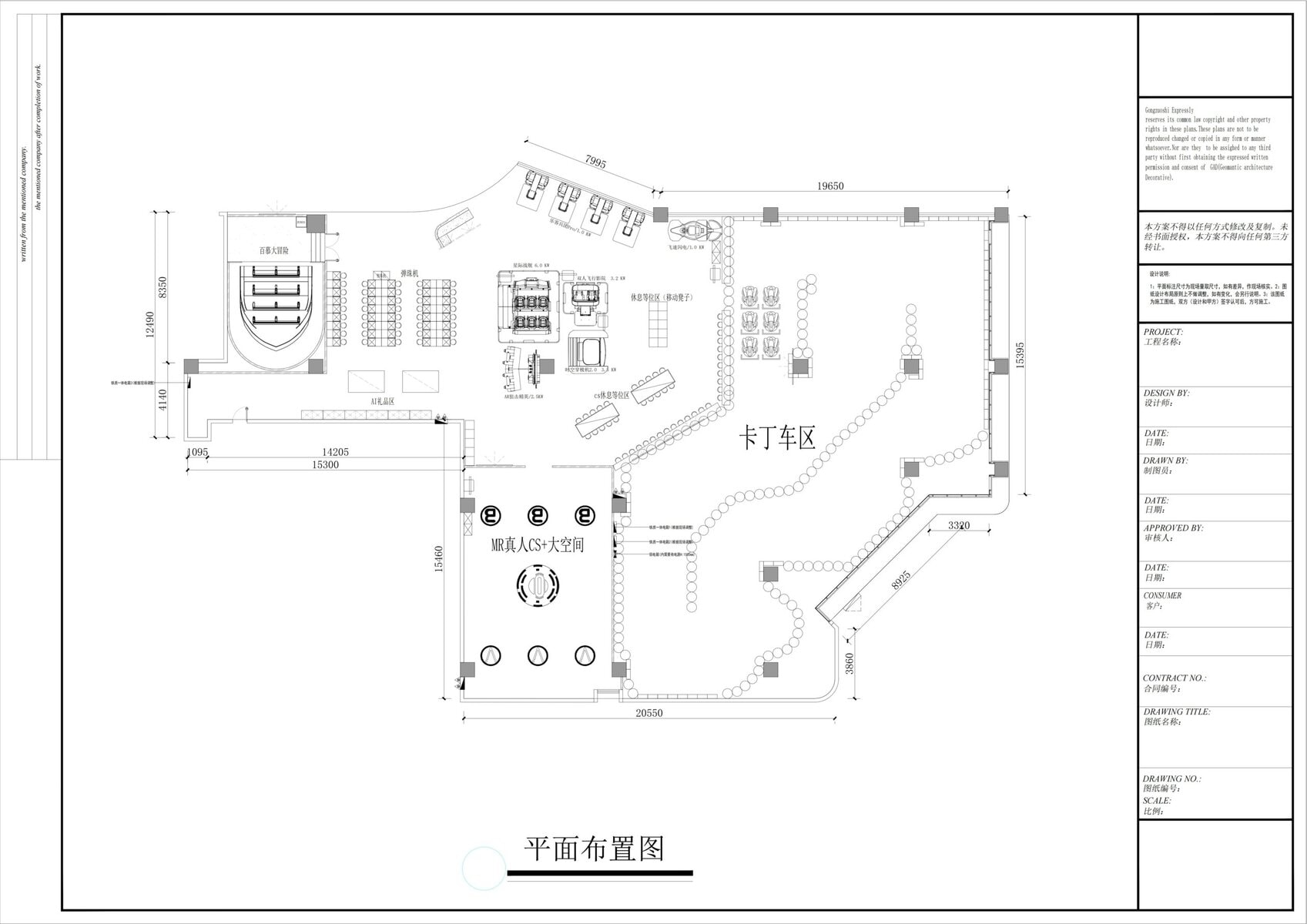
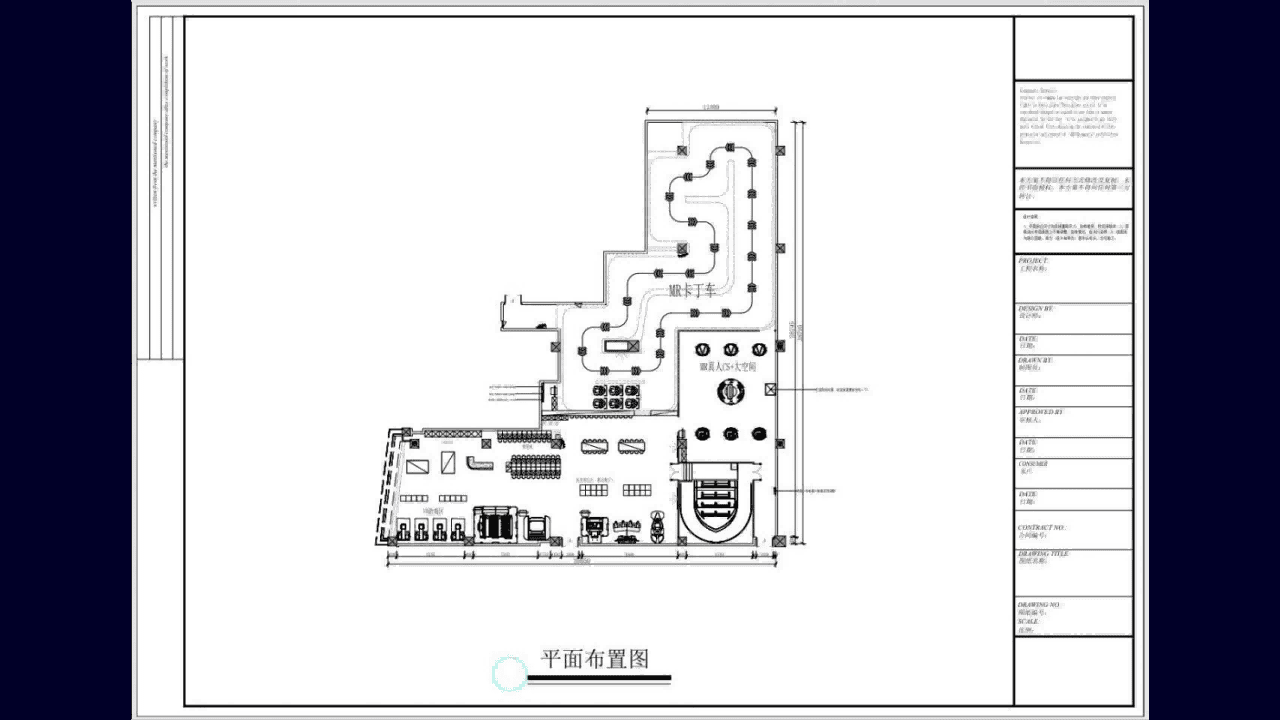
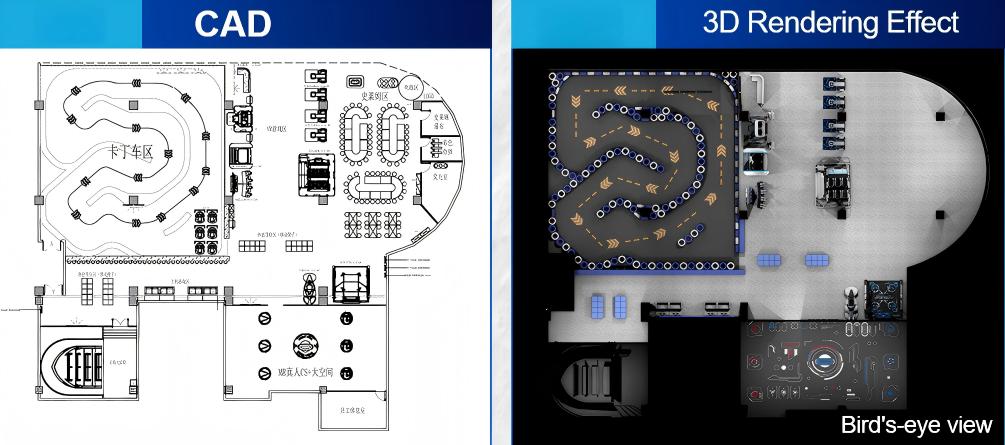
The Zengcheng project shipped with a complete design package: construction drawings, layout scheme, and venue design delivered by LEKE VR’s engineering team. The zoning separates quiet cinema from loud battle zones, keeps the arena open for movement, and puts high-draw racing near the entrance so queues become spectacles:
The full construction drawing for the 1,000 m² LEKE VR vr project in Guangzhou Zengcheng — zoning 8 attractions plus a free-roam arena.
Zone
Units
Why
Entrance / Racing
MR Go-Kart + VR Racing
Movement and racing create the loudest, most visible spectacle — ideal for drawing walk-ins.
Free-Roam Arena
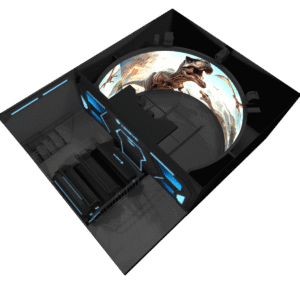
X-Space VR Arena
Large open floor with calibration zones and safety clearances for 20+ moving players.
Social Battle
AR Sniper + Self-Service Stand
Group shooter + self-serve kiosk cluster converts friend groups and quick plays.
Quiet, seated experiences grouped together — away from loud racing and battle zones.
Counter / Wait
Cashier + seating + entry gate
Central ticketing with seated queue converts wait time into repeat purchases.
Every LEKE VR venue ships with a free CAD review of the operator’s space before production — so whether you plan yourself or take our full design package, clearances, power, and guest flow are verified before a single unit is built. Request a floor-plan review →
Live Footage From Opening Day
The best virtual reality examples are the ones you can watch running with real customers. Below are real videos and photos from the Guangzhou Zengcheng venue’s August 22 launch — the same equipment mix, the same floor plan, in live operation. For operators planning a vr project of any size, this is the closest thing to a site visit before you invest.
Video 1 · Day-to-Day Operation
The 1,000 m² Venue in Normal Operation
Real storefront footage of the Guangzhou Zengcheng venue running with live customers — MR kart, free-roam arena, cinema, and AR shooting in action.
Video 2 · On-Site Service Demo
Explaining Services to Customers On-Site
A LEKE VR consultant walks customers through the venue’s services and options — showing how quickly visitors engage and stay with the store.
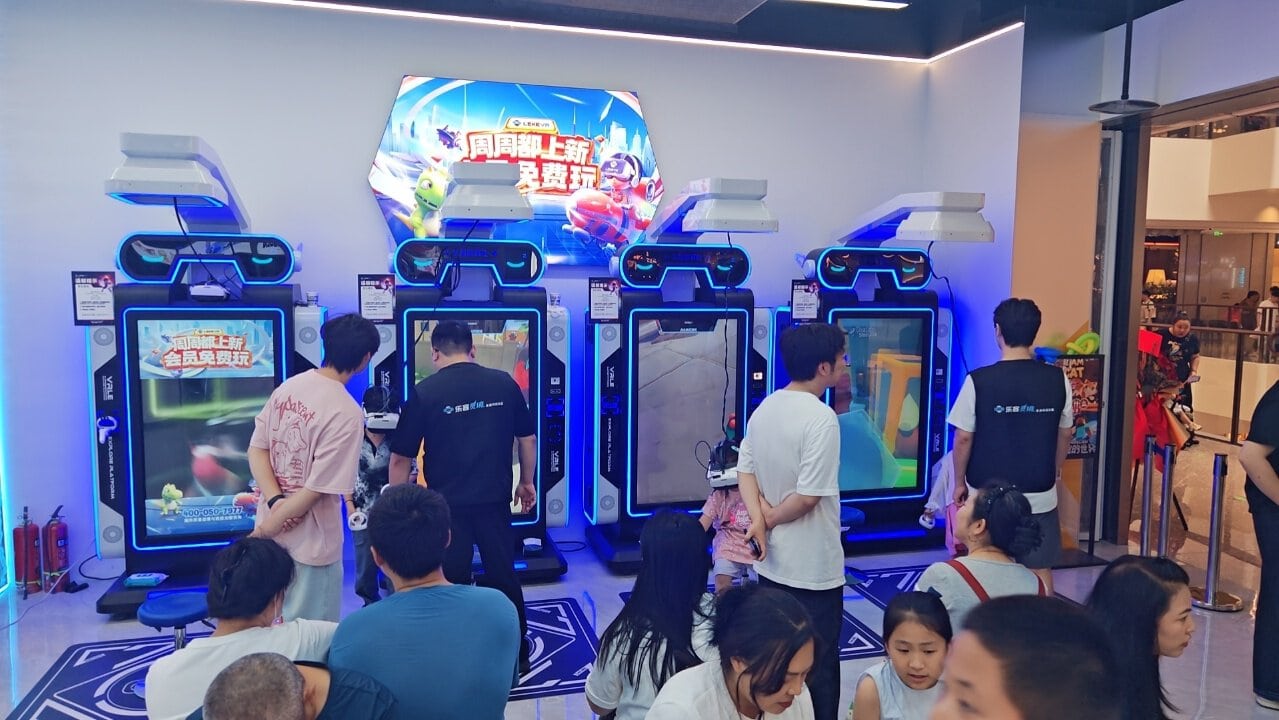
The ~1,000 m² LEKE VR venue in Guangzhou Zengcheng on opening day — 8 attractions plus the free-roam X-Space arena in live operation.
One Manufacturer for a 1,000 m² Venue
A venue this size usually means coordinating multiple suppliers — one for cinema, one for racing, one for the arena, plus a designer and an installer. The Guangzhou Zengcheng vr project shows the alternative: a single manufacturer accountable for the whole chain.
What the delivery chain covers:
Layout, construction & scheme drawings — professional venue design plus free CAD review of the operator’s space.
Factory-direct manufacturing — one accountable manufacturer for all eight attractions and the arena, pre-assembled and tested before crating.
Door-to-door logistics — shipping, customs, and import documentation coordinated for destinations worldwide.
Remote installation & commissioning — step-by-step video-call support; every unit commissioned on site.
Training, content updates & after-sales — SOP training, content refreshes, diagnostics, and a dedicated engineer team. Inquire about your project →
Frequently Asked Questions
How large is the Guangzhou venue and how many VR attractions does it hold?+
The Guangzhou Zengcheng venue is approximately 1,000 m² and runs 8 attractions plus a free-roam X-Space VR arena — 9 experiences in total covering cinema, multiplayer, racing, AR shooting, and free-roam formats. It opened on August 22.
Can a single manufacturer really deliver a 1,000 m² VR project?+
Yes. This venue is proof: LEKE VR delivered the layout drawings, manufactured all units, and coordinated logistics, installation, and training through one accountable team. You avoid the multi-vendor coordination risk that usually sinks large vr projects.
Do I get floor plans and venue design before production?+
Yes. Projects include construction drawings, layout schemes, and venue design, plus a free CAD review of your own space. The plan is validated for clearances, power, ventilation, and guest flow before manufacturing begins.
What are these virtual reality examples good for in my market?+
The mix covers the four demand layers that make a vr arcade business resilient: family walk-in volume (360° chair, cinema pods), group battles (AR sniper, arena), competitive replay (MR kart, VR racing), and high-capacity group cinema (Bermuda, 6-seat). The exact lineup is tailored to your space and audience.
How fast can a large venue go from order to opening?+
Timelines depend on the unit count, destination, and shipping route. After layout confirmation, manufacturing typically runs 25–60 days, plus sea freight (varies by region) and a short on-site commissioning window. Ask for a timeline for your city →
The Guangzhou Zengcheng venue is a working, large-scale example of what virtual reality examples look like when one manufacturer owns the whole vr project — from floor plan to opening day. Whether you are planning 100 m² or 1,000 m², LEKE VR can design, build, and deliver the same accountable package for your market. Get a custom 1,000 m² (or any-size) venue plan →
VR Entertainment Centers: Turnkey Setup Guide — Real Plan, Real Store, Real Reference
You want to open a vr entertainment center. You have searched for vr examples. You have browsed equipment catalogs. But three questions keep you from signing anything: how do these machines fit together on a real floor plan, how long until the investment pays back, and who handles support when something stops working three months after opening? This article answers all three. It takes you through the CAD design, the equipment matrix, a simulated ROI model, and the real on-site photographs of a LEKE VR store already operating inside a shopping mall in Tianjin, China — built on a right-triangle floor plan that most landlords would call “difficult to lease.” Spoiler: it works.
Store
Tianjin Jinyu Jiapin Mall
Floor Plan
Right-Triangle · ~150㎡
Equipment
6 LEKE VR Products
Focus Keyword
vr entertainment centers
Why Traditional FECs Are Losing Ground — and Where the Opportunity Is
Walk into a typical family entertainment center in 2026 and you will see the same three revenue engines that have been running for twenty years: ball pits and climbing structures (large footprint, fixed per-hour revenue), token-redemption arcades (shrinking audience as mobile gaming captures casual play), and bumper cars or mini-karting tracks (permanent floor modifications, rigid layout, impossible to relocate). These formats share one structural weakness: the experience is static. A ball pit is the same ball pit on the hundredth visit as it was on the first. There is no content update pipeline. There is no seasonal refresh. There is no new reason to come back. This is where a well-designed vr theme park or vr amusement park concept fundamentally changes the unit economics.
A vr entertainment center powered by LEKE VR replaces static physical infrastructure with software-defined experiences. The same VR Arena floor area that houses a free-roam shooter today can deliver an entirely new game title next quarter without moving a single cable. The AR Shooting bay can switch its twelve built-in games seasonally. The 2-Seat 9D Cinema and 360° VR Chair load new immersive film content on a quarterly update cycle. This is not a collection of arcade machines bolted to a floor. It is a content platform disguised as a retail space.
The Floor Plan Decoded — How a Right-Triangle Store Becomes a Fully Zoned VR Center
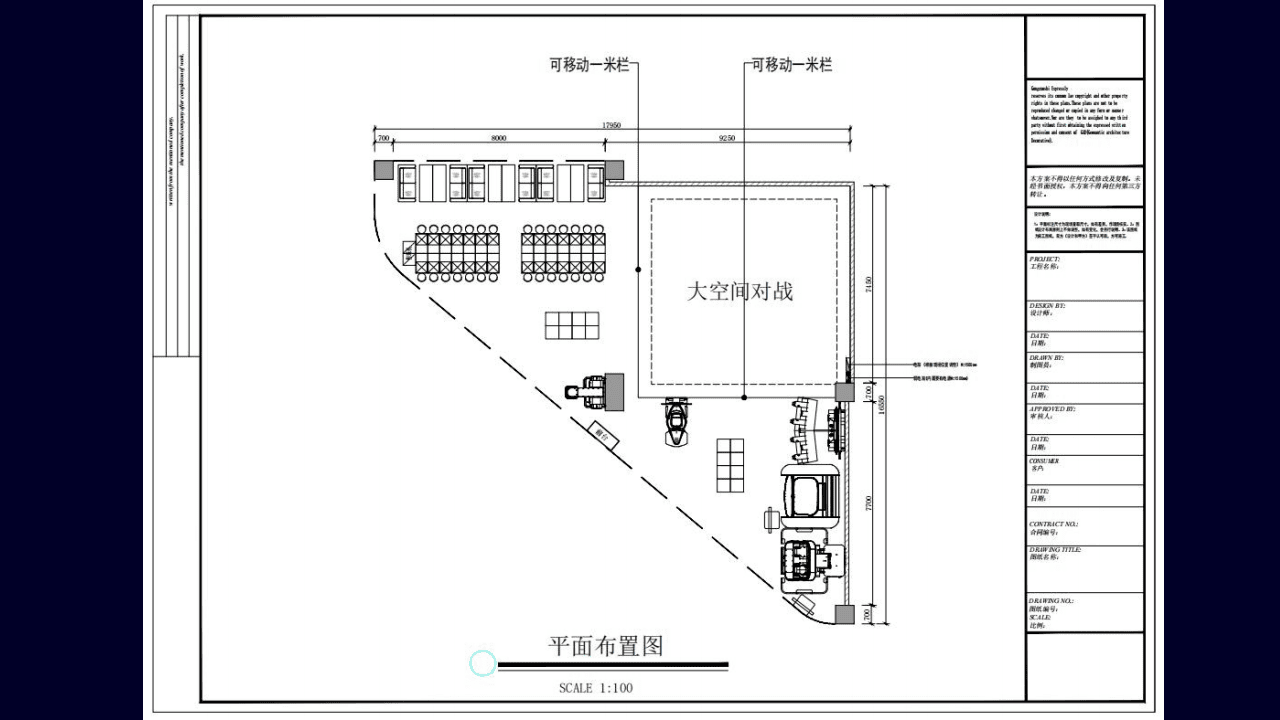
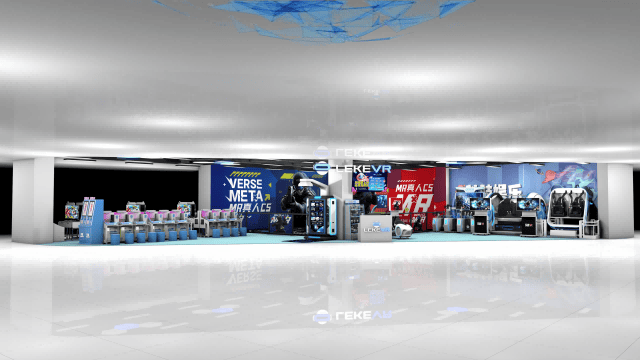
Most equipment catalogs assume you have a perfect rectangle. Real commercial leases rarely deliver one. The Tianjin store occupies a right-triangle unit with the hypotenuse facing the mall’s main pedestrian corridor. Instead of fighting the shape, the LEKE VR spatial design team used the triangle’s geometry to create four naturally separated functional zones, each with a distinct revenue role. Below are the actual CAD 2D floor plan and C4D 3D rendering produced during the design phase — the same documents every LEKE VR partner receives before a single piece of equipment is manufactured.
CAD 2D floor plan: the right-triangle layout mapped to millimeter precision — every equipment bay, circulation path, and zone dimension specified before construction began.C4D 3D rendering: a photorealistic pre-construction visualization — lighting, materials, equipment placement, and guest flow rendered so all stakeholders share the same reference before manufacturing begins.
Zone
Position
Equipment
Revenue Role
Storefront
Hypotenuse
Reception desk @ midpoint
Maximum visibility from mall corridor · three-direction entry
Immersion escalates with walking distance · ticket price increases per step
Support Zone
Base leg
Rest area
Post-session buffer · extends dwell time · relaxation before exit
Design Principle: The right triangle is not a problem to solve. It is a zoning advantage. The hypotenuse is the longest single edge, maximizing storefront exposure. The right-angle corner — where two solid walls meet — provides a natural enclosure for the largest attraction (VR Arena at 9,250 × 7,460mm) without needing additional barriers. The two legs create a natural progression path that carries guests deeper into the experience. LEKE VR’s spatial design team produces a custom CAD floor plan and C4D 3D rendering for every partner venue — these are standard deliverables, not upsells. Inquire about a custom floor plan for your venue →
Equipment Matrix — The Six Products That Power This Store
Six LEKE VR products deployed across four functional zones. Below is the complete equipment matrix with product page links:
Product
Format
Customer Role
Product Page
VR Arena
Multiplayer Free-Roam · ~9250×7460mm
Group bookings · Longest dwell time · Highest ticket
Case Study — A Fully Operational LEKE VR Store at Tianjin Jinyu Jiapin Mall
The following photographs are not renderings. They were taken inside the Tianjin Binhai Jinyu Jiapin Mall LEKE VR store — a right-triangle commercial unit currently in operation. Compare each photograph against the CAD and C4D documents above: the finished store matches the plan.
The hypotenuse storefront — reception at midpoint, full-length glass façade. Passersby see active VR equipment from the mall corridor.VR Arena at the right-angle corner. Two solid walls as natural boundaries; software-defined tracking conforms precisely to the triangular space.The equipment progression leg: 360° VR Chair → 2-Seat 9D Cinema → AR Shooting Arcade. Immersion depth and ticket price increase with walking distance. VR Arena sits beyond these three at the corner.The high-turnover zone behind reception: VR Motorcycle and VR Stand Stations. Shortest conversion path — guest enquires at desk, turns around, plays.
🎦 Full Store Walkthrough Video
Complete walkthrough: from hypotenuse storefront → reception → high-turnover zone → equipment progression leg → VR Arena at the right-angle corner — with guests actively playing across all stations. Watch on YouTube →
Simulated ROI Reference — CAPEX, OPEX & Payback Model
⚠ Disclaimer: The following figures are a simulated reference model based on the Tianjin store’s equipment configuration and typical mid-tier commercial parameters. Every location differs in rent, foot traffic, local pricing, staffing costs, and market conditions. These numbers are provided for business planning reference only and do not constitute a guaranteed earnings projection. LEKE VR builds a customized financial model for each partner during the site assessment phase.
Europe / North America scenario: at higher per-session pricing ($6–10 blended), net margin 30–40%, simulated payback approximately 6–10 months under stable traffic.
Southeast Asia / Middle East scenario: at lower per-session pricing ($3–6 blended) with higher foot-traffic volume, simulated payback approximately 8–14 months.
These are simulated reference scenarios only. Actual results depend on your specific location, local market conditions, staffing model, and operational execution. LEKE VR does not guarantee any specific financial outcome.
After-Sales Support — What Happens After the Equipment Arrives
For overseas buyers, the most important question is not “what does the equipment cost.” It is “what happens when something stops working six months after opening?” LEKE VR’s after-sales system is designed to keep a venue running across time zones, without requiring an on-site technician from China:
Support Layer
What It Means for You
Remote Installation Assistance
Real-time video-call guidance through every step of assembly and calibration, plus comprehensive installation documentation. Your local team does the physical work; our engineers verify every connection remotely.
Remote Equipment Diagnostics
When a fault is reported, our engineers diagnose the issue remotely before any parts are shipped. Most software-level issues are resolved in the same session. Hardware faults are identified and addressed without guesswork.
48-Hour Parts Shipment SLA
If a hardware component needs replacement, the part ships from our Shenzhen facility within 48 hours of confirmed diagnosis. Downtime is kept to the absolute minimum.
Quarterly Content Updates
New game titles and immersive film content ship quarterly to sustain repeat visitation. The hardware stays constant; the software keeps the experience fresh.
Operations SOP & Launch Kit
Staff training manual covering equipment SOPs, customer flow management, and safety protocols. Pre-built launch marketing kit including social media templates and on-site signage artwork.
Dedicated After-Sales Engineer
Each partner venue is assigned a dedicated engineer contact. You are not routed through a general support queue. The person who answers knows your store’s specific equipment configuration.
Comparing Your Path to Opening a VR Entertainment Center
How much does it cost to open a VR entertainment center, and what is the typical payback period?+
The simulated CAPEX reference for a six-product vr entertainment center configuration comparable to the Tianjin store ranges from approximately $120,000 to $196,000, including VR Arena, AR Shooting, 2-Seat 9D Cinema, 360° VR Chair, VR Motorcycle, VR Stand Stations, and installation. Monthly OPEX is estimated at $5,100–12,300 depending on location. These are simulated reference figures only. Simulated payback references range from 6–10 months (Europe/North America) to 8–14 months (Southeast Asia/Middle East) under conservative assumptions. LEKE VR builds a customized financial model for each partner. No specific outcome is guaranteed. Request a customized CAPEX estimate →
I am based overseas. How does LEKE VR handle installation, training, and technical support?+
LEKE VR’s global after-sales system is built around remote support infrastructure: (1) Remote installation assistance — real-time video-call guidance through every assembly and calibration step, backed by comprehensive documentation; (2) Remote equipment diagnostics — most software faults are resolved in the same session; hardware faults are diagnosed before any parts ship; (3) 48-hour parts shipment SLA from our Shenzhen facility; (4) Quarterly content updates to sustain repeat visitation; (5) Operations SOP and launch marketing kit included; (6) a dedicated after-sales engineer assigned to your venue — not a general support queue. Learn about turnkey global deployment →
Can LEKE VR design a floor plan for an irregularly shaped commercial unit?+
Yes. The Tianjin store documented in this article is a right-triangle unit — exactly the kind of irregular floor plan that many landlords struggle to lease. LEKE VR’s spatial design team produces a custom CAD 2D floor plan and C4D 3D rendering for every partner venue, regardless of shape — right triangles, L-shapes, arc-shaped corners, and narrow-depth units. These are standard deliverables, not optional upsells. Request a custom floor plan for your venue →
What equipment and floor space do I need to open a VR entertainment center?+
A vr entertainment center is not a collection of machines in a room. It is a designed space where every equipment position, every circulation path, and every customer touchpoint is planned before manufacturing begins — on a CAD floor plan, visualized in a C4D rendering, and validated in real stores like the Tianjin Jinyu Jiapin Mall location documented in this article. Six products. Four functional zones. A right-triangle floor plan that most landlords would call difficult — working. One manufacturer. One accountable partner. The floor plan, the equipment matrix, the simulated ROI reference, and the real on-site photographs are all in this article. The next step is a conversation about your specific venue. Start that conversation here →
Virtual Reality Examples: Inside LEKE VR’s New 1,000㎡ Flagship at Shanghai PRISMA Center
If you have ever searched for vr examples and found only renderings, marketing brochures, or staged product shots—this article is different. On July 6, 2026, LEKE VR opened a 1,000㎡ flagship vr experience center inside Shanghai’s PRISMA Xinjia Center, a newly opened premium commercial complex. We walked through the store with a camera on an operating day. What follows is a real photo report—no stock photos, no mockups. Seven photographs spanning the on-site experience and the spatial design that preceded it, plus a walkthrough video. If you are evaluating vr simulation experiences for a commercial project, this is what the finished product looks like—from blueprint to opening day.
Location
Shanghai PRISMA Xinjia Center
Opened
July 6, 2026
Format
1,000㎡ Flagship
Photos
7 + Video
Focus Keyword
vr examples
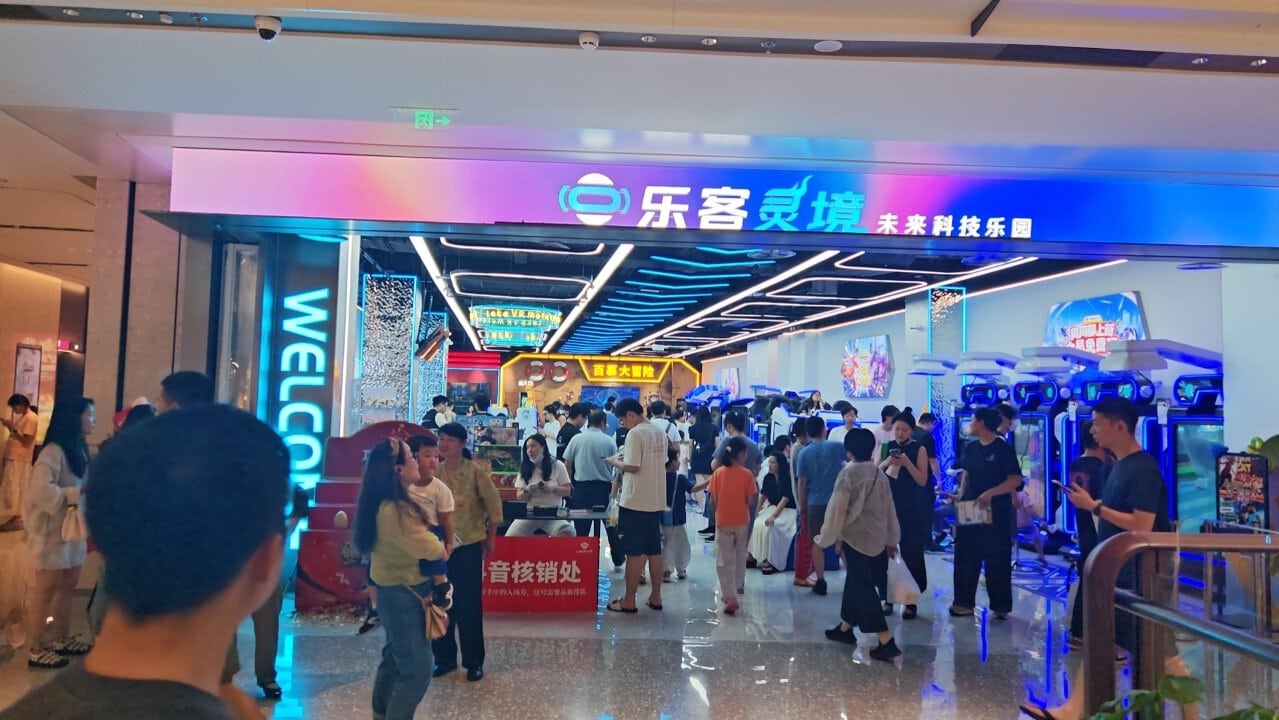
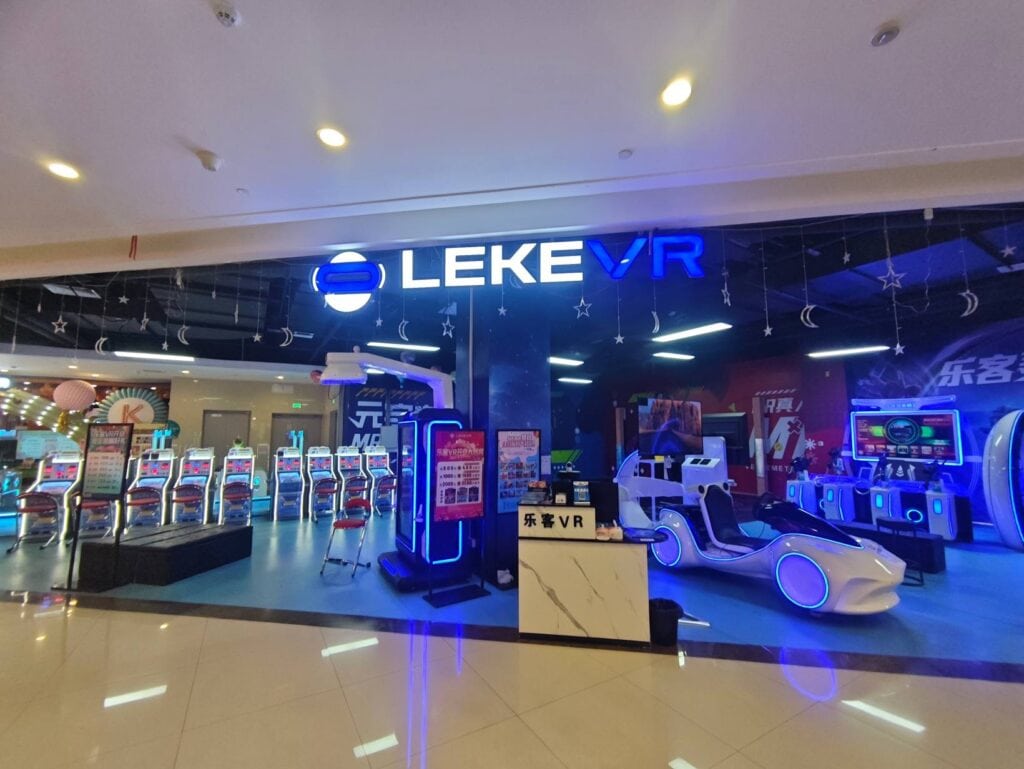
LEKE VR 1,000㎡ flagship at Shanghai PRISMA Xinjia Center — opened July 6, 2026. Premium mall entrance brand exposure on a primary pedestrian artery.
From Mall Entrance to Store Front — The Foot-Traffic Journey
Shanghai PRISMA Xinjia Center is one of the city’s newest premium commercial complexes. LEKE VR occupies a high-visibility position on a primary pedestrian artery, with the storefront visible from the moment visitors step off the escalator. The brand signage spans the full width of the entrance—a deliberate spatial strategy that turns every passing shopper into a potential walk-in guest. There is no door to push open, no ticket window blocking the view. The store begins where the mall corridor ends.
What this photograph captures is the first principle of a successful vr experience center in a shopping mall: visual permeability. The guest does not decide to enter based on a menu board. They decide because they can see movement, light, and other people having fun from thirty meters away. LEKE VR’s spatial design team applies this principle from the first architectural sketch—as the floor plan later in this article will make clear.
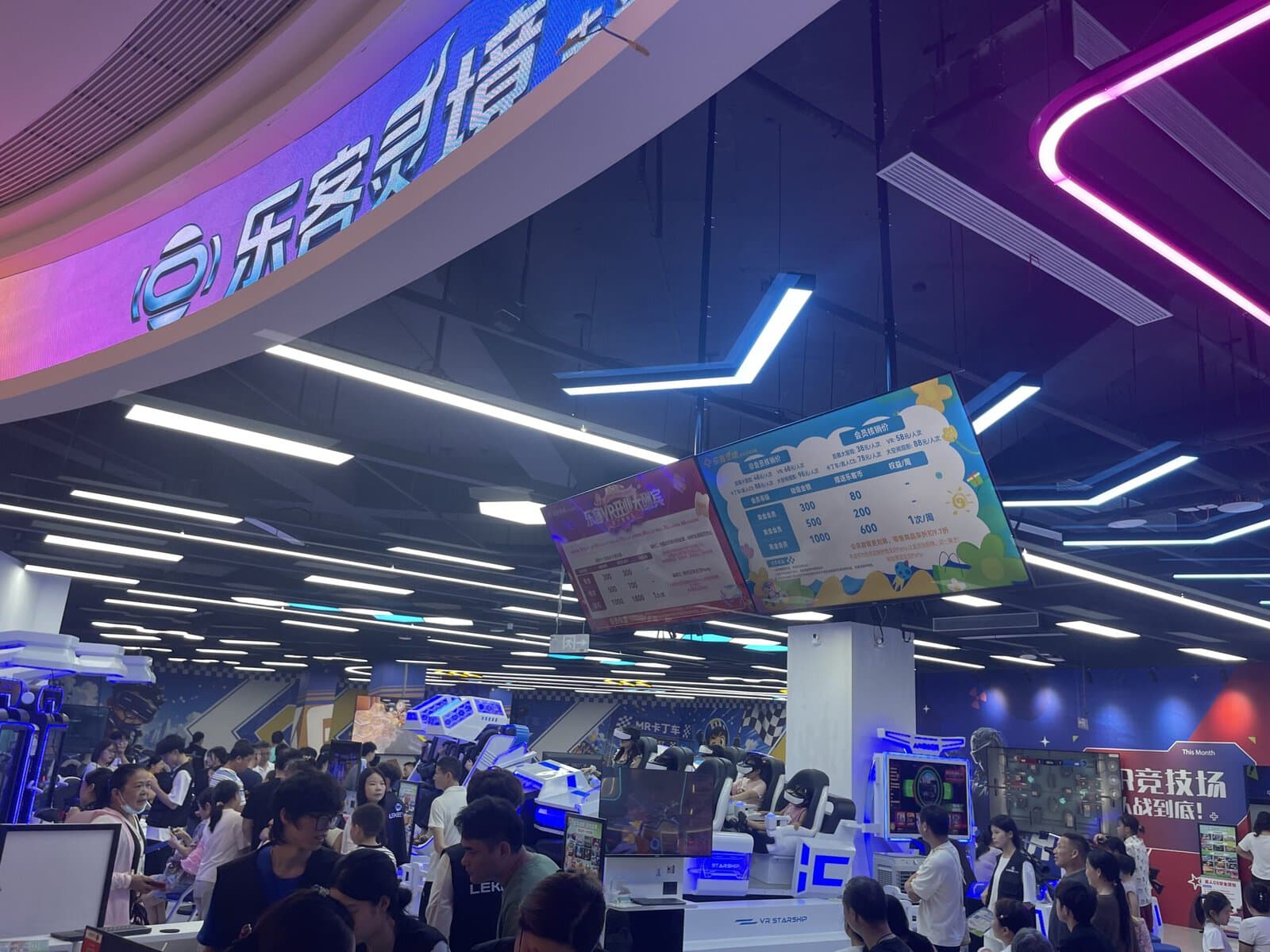
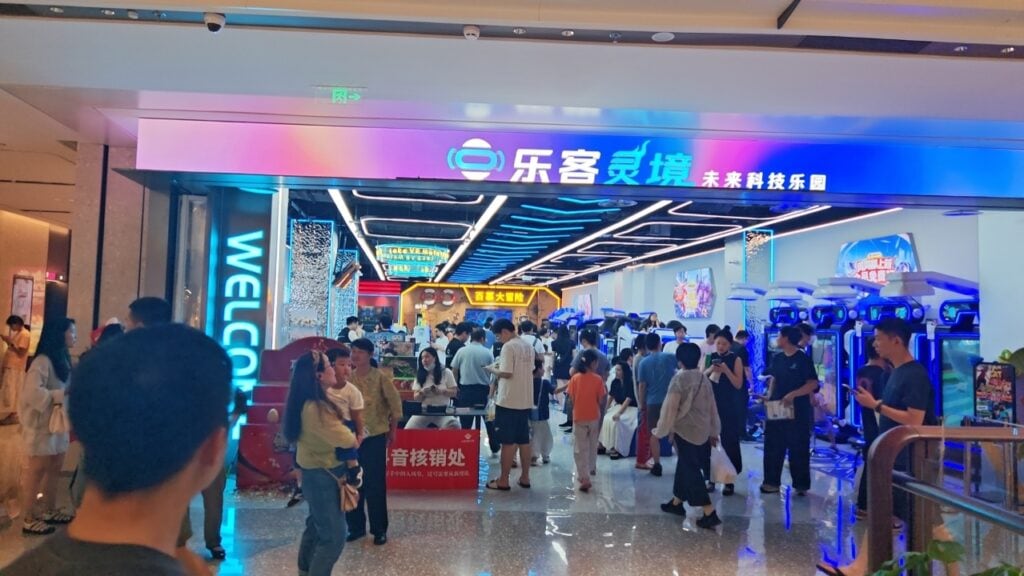
Opening-weekend crowd at the LEKE VR Shanghai flagship entrance — the open-plan storefront converts passing mall traffic into walk-in guests.
The second photograph shows the reception and queuing area during the opening weekend. The reception desk is positioned to the side—not as a barrier across the entrance—so guests flow naturally into the space rather than being stopped at a gate. The queue itself, visible from outside, signals social proof to passersby. Two staff members handle check-in and equipment orientation simultaneously, keeping the queue moving without congestion. These operational details—desk placement, queue visibility, staff-to-guest ratio—are not improvisations; they are designed into the floor plan before a single piece of equipment arrives on site.
Design Insight: Among available vr examples, the stores with the highest walk-in rates share one trait: guests can see other guests playing before they commit to paying. The open storefront is not an aesthetic choice—it is a conversion mechanism. Explore LEKE VR’s venue design service →
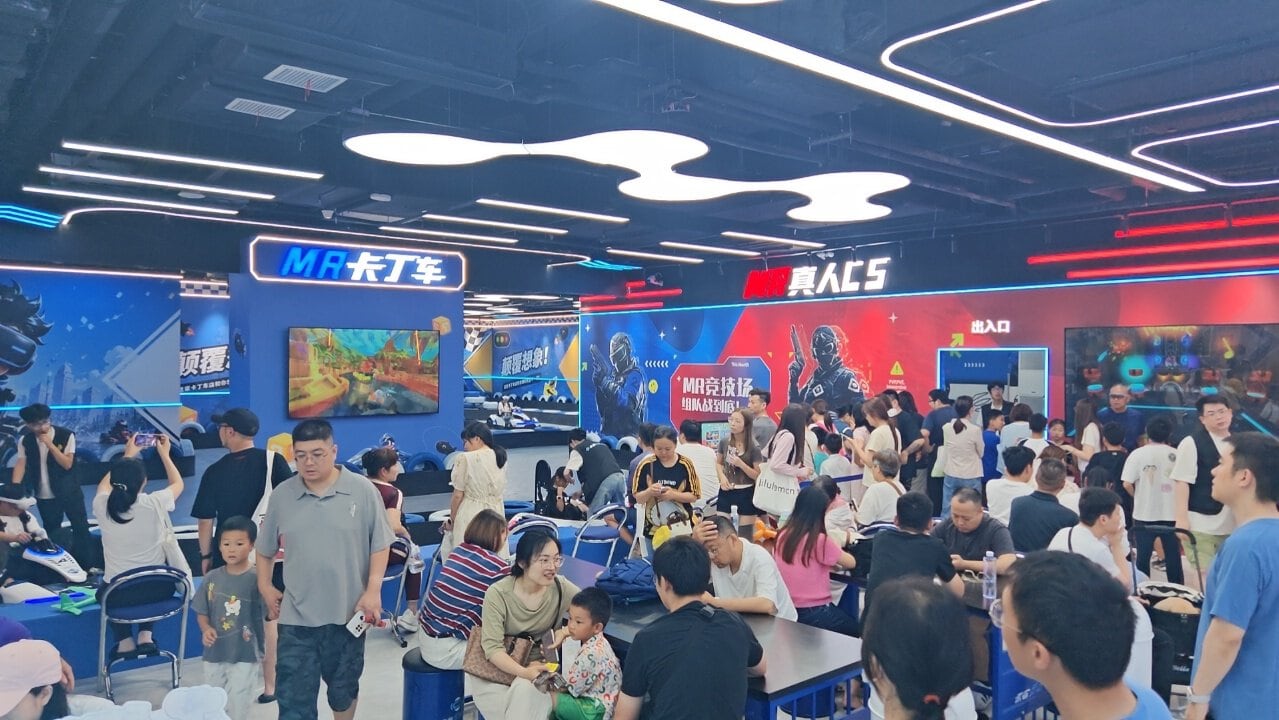
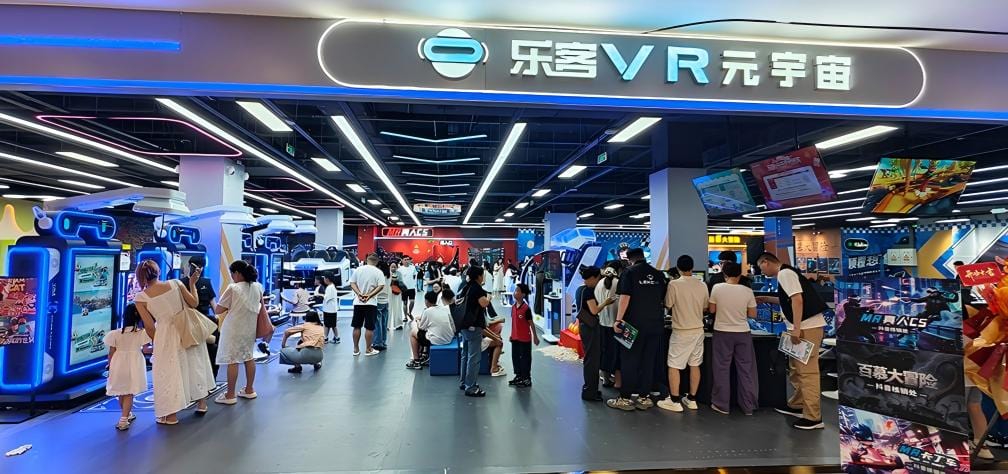
Inside the 1,000㎡ LEKE VR Shanghai flagship — a panoramic view across racing, arena, cinema, and solo-play zones with guests distributed across all areas.
First Impressions — The Scale of a 1,000㎡ VR Experience Center
The third photograph is an ultra-wide view from the center of the store. What hits first is not any single piece of equipment—it is the spatial scale. A 1,000㎡ vr experience center does not feel like a collection of machines in a room. It feels like a destination. Guests are visible across every zone: racing cockpits on the left, the free-roam arena at center-rear, families at cinema bays on the right, solo players on standing platforms scattered throughout.
Three observations from this image are relevant for anyone searching for vr examples to benchmark against:
✓Zonal separation works. Guests in the racing zone are fully engaged and do not interfere with the cinema zone. Each bay maintains its own acoustic and visual identity.
✓Solo and group experiences coexist. Standing platforms fill the gaps between larger group attractions. When the arena is booked, solo players rotate through stand stations; when cinema bays empty between sessions, overflow feeds into the arena queue.
✓Circulation space is engineered, not wasted. The 15–20% of floor area dedicated to walkways and queue zones prevents claustrophobia at peak capacity. A 1,000㎡ store that crams equipment into every meter will feel smaller than a well-designed 500㎡ zone that breathes.
🎦 Walkthrough Video — See the Store in Motion
A first-person walkthrough of the LEKE VR Shanghai PRISMA flagship — from entrance through racing zone, arena, cinema, and solo-play areas on an operating day. Watch on YouTube →
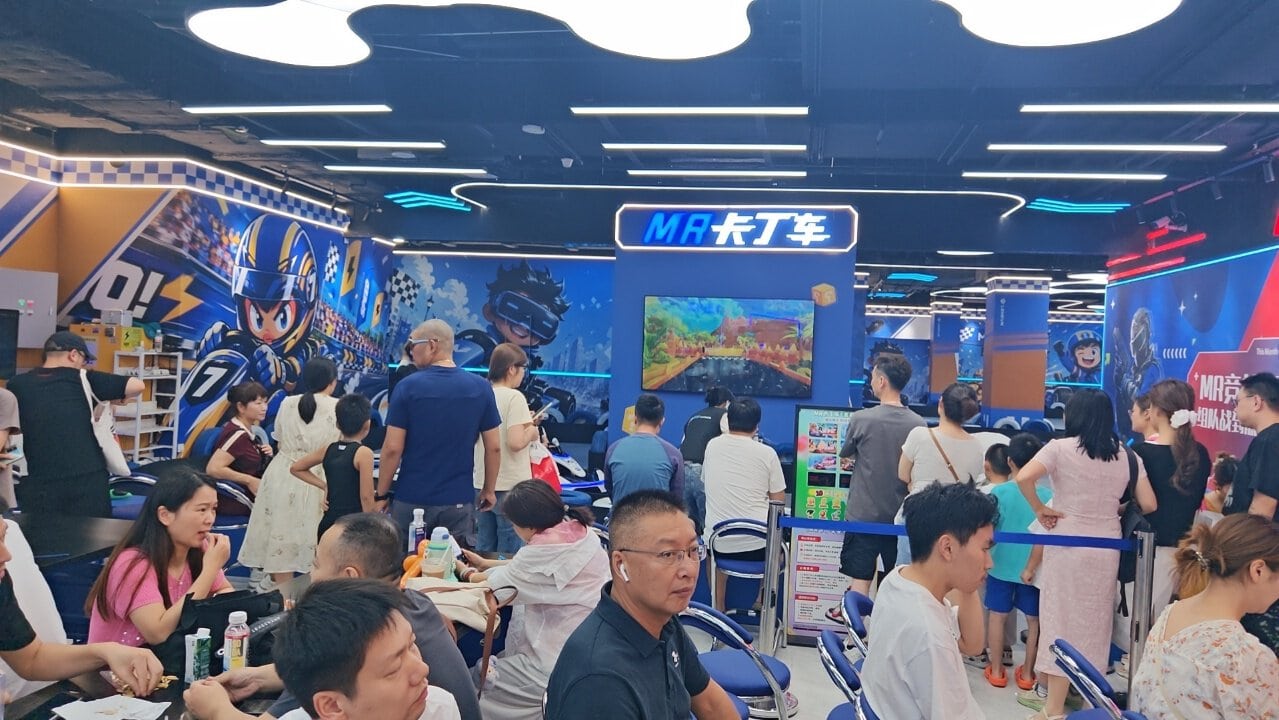
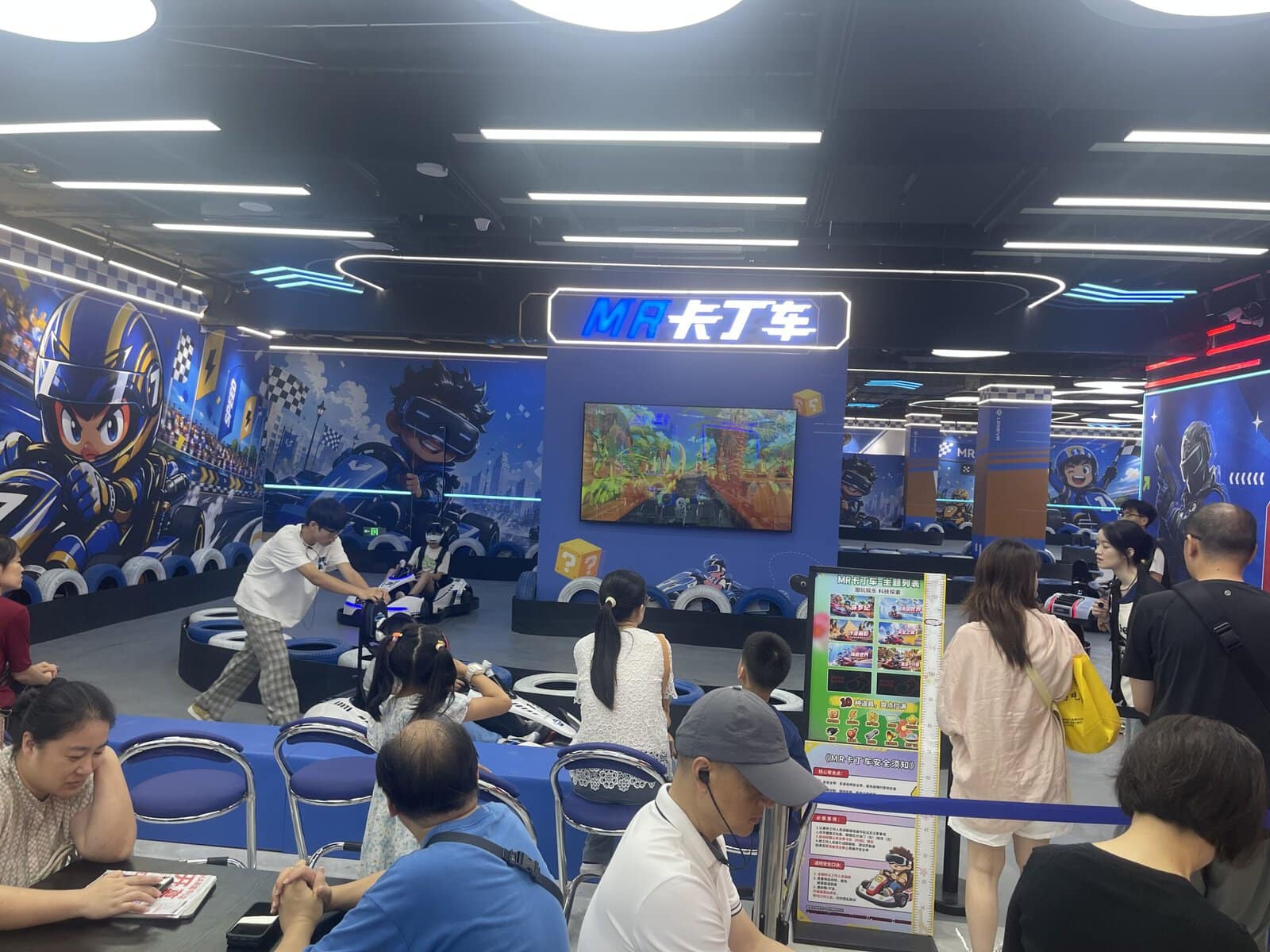
The racing zone at Shanghai PRISMA: MR Go-Kart, VR Motorcycle, and 360° double VR Chair — the store’s highest-energy visual anchor with the largest spectator crowd.
The Racing Zone — Where VR Racing Simulators Become Social Spectacles
What makes this zone the store’s primary crowd magnet is not just the equipment—it is the spectator dynamic visible in the photograph. The MR Go-Kart’s overhead display broadcasts the live race to everyone within sight. The motorcycle’s motion platform banks in physical space, catching peripheral attention from fifty meters away. The 360° VR Chair rotates through its full range, with guests inside visibly reacting to every drop and twist. None of this requires explanation. The bystander watches for thirty seconds, then asks: “How do I play?” For operators searching for vr racing simulators that function as both a revenue driver and a visual billboard, this photograph is the direct reference.
Product
Format
Best For
Link
MR Go-Kart
2-Player Mixed-Reality Racing
Competitive play · Spectator draw · No track needed
The high-throughput zone: Space Shuttle 2.0 9D VR Cinema and self-service VR Stand Stations — the store’s volume engine, sustaining weekday baseline revenue with rapid 5-minute session rotation.
VR Cinema & Solo Stations — The Volume Engine of the Store
The fifth photograph shifts focus to the opposite side of the store. In frame are the Space Shuttle 2.0 9D VR Cinema simulator (2-player motion-synchronized seating, sci-fi cockpit design) and multiple self-service VR Stand Stations (2.46m² footprint each, pre-loaded with 80+ games).
If the racing zone is the showpiece, this zone is the operational backbone. The Space Shuttle 2.0 runs 5-minute immersive film sessions requiring zero player skill—a family of four can walk in, sit down, experience a synchronized VR film, and leave within the runtime of a single song. The self-service VR Stand Stations go further: guests select their own game from an 80+ title library, put on the headset, and play without attendant assistance. One staff member can oversee six stand stations and two cinema units simultaneously. For vr simulation experiences that need to process high daily volume, this zone is the workhorse.
From Blueprint to Reality — The Design Documents Behind the Store
What the on-site photographs do not show is the design process that preceded the build. Every LEKE VR flagship begins as a spatial plan—first a 2D equipment layout, then a fully realized C4D 3D visualization—before a single piece of equipment is manufactured for the site. Below are the actual design documents for the Shanghai PRISMA store. Compare them against the panoramic interior photograph above: the finished venue matches the plan with near-pixel precision.
2D floor plan — the Shanghai PRISMA flagship equipment layout showing all five zones, circulation paths, and bay dimensions before construction began.C4D 3D spatial rendering — photorealistic pre-construction visualization of the Shanghai PRISMA flagship interior, matching the final built result shown in the panoramic photograph.
The floor plan and C4D rendering are not marketing assets—they are delivery documents. When a commercial property developer or investor partners with LEKE VR, these are the deliverables produced during the spatial design phase, before manufacturing begins. The 2D plan maps every equipment bay to exact dimensions, ensuring the racing zone, arena, cinema, solo platforms, and circulation space fit the floor plate without compromise. The C4D visualization renders the finished interior in photorealistic detail—lighting, materials, equipment colors, guest flow—so every stakeholder sees the same picture before committing to construction.
For operators who search for vr examples not just to see finished stores, but to understand the design methodology behind them, these two documents reveal the full pipeline: spatial strategy on paper, visual confirmation in 3D, and the finished venue captured in the photographs above. The Shanghai PRISMA store is not a one-off creative exercise. It is a replicable spatial system.
Design-to-Delivery Pipeline: LEKE VR’s spatial design team produces a custom 2D floor plan and C4D 3D visualization for every venue—not as an optional upsell, but as a standard step in the turnkey delivery process. The Shanghai PRISMA documents shown here are the actual deliverables that preceded the build. Inquire about a custom venue design for your location →
The Full Equipment Matrix of the Shanghai Flagship
While the photographs focus on the zones with the highest visual impact, the Shanghai flagship’s complete product matrix spans five functional zones. Below is the full equipment lineup, organized by zone and linked to product pages:
What equipment does a 1,000㎡ flagship VR experience center typically include?+
Based on the Shanghai PRISMA flagship documented in this article, a full-scale vr experience center uses a five-zone architecture: Racing Zone — MR Go-Kart, VR Motorcycle, and 360° VR Chair for competitive play and spectator draw; Arena Zone — Multiplayer VR Arena for group bookings and social experiences; Cinema Zone — Space Shuttle 2.0 9D VR Cinema for high-throughput family sessions; Solo Zone — VR Stand Stations for impulse self-service play; and a Family Zone — 4-Player AR Shooting Arcade for no-headset parent-child co-play. Every venue receives a custom floor plan and C4D 3D spatial design tailored to its specific dimensions and demographics. Request an equipment consultation →
Which VR experiences attract the most customers in a large-format commercial venue?+
VR racing simulators consistently generate the largest spectator crowds and serve as the primary walk-in conversion driver—the MR Go-Kart in particular, with its overhead spectator display, pulls the largest onlooker audiences. The Multiplayer VR Arena follows as the strongest group-booking and social-content driver. For pure throughput volume, the Space Shuttle 2.0 9D Cinema and VR Stand Stations process the highest daily session counts. The AR Shooting Arcade captures the family demographic that might hesitate at VR headsets. A successful flagship does not rely on one category; it combines all five zones so each time-of-day and each customer segment has a natural entry point. Explore the full product matrix →
Does LEKE VR provide store design and spatial planning before equipment manufacturing?+
Yes—spatial design is a standard step in the LEKE VR turnkey process, not an optional add-on. Every venue receives a custom 2D floor plan mapping equipment bays to exact dimensions, followed by a photorealistic C4D 3D visualization of the finished interior—lighting, materials, equipment placement, and guest circulation. These are the same design documents shown in this article for the Shanghai PRISMA flagship. The full delivery chain covers: site assessment and equipment mix planning, 2D floor plan + C4D 3D spatial design, factory manufacturing with pre-shipment testing, global logistics, remote installation assistance, staff training with launch marketing kit, and ongoing quarterly content updates with 48-hour after-sales SLA. No franchise fees. No revenue sharing. Inquire about flagship venue deployment →
The Shanghai PRISMA Xinjia Center flagship is not a rendering. It is a real 1,000㎡ vr experience center that opened on July 6, 2026—documented here in seven photographs, a walkthrough video, and the actual floor plan and C4D visualization that preceded construction. Five equipment zones. Seven product lines. A design-to-delivery pipeline visible from blueprint to opening day. For operators and commercial property developers searching for vr examples they can benchmark against, this venue is available as a live reference. Inquire about building your own LEKE VR flagship →
50㎡ VR Zone Revenue Model: Scaling Profit Without Overexpansion
Search for “vr arcade” and you will find two kinds of content: glossy renderings of 500㎡ mega-venues, and forum threads asking whether a small VR zone can actually make money. This article is neither. It is a data-backed, square-meter-by-square-meter revenue model for a 50㎡ virtual reality experiences zone—the kind you can install inside an existing shopping mall, a supermarket retail strip, or an airport concourse. No overexpansion. No $500k gamble. Just a disciplined spatial architecture, a three-zone revenue layering strategy, and the throughput numbers to underwrite the investment. If you have ever searched for vr examples of compact, profitable setups—or wondered whether a rec room can evolve into a micro-entertainment hub—this is the blueprint.
Focus Keyword
vr arcade
Reading Time
12 minutes
Model Coverage
50㎡ · EU & SEA · CAPEX-to-Payback
Why 50㎡ Is the Strategic Sweet Spot for a VR Arcade
If 30㎡ is the entry-level precision format—compact, low-overhead, but fragile—then 50㎡ is the controlled scale model. It is the smallest footprint that unlocks what makes a vr arcade structurally profitable: revenue layering. At 30㎡, every machine must multitask; revenue is dependent on peak utilization; one machine going down can collapse the day’s income. At 50㎡, you can introduce dedicated zones, separate traffic types, engineer price differentiation, and smooth volatility.
A 50㎡ virtual reality experiences zone is:
✓Large enough to support multiple revenue streams simultaneously, introduce structured queue management, create visible attraction in malls, and offer pricing tiers.
✓Small enough to operate with 1–2 staff, maintain cost discipline, and avoid high-risk rent commitments.
Key Insight: 50㎡ is not about cramming more machines into a bigger room. It is about revenue layering—the difference between a machine cluster and a micro-entertainment hub. Among available vr examples, the 50㎡ model stands out as the format that balances investment discipline with revenue diversification. Explore LEKE VR’s compact zone solutions →
The Three-Zone Revenue Architecture
A stable 50㎡ VR zone does not succeed by accident. It succeeds because the equipment is organized into three distinct revenue zones. This separation prevents queue bottlenecks, revenue cannibalization, and underutilization during slow hours.
Revenue models live or die on throughput assumptions. Below is a blended utilization model assuming 5-minute sessions, 1-minute reset windows, and 55% blended utilization across a standard operating day:
Payback analysis (conservative): At a net margin of 30–40%, the European/North American scenario yields approximately $20,000–27,000 monthly net—4–6 month payback under stable traffic. The Southeast Asian/Middle Eastern scenario typically sees 6–10 month payback. These are conservative estimates based on reference data; actual performance depends on location quality, staffing efficiency, and content refresh cadence.
Strategic Insight — Why 50㎡ Outperforms a Traditional Rec Room: Three structural reasons. (1) Short 5-minute sessions with 1-minute resets create throughput density that passive entertainment cannot match. (2) Multi-layered pricing allows the same 50㎡ to extract different revenue rates from different customer segments simultaneously. (3) Group psychology—when a 4-seat cinema fills, bystanders are more likely to join the VR chairs or shooting unit rather than walk away, creating a self-reinforcing occupancy loop. A rec room filled with static gaming stations cannot replicate this dynamic because each station is a silo. A well-designed VR zone behaves as an ecosystem. Explore LEKE VR’s compact zone solutions →
Scaling Logic Beyond 50㎡
If a 50㎡ zone stabilizes for six or more months with consistent weekend throughput, the expansion path is not “double the floor space.” It is targeted scaling of what already works:
✓Duplicate the cinema — a second 4-seat unit doubles the highest-throughput zone without changing the operational workflow.
✓Add a second premium simulator — a 6DOF racing platform alongside the existing 3DOF unit creates a premium head-to-head tier.
✓Create a group party package — bundle Zone A + Zone C into a fixed-price group experience for predictable weekend revenue blocks.
Avoid: jumping directly to a 150㎡ arena without traffic proof. The discipline of 50㎡ is not a limitation—it is a verification stage.
How much does it cost to set up a 50㎡ VR arcade, and how long is the typical payback period?+
Total CAPEX for a commercial-grade 50㎡ vr arcade ranges from approximately $75,000 to $115,000, covering a 4-seat VR cinema, three VR chairs or standing platforms, one racing simulator (such as the LEKE VR 3DOF Racing Simulator), one compact shooting unit, and installation. Monthly OPEX (rent, 1–2 staff, utilities, maintenance) runs approximately $4,500–9,000 depending on location. Under conservative assumptions with stable traffic, European/North American markets typically see a 4–6 month payback; Southeast Asian/Middle Eastern markets 6–10 months. Every location is different, and LEKE VR builds a customized projection during site assessment. Request a CAPEX estimate for your location →
What equipment should I put in a 50㎡ VR zone to maximize revenue per square meter?+
The optimal 50㎡ configuration follows a three-zone revenue architecture: Zone A (18㎡) — a 4-seat VR cinema as the group anchor and visual billboard; Zone B (10㎡) — three VR chairs or standing platforms for high-turnover solo plays; Zone C (6㎡) — one racing simulator as the premium upsell tier; plus a compact shooting unit (6㎡) as flex/overflow. At 55% blended utilization, this processes 48–50 plays per hour across four pricing tiers, yielding approximately $6.60/hr per square meter in revenue density. Explore the recommended racing simulator →
What kind of VR experiences generate the highest throughput in a compact commercial zone?+
Among available virtual reality experiences for compact commercial venues, three categories consistently deliver the strongest throughput-to-footprint ratio: (1) multi-seat immersive cinemas — zero skill barrier, 5-minute sessions, processes 4 guests simultaneously; (2) solo VR chairs or standing platforms — fast rotation, impulse-friendly, fills gaps between group sessions; (3) motion racing simulators — lower hourly play count but highest per-session ticket price, functioning as the premium tier that lifts the blended revenue rate. The key is combining all three in a zone architecture that prevents bottlenecks and revenue cannibalization. Tour the X-Space group anchor platform →
A 50㎡ vr arcade is not about being bigger than 30㎡. It is about layered revenue, operational resilience, price segmentation, and space engineering. When designed properly—with a three-zone architecture that separates group anchor traffic from solo impulse plays and premium upsells—it behaves like a micro-entertainment hub, not a machine cluster. Among the available vr examples for operators evaluating their first or next move, the 50㎡ model stands out as the format that best balances investment discipline with revenue diversification. One manufacturer. One accountable partner. A zone model that works from day one.
VR Entertainment Business Case Study: A LEKE VR Store Generated $13,368 in a Single Day
VR Entertainment Business Case Study: A LEKE VR Store Hit $13,368 in a Single Day
On May 30, 2026, LEKE VR opened its doors on the third floor of Bubugao Meixi Xintiandi in Changsha, Hunan Province. Through its early operations, the store has averaged approximately $8,000 in daily revenue — and hit a single-day peak of $13,368 on International Children’s Day. This is a real VR entertainment business running LEKE VR’s full product matrix and turnkey brand solution inside a busy shopping mall. This article unpacks the products, the service chain, the revenue model, and the ROI reference behind the numbers, so you can evaluate whether a VR entertainment business powered by LEKE VR fits your next commercial project — as a VR arcade, a VR entertainment center, or a mixed-use Urban Entertainment Hub.
LEKE VR Metaverse — Changsha Bubugao Meixi Xintiandi store, 3F. A working VR entertainment business opened May 30, 2026.
Revenue Overview — Real Numbers from a Working Location-Based VR Store
The table below summarizes the verified revenue performance from the Changsha store’s early operations, expressed on a daily-average basis in USD. It reveals the revenue rhythm of a shopping-mall VR entertainment business: the opening surge, the holiday spike, the weekday baseline, and the weekend recovery — the same rhythm any vr arcade business plan needs to model before committing a dollar.
Metric
Value
Basis
Peak single-day revenue
$13,368
International Children’s Day (Jun 1)
Average daily revenue
~$8,000 / day
Verified early-operations average
Estimated monthly revenue
~$240,000 / month
30-day basis at daily average
Weekend & holiday peaks
Substantially above average
High-density foot-traffic conversion
Weekday baseline
Stable, lower
Predictable operational floor
Three clear patterns emerge. First: holiday surge capacity—on International Children’s Day the store recorded a single-day peak of $13,368, proving the product matrix can absorb high-density foot traffic and convert it at scale. Second: weekend reliability—every Friday-through-Saturday consistently outperforms weekdays, making weekends the dependable backbone of monthly turnover. Third: weekday stability—a predictable baseline keeps the store running cost-efficiently between peaks. These numbers offer a transparent view into the revenue rhythm of a real vr arcade business in action—and a realistic starting point for your own VR entertainment business model.
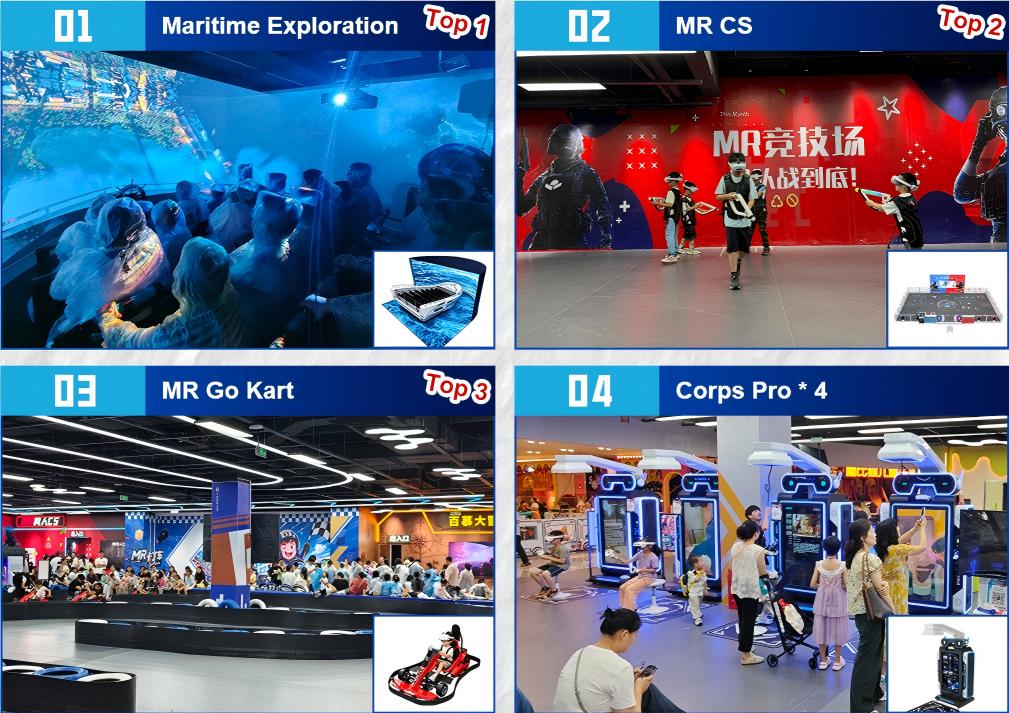
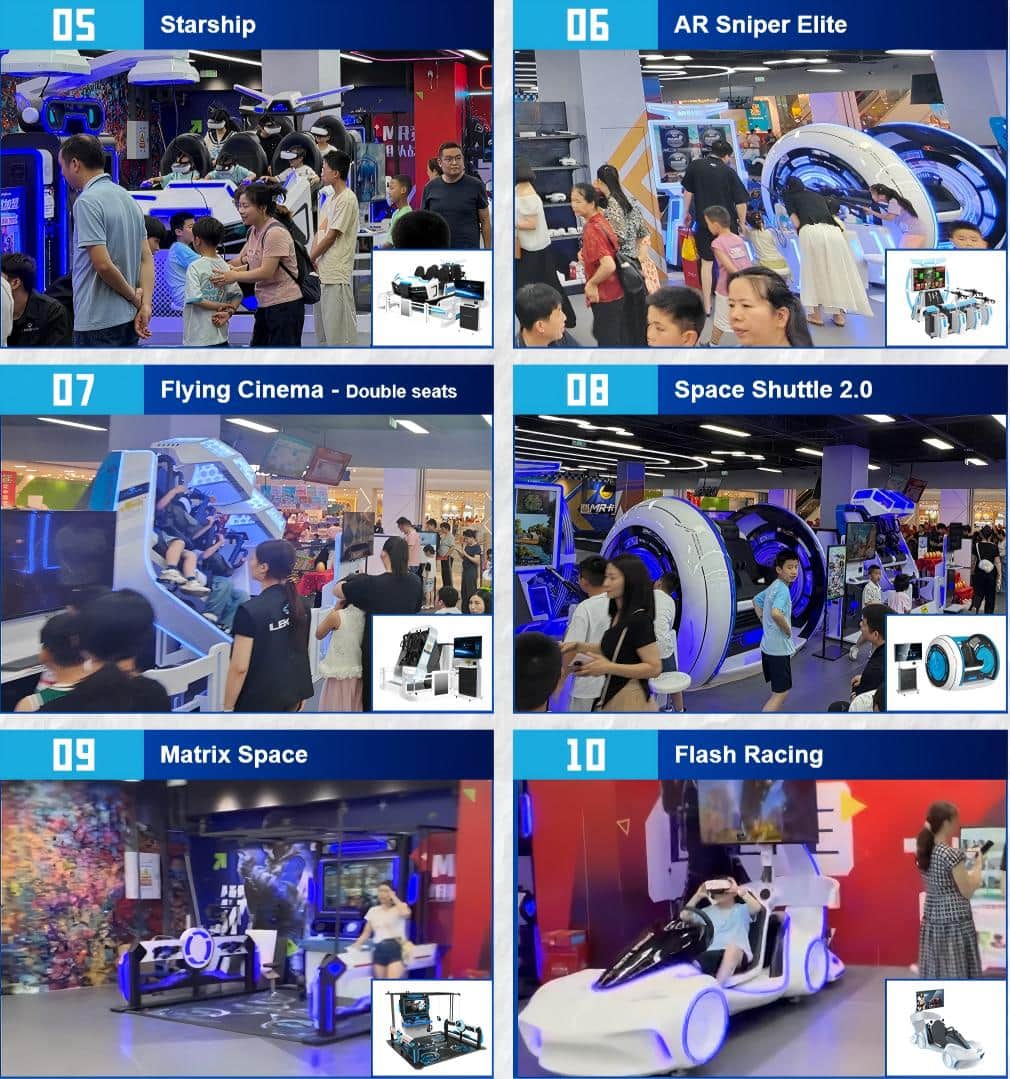
Customer equipment popularity ranking #1–4 — Bermuda Cinema, X-Space CS Arena, MR Go-Kart, Standing Platform.Customer equipment popularity ranking #5–10 at LEKE VR Changsha store, May 30 – June 8, 2026.
The customer ranking tells a clear product story for anyone planning a VR entertainment center. The top four attractions—Bermuda Cinema (immersive theater), X-Space Real-Person CS (large-scale free-roam arena), MR Go-Kart (mixed-reality racing), and Standing Platform (solo VR bays)—together demonstrate that a successful virtual reality entertainment venue needs both social-group attractions and solo-play stations. The large-space arena and MR karting products, in particular, drive the highest per-session ticket values and are the primary revenue engines behind the weekend and holiday surges shown in the data above.
The LEKE VR Product Line — What Powers the Revenue
The Changsha store is powered by LEKE VR’s full commercial product matrix—a curated lineup of motion simulation, immersive VR, and mixed-reality attractions designed to capture every age group and play style that walks through a shopping-mall entrance. Here is the equipment that turned third-floor retail space into a VR theme park and a profitable location based entertainment hub capable of processing thousands of guests in a single weekend.
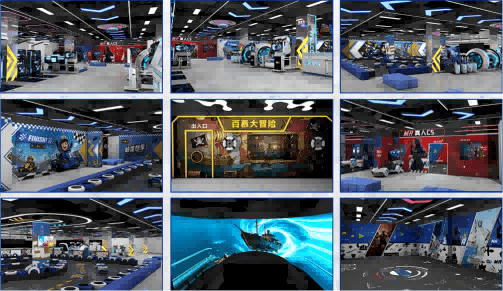
LEKE VR’s commercial product matrix — nine equipment categories deployed across the Changsha store.Individual game zones and attraction bays inside the Changsha store — each bay targets a specific audience segment.
The product matrix breaks down into three complementary tiers, each contributing to a different layer of the daily revenue structure:
✓Large-Space Social Tier — X-Space Free-Roam Arena & Real-Person CS — The #2 most popular attraction at the Changsha store. Multiplayer untethered VR in an open arena, purpose-built for group bookings, team-building events, and social visitors. This product category consistently delivers the highest per-session ticket prices and longest dwell times in the venue.
✓Mixed-Reality Racing Tier — MR Go-Kart & 3DOF/6DOF Simulators — The #3 most popular attraction. MR Go-Kart blends physical kart control with augmented-reality overlays for a low-barrier, high-excitement racing experience that works for all ages. The 3DOF racing simulator (new release, 2400mm triple-screen, 360° rotation, force-feedback steering, five titles) and 6DOF flagship serve the competitive racing demographic. Together, these racing products are the store’s highest per-session ticket drivers.
✓Immersive Theater & Solo-Play Tier — Bermuda Cinema & Standing Platforms — The #1 and #4 attractions by play count. Bermuda Cinema delivers high-throughput immersive film experiences that require zero player skill—critical for capturing walk-in family traffic. Standing Platform solo VR bays serve the quick-session crowd and fill gaps between group bookings. These two categories generate the volume that sustains weekday baseline revenue.
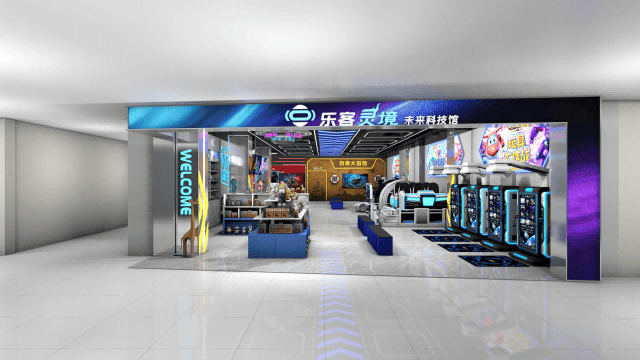
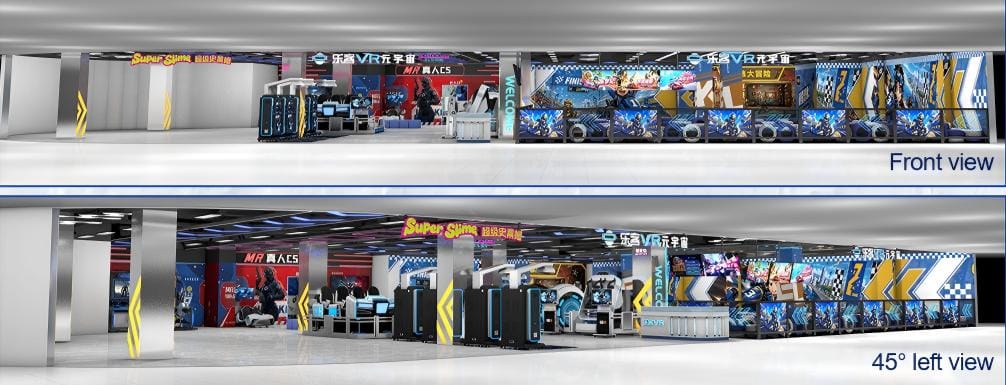
3D venue rendering — front elevation and 45° perspective view of the Changsha store layout.
Turnkey Solution — How LEKE VR Delivers a Ready-to-Operate Store
The revenue numbers from Changsha did not happen because the right equipment happened to be in the right mall. They happened because LEKE VR executed a full-chain VR entertainment business delivery—from the first site consultation to daily after-sales support. What follows is the six-step turnkey service chain that turns an empty retail unit into a revenue-generating VR destination—the backbone of every VR arcade business plan we build with our partners worldwide.
On-site photograph — guests engaging with LEKE VR equipment inside the Changsha Bubugao store.
The Six-Step LEKE VR Turnkey Delivery Chain:
Site Assessment & Equipment Planning — We evaluate your floor plan, target demographics, foot-traffic patterns, and local market conditions to recommend the optimal equipment mix. Every proposal is customized to your venue—not a pre-packaged template.
Spatial Design & 3D/C4D Visualization — Our design team delivers detailed floor plans, 3D renderings, and C4D spatial walkthroughs so you see exactly how every piece of equipment fits before manufacturing begins.
Factory Manufacturing & Pre-Delivery Testing — All equipment is manufactured at our Shenzhen campus, pre-assembled, and fully tested before crating. Every unit ships operational out of the box.
Global Logistics & Customs Coordination — We manage door-to-door shipping, import documentation, and local customs brokerage for destinations worldwide.
Remote Installation Assistance & System Commissioning — Our engineer team provides step-by-step remote guidance through the installation and calibration process, with video-call support and detailed documentation. Every cable, every calibration, every content license activation is verified remotely before the store opens its doors.
Staff Training, Launch Support & Ongoing After-Sales — We train your operations team remotely on equipment SOPs, customer flow management, and safety protocols, and deliver a pre-built launch marketing kit. Post-launch: quarterly content updates, remote equipment diagnostics, and a dedicated after-sales engineer team with a 48-hour parts-shipment SLA. Inquire about turnkey store deployment →
3D floor plan and C4D spatial visualization — equipment placement, guest circulation paths, and bay dimensions for the Changsha store design.
Comparing Your Path to Opening a VR Store
There are three ways to put VR equipment into a retail space. Only one comes with a verified operational track record:
Factor
DIY Assembly
Franchise Package
★ LEKE VR Turnkey
Equipment Sourcing
Multiple vendors No compatibility guarantee
Brand-mandated equipment bundle
Single manufacturer Factory-direct pricing
Store Design & Layout
Self-designed or outsourced
Brand-standard fixed template
Custom 3D/C4D spatial design per venue
Installation
Self-managed per-vendor coordination
Brand team or third-party
Remote installation assistance + full documentation
Staff Training
DIY manuals vendor YouTube videos
Brand-delivered training program
Full SOP training + launch marketing kit
Content Updates
Purchased per title per vendor
Brand-controlled release schedule
Quarterly content updates included at no extra cost
Ongoing Fees
Vendor-by-vendor warranty fees
8–15% revenue share
Zero franchise fee Zero revenue share
After-Sales Support
Per-vendor variable response
Brand-managed support center
Dedicated engineer team 48h SLA + remote diagnostics
Star Products
Depends on vendor selection
Fixed brand catalog
X-Space Arena + MR Go-Kart + 3DOF/6DOF Racing
The DIY path looks cheaper on a spreadsheet—until a critical piece of equipment goes down with no single accountable vendor. The franchise path looks simpler—until the monthly royalty statement arrives. The LEKE VR path is the only model backed by a real store’s operational data, with one manufacturer accountable for every piece of hardware, every content update, and every after-sales response.
ROI Reference: What a Four-Attraction VR Business Can Earn
To help you translate the Changsha store’s revenue rhythm into your own projection, the model below is a transparent VR entertainment business ROI reference built around a proven four-attraction bundle. It shows monthly turnover, fixed costs, and net profit at two ticket-price points—the same logic any VR arcade business plan should apply before committing capital.
B2B ROI Reference Model
Sample Monthly Revenue Model — 4-Attraction Configuration
Fixed costs: 3 employees €6,000 + rent €6,500 + miscellaneous €2,500 = €15,000 / month. At €10 tickets, net margin is ≈30.6%; at €15, it rises to ≈53.7%.
Modeling example based on a typical European urban venue. Actual results vary by location, foot traffic, and local pricing. Use this as a starting point for your own VR entertainment business ROI analysis — never as a guarantee. Request a custom projection →
Frequently Asked Questions
Which LEKE VR equipment drives the highest customer demand in a shopping mall venue?+
Based on the Changsha store’s real operating data, the top four attractions by play count were: Bermuda Cinema (immersive theater — high-throughput, zero-skill-barrier, ideal for walk-in families), X-Space Real-Person CS (large-scale free-roam arena — highest per-session ticket value and longest dwell time, dominant driver of weekend revenue), MR Go-Kart (mixed-reality racing — broad age appeal, strong holiday surge performance), and Standing Platform (solo VR bays — volume filler for quick sessions). A balanced equipment mix covering social-group attractions and solo-play stations consistently outperforms a single-category lineup — a key lesson for anyone modeling a VR entertainment business or VR entertainment center. Explore the X-Space free-roam arena →
How does LEKE VR determine the right equipment mix for my specific venue?+
Equipment selection is not a one-size-fits-all decision—it is driven by your venue’s specific parameters. During the site assessment phase, our team evaluates your floor-plan dimensions, ceiling height, power infrastructure, target demographic profile, local competitive landscape, and projected foot-traffic patterns. From there, we recommend a customized equipment matrix: a large-space anchor like X-Space VR Arena for group and social traffic, MR Go-Kart or 3DOF/6DOF racing simulators for competitive-gaming zones, and immersive theater or solo-play bays for volume throughput. Every VR arcade business proposal is tailored to your space, audience, and local economics—not a pre-assembled catalog. Request a customized venue assessment →
What turnkey support does LEKE VR provide beyond equipment manufacturing?+
LEKE VR is a full-chain VR entertainment business partner—not a drop-ship vendor. Our six-step delivery covers: customized site assessment and equipment planning, 3D/C4D spatial design, factory manufacturing with pre-shipment testing, global logistics coordination, remote installation assistance with real-time engineer support, and ongoing staff training with a launch marketing kit. Post-launch, we provide quarterly content updates, remote equipment diagnostics, and a dedicated after-sales engineer team backed by a 48-hour parts-shipment SLA. No franchise fees. No revenue sharing. One manufacturer accountable for the entire store lifecycle. Inquire about turnkey deployment →
A location-based VR business lives or dies on two variables: whether the equipment can sustain commercial-duty cycles, and whether the store design converts mall foot traffic into paid sessions. The Changsha store—averaging approximately $8,000 in daily revenue with a single-day peak of $13,368 through early operations, and a product matrix spanning large-space arenas, mixed-reality racing, immersive theater, and solo-play stations—validated both. If you are evaluating a VR entertainment business for a shopping mall, a commercial complex, or an independent FEC, LEKE VR’s turnkey solution delivers the equipment, the design, the remote installation support, the training, and the ongoing after-sales care. One accountable partner. Zero franchise fees. A store model already proven in the real world. Request a custom projection for your venue →
Core VR Solutions
Explore More Commercial VR Attractions
A complete ecosystem for your VR business, manufactured in our certified factory.
Get a Tailored Quote for the Multiplayer VR Shooting Arena | Commercial VR Laser Tag Equipment
Share your floor plan dimensions, target country and budget. Our solutions team returns a tailored equipment mix, 3D venue layout and revenue projection. No cost. No commitment.




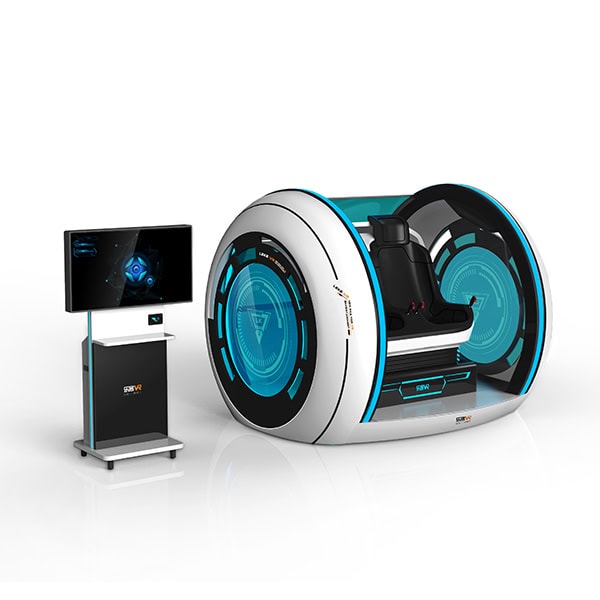
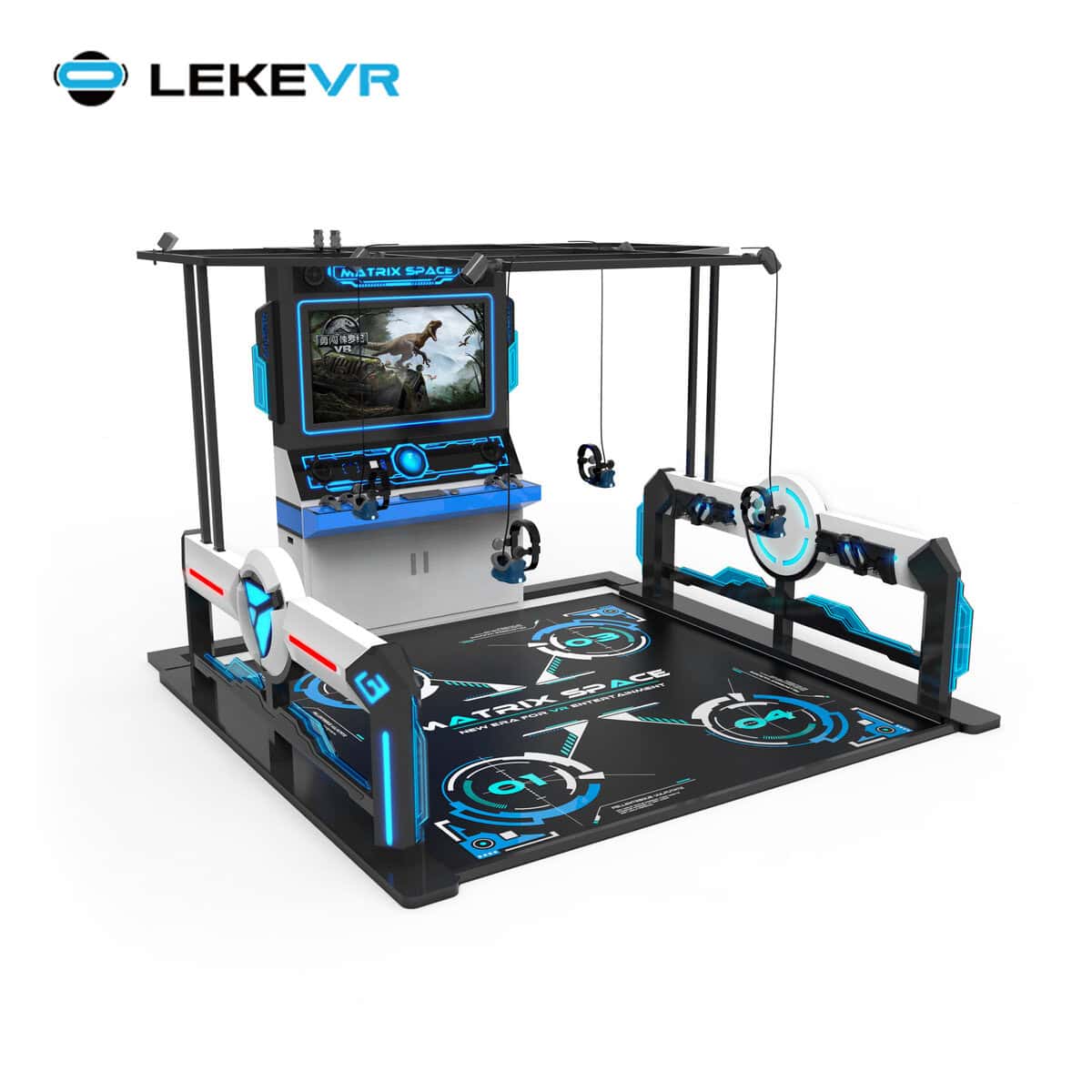
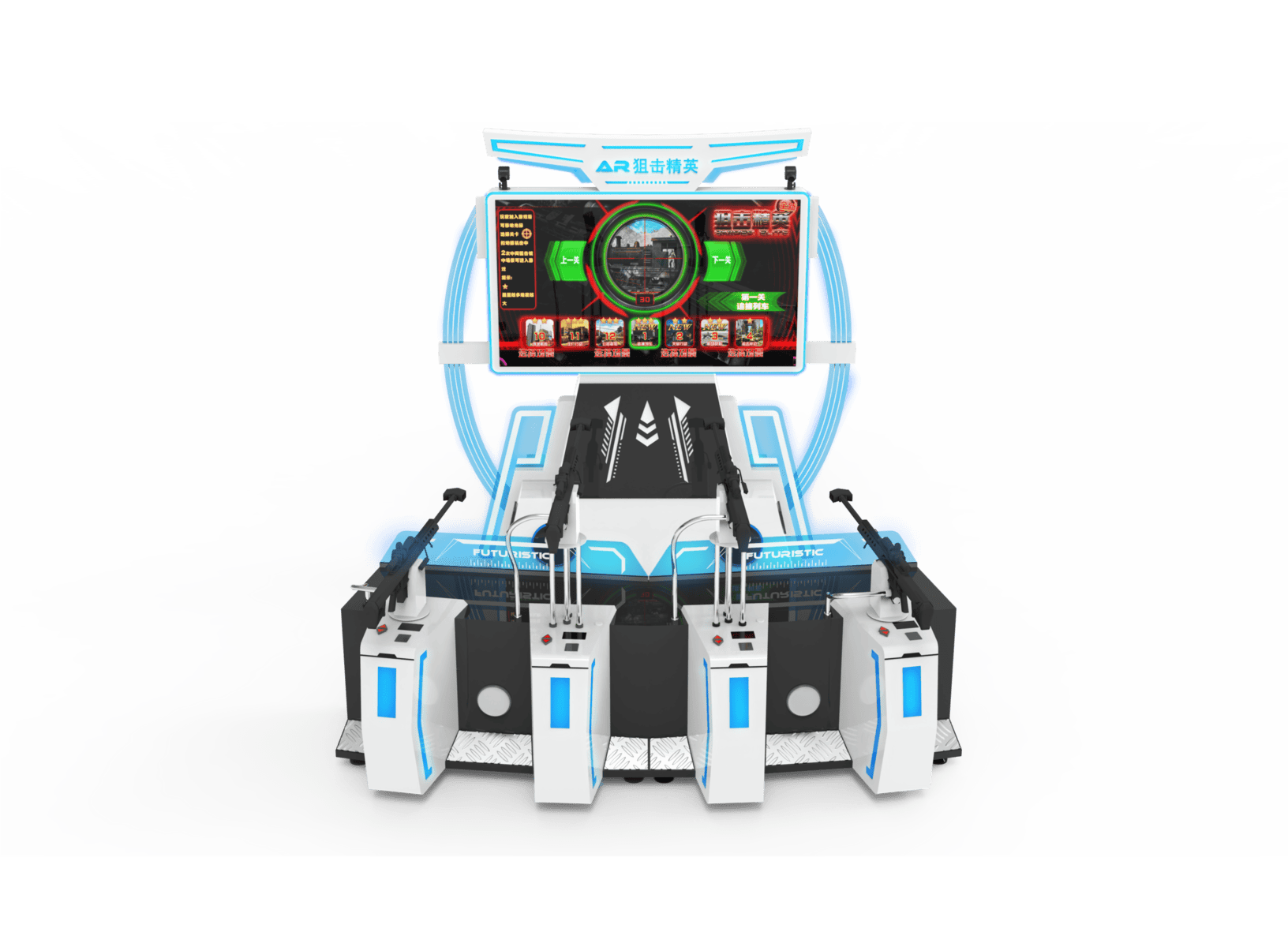
 MR Go-Kart
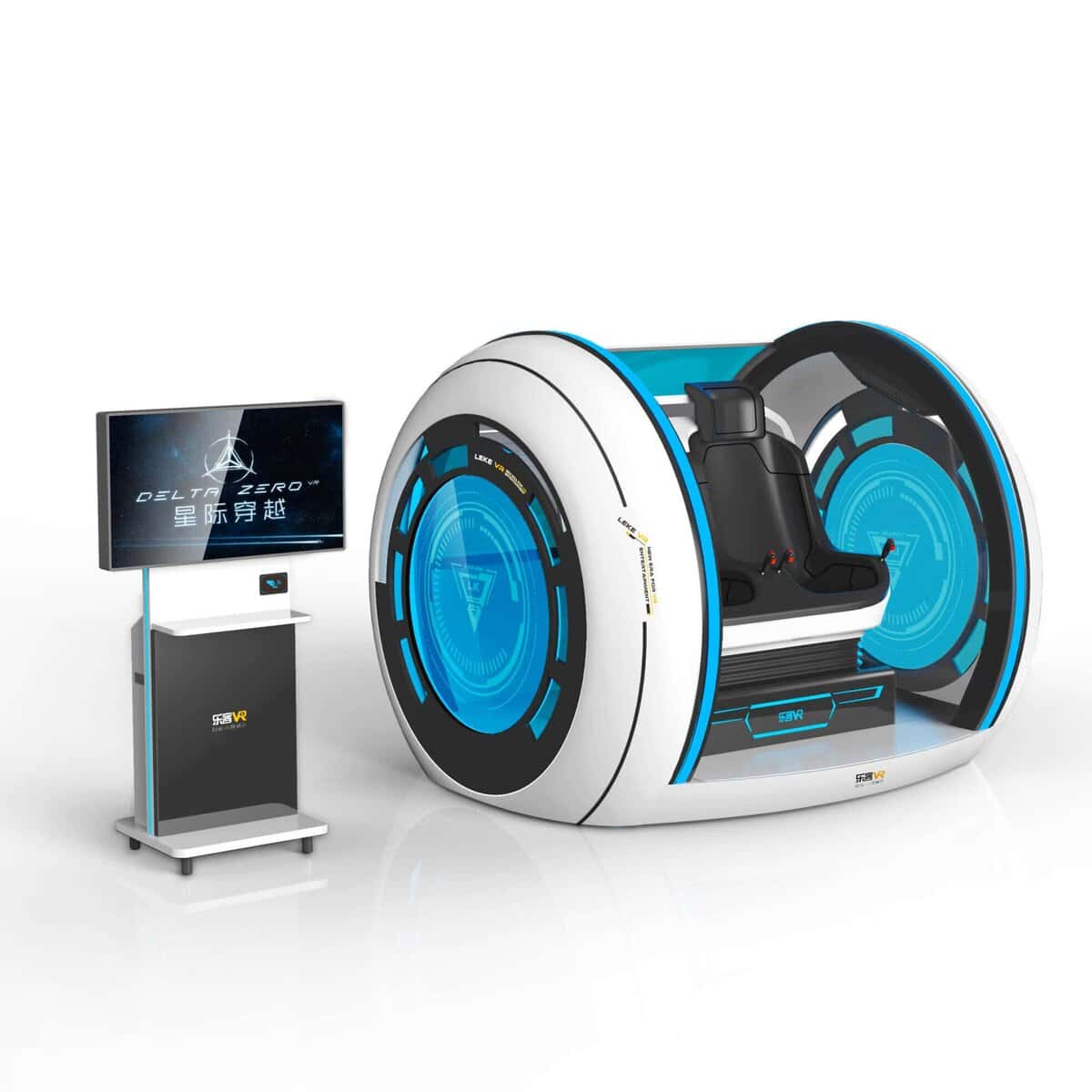 Space Shuttle 2.0
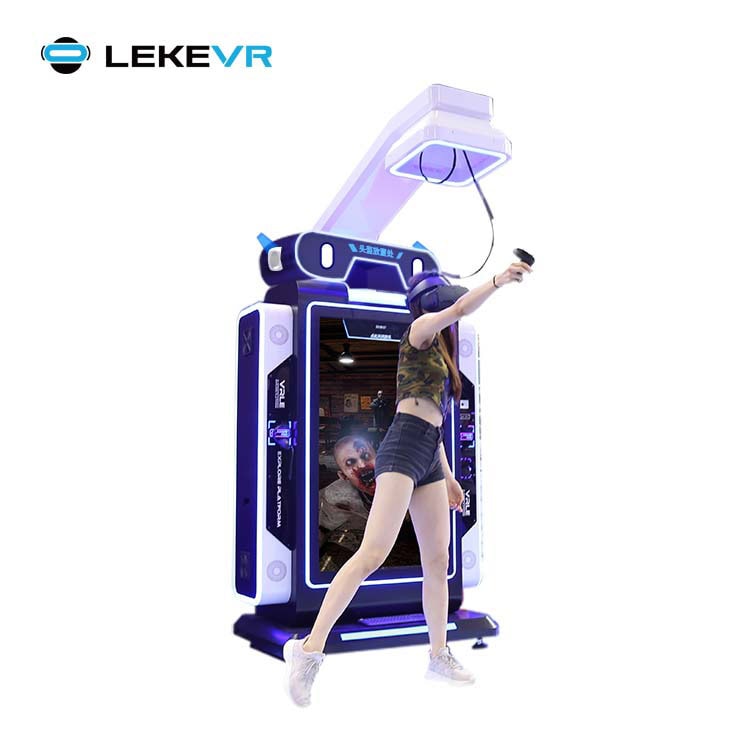 Self-Service VR Stand
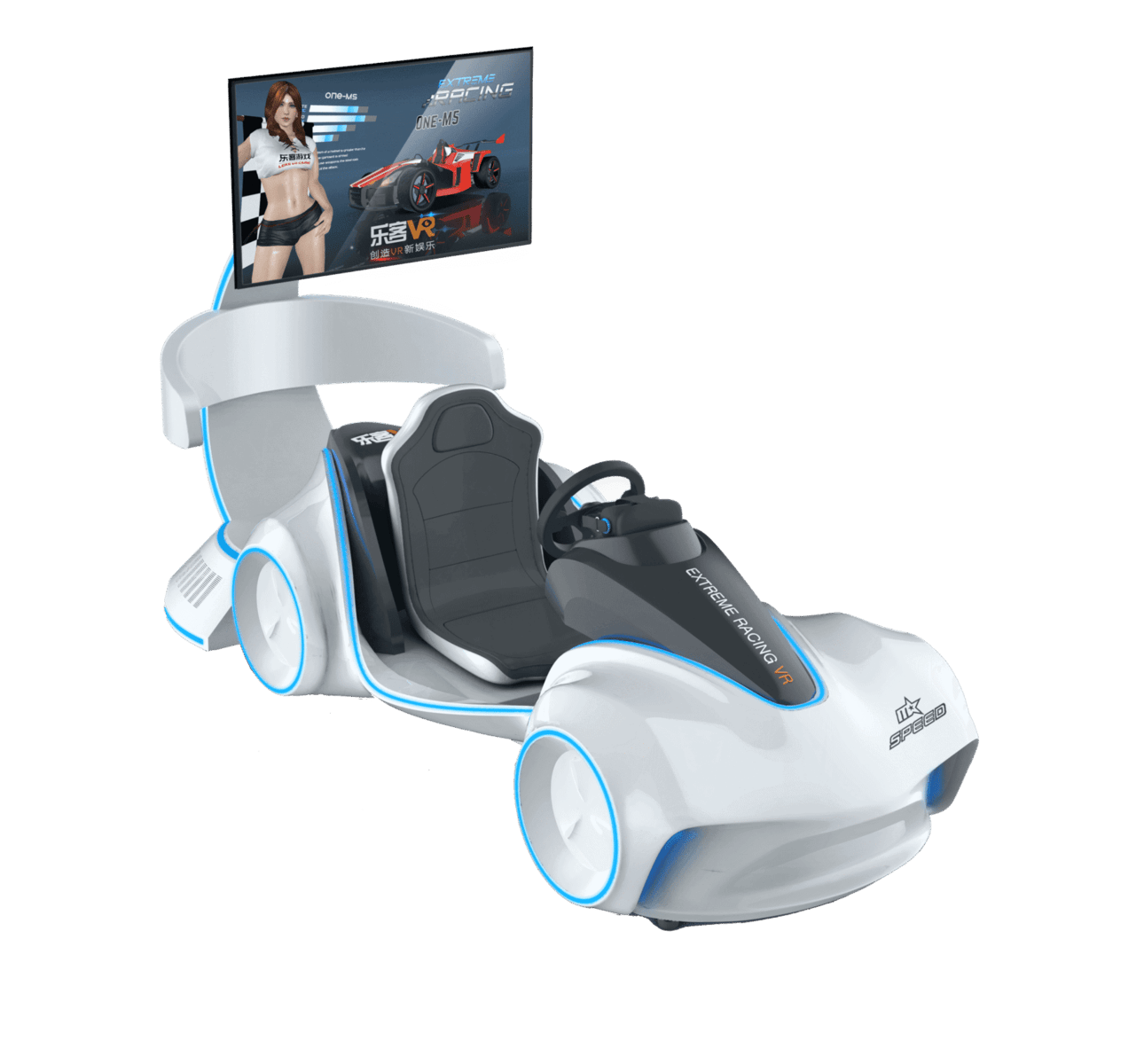 VR Racing
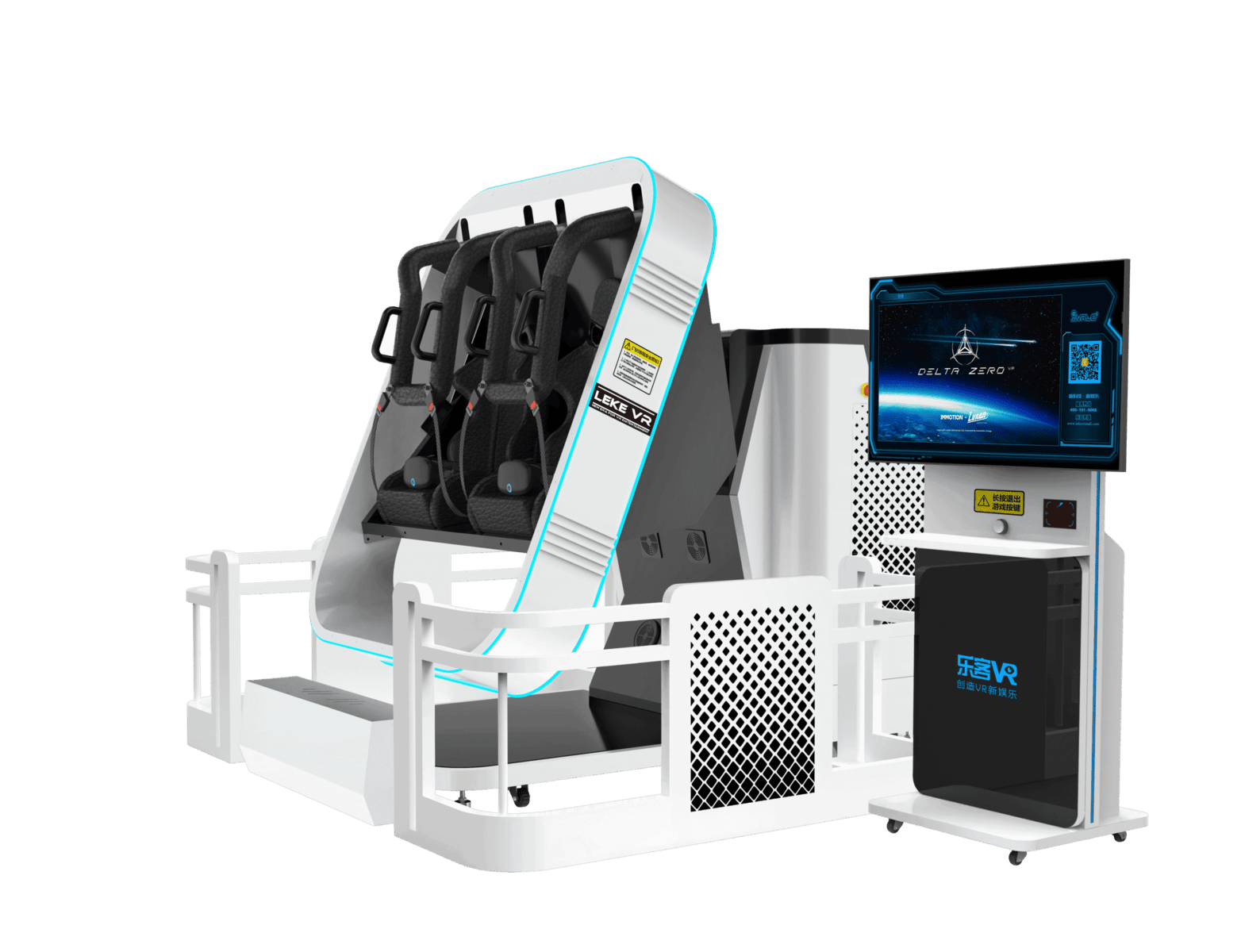 360° VR Chair
 AR Sniper
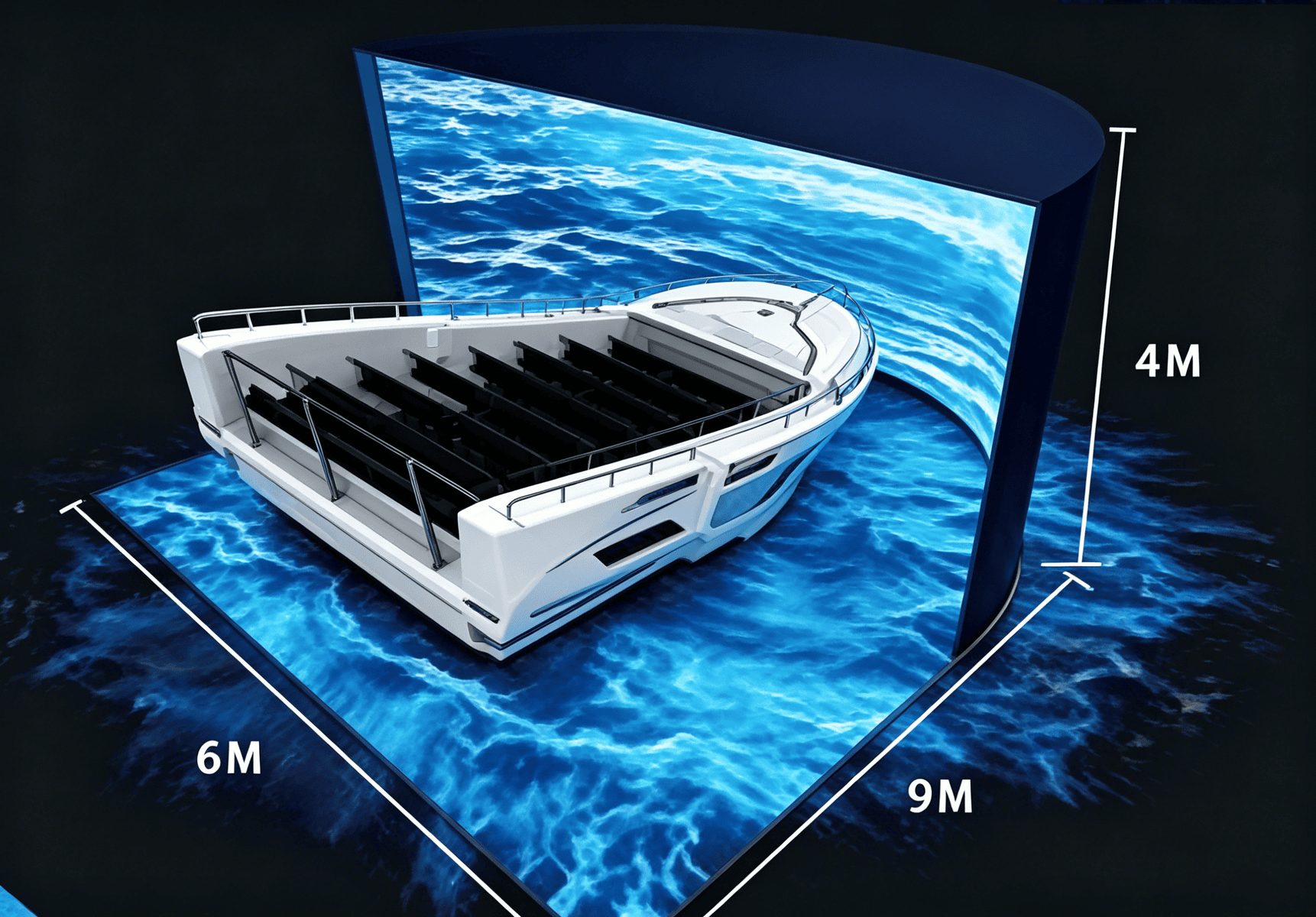 Bermuda Naked-Eye 3D
 9D VR Cinema 6-Seat